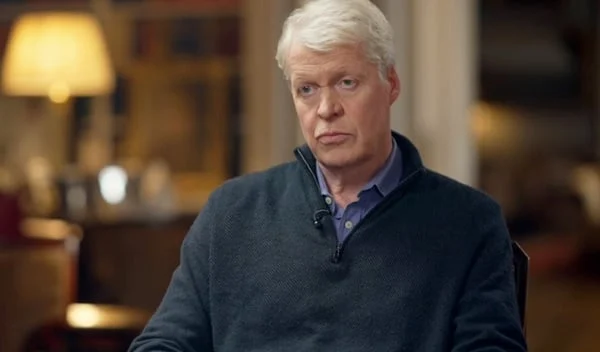
Nearly three decades after Earl Charles Spencer stood before a global audience at Westminster Abbey to deliver a searing, emotional eulogy for his late sister, Princess Diana, he has returned to the public eye with a series of explosive revelations that threaten to fracture the already delicate relations within the British Royal Family. In his highly anticipated new book, the 9th Earl Spencer exposes long-buried tensions, detailing harrowing phone calls with the then-Prince Charles, challenging the official narratives of the Firm, and accusing the palace of psychological manipulation.
The publication of these revelations has reopened historic wounds, particularly concerning Princes William and Harry. Critics and royal commentators alike have questioned the timing and motives behind Spencer’s decision to air the family’s grievances publicly, while supporters argue that the memoir underscores a lifelong commitment to defending his sister’s legacy and protecting her offspring from the suffocating machinery of the monarchy. As the echoes of these claims reverberate through the British media, the fallout offers a rare, unfiltered glimpse into the institutional pressures that defined Princess Diana’s life and tragic death.
A Solemn Promise and a Retrospective Reassessment
At Princess Diana’s funeral on September 6, 1997, Earl Spencer made a profound and publicly broadcasted pledge. He promised to protect his young nephews, Prince William and Prince Harry—whom he referred to as his sister’s "blood kin"—from the intense media scrutiny and institutional pressures that had frequently driven their mother to "despair and to tears."
For years, that eulogy was remembered primarily as a bold defense of Diana and an indirect rebuke of the royal establishment. However, nearly thirty years later, the claims put forth in Spencer’s new literary work have introduced a jarring new perspective. Rather than protecting the princes from external forces, British press reviews suggest that the unearthing of these familial conflicts risks driving a deeper wedge into the hearts of William and Harry, who are already navigating their own well-documented estrangement.
The Memoir’s Most Explosive Claims: Confronting King Charles
At the center of the controversy are Spencer’s recollections of the immediate aftermath of Princess Diana’s fatal car crash in Paris. According to excerpts published ahead of the book’s release, tensions flared intensely between the grieving brother and the future monarch regarding the ceremonial arrangements for the funeral.
Spencer reportedly argued that Princess Diana would never have wanted her young sons, William and Harry—then aged 15 and 12—to walk behind her coffin in the public funeral procession, a grueling ordeal that both princes have since described as deeply traumatic. In response to this intervention, Spencer claims that then-Prince Charles—now King Charles III—reacted with a "white-hot rage" during a tense telephone conversation.
Furthermore, the memoir alleges that during the tumultuous period following the tragedy, the current monarch remarked, "We will soon forget her"—a statement that, if accurate, paints a cold and institutional portrait of grief management within the royal household. Buckingham Palace has forcefully denied these assertions, categorically rejecting the timeline and tone of the interactions described by the Earl.
The Accusation of Gaslighting and the Palace’s Counter-Response
In a tactical counter-offensive that highlights the deep hostility between the Spencer family and the modern royal establishment, official sources close to the palace dismissed the Earl’s accounts. Buckingham Palace officials suggested that Spencer’s judgment was clouded by profound grief, stating that "the pain of fraternal mourning can cloud objective reality."
This official framing provoked an immediate and fierce reaction from Charles Spencer. In an interview with the Mail on Sunday, Spencer did not mince words, labeling the palace’s statement as a textbook example of "gaslighting"—a psychological manipulation technique designed to make an individual doubt their own perception of reality.
"It is not an everyday occurrence that you wake up to find yourself being gaslit by the King," Spencer remarked in the published commentary. This high-stakes war of words has triggered a broader debate across British media outlets. While traditionalist commentators argue that rehashing decades-old private conversations serves little purpose other than to sensationalize family trauma, defenders of the Earl assert that the memoir exposes the systemic lack of empathy embedded within royal protocols, prioritizing institutional preservation over human compassion.
Aristocratic Heritage and the Althorp Dynasty
To understand Charles Spencer’s willingness to challenge the throne, one must examine his deep-rooted place within the British aristocracy. Born Charles Edward Maurice Spencer in London on May 20, 1964, the 9th Earl Spencer is the youngest child of the 8th Earl Spencer and Frances Shand Kydd. His lineage is deeply intertwined with both British history and the royal family itself; the late Queen Elizabeth II served as his royal godmother.
The Spencer family seat is the historic Althorp estate, located in West Northamptonshire, approximately a two-and-a-half-hour drive north of London. Purchased by the Spencer family in 1508, the sprawling estate has served as the ancestral home for generations and is the final resting place of Princess Diana, whose grave sits on an island within an ornamental lake on the property.
Growing up at Althorp, Charles and Diana—who were separated in age by less than three years—shared a remarkably close bond. Their childhood, though privileged, was marked by the tumultuous divorce of their parents, an experience that forged a protective and enduring alliance between the siblings that lasted until Diana’s death.
Educational Pedigree and Professional Background
Following in the footsteps of many aristocratic British males of his generation, Spencer attended Eton College, the prestigious boarding school situated near Windsor Castle in Berkshire. He subsequently pursued higher education at Magdalen College, University Oxford, where he specialized in modern history—a foundational academic pursuit that later informed his extensive career as a writer and historian.
Transitioning from academia to media, Spencer established a successful career in journalism. Notably, he spent a decade working with the American television network NBC News starting in 1986, serving as a broadcast correspondent and covering major international events.
Beyond his television career, Spencer is a prolific author. His literary portfolio includes works exploring his family’s extensive lineage, biographies of historical royal figures such as King Charles II, and investigations into aristocratic heritage. According to official biographical data, Spencer has been married four times and is the father of seven children—five daughters and two sons.
Chronology of a Fractured Relationship: A Historical Timeline
To contextualize the current friction between Earl Spencer and the Crown, it is essential to trace the pivotal milestones that have defined their relationship over the past four decades:
- July 1981: Lady Diana Spencer marries Charles, Prince of Wales, at St Paul’s Cathedral, uniting the Spencer and Windsor dynasties in a high-profile global event.
- August 1996: Following years of highly publicized marital strife and public scandals, the Prince and Princess of Wales are officially divorced, stripping Diana of her Royal Highness title.
- August 31, 1997: Princess Diana tragically dies in a car crash in Paris alongside Dodi Fayed and driver Henri Paul, plunging the British nation and the global community into profound mourning.
- September 6, 1997: During her funeral at Westminster Abbey, Earl Charles Spencer delivers a blistering eulogy that indirectly criticizes the press and the royal family, while publicly vowing to shield Princes William and Harry.
- Early 2000s–2010s: Spencer maintains a relatively quiet profile focused on the stewardship of Althorp estate, historical research, and charitable endeavors, while occasionally offering measured reflections on his sister’s legacy.
- Mid-2020s: Spencer prepares and releases his new memoir, breaking decades of relative diplomatic silence regarding the inner workings of the royal family and detailing incendiary interactions with the future King Charles III.
Broader Implications for the Modern Monarchy
The publication of Earl Spencer’s memoir arrives at a particularly sensitive juncture for the British monarchy. King Charles III, currently undergoing cancer treatment alongside the Princess of Wales, has labored to project an image of stability, modernization, and continuity. The introduction of explosive historical grievances from a prominent aristocratic insider disrupts this carefully cultivated narrative, dragging contemporary institutions back into the quagmire of 1990s royal scandals.
Furthermore, the impact of these revelations on Princes William and Harry cannot be overstated. As the brothers remain locked in a profound personal rift, external commentary from maternal family members regarding their upbringing and the tragic events surrounding their mother’s death risks intensifying existing emotional strains. While William has consistently sought to protect his own immediate family and maintain the dignity of the crown, Harry has frequently spoken out about the generational trauma inflicted by the royal institution—themes that closely mirror the assertions made in his uncle’s new book.
Ultimately, Earl Spencer’s intervention serves as a stark reminder that the history of the House of Windsor is inextricably linked to the personal costs borne by those who married into it. Whether viewed as an act of courageous truth-telling or a disruptive reopening of old wounds, the memoir ensures that the legacy of Princess Diana, and the complex institutional reactions to her life and death, will remain a subject of intense public scrutiny for generations to come.