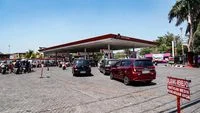
The energy landscape in Makassar, South Sulawesi, has experienced significant strain in recent weeks, prompting a coordinated and aggressive response from state-owned energy enterprise PT Pertamina Patra Niaga and the provincial government. Driven by a sudden surge in localized fuel demand, local authorities and corporate stakeholders have rolled out a comprehensive series of operational interventions designed to mitigate severe congestion at public refueling stations. Among the most notable measures is the implementation of an odd-even vehicle registration system for fuel purchases at select Public Fuel Filling Stations (SPBU), a traffic management strategy rarely applied to energy retail but deemed necessary to restore order to urban thoroughfares.
By mid-September, these concerted interventions began yielding tangible results. According to official reports from Pertamina Patra Niaga, vehicle queues at numerous SPBU locations across Makassar began to recede gradually by Sunday, September 13, signaling that the acute congestion points were steadily decompressing. The joint initiative underscores the delicate balance required to maintain energy security in rapidly growing metropolitan centers, particularly when consumption patterns fluctuate unpredictably due to seasonal factors, economic shifts, or behavioral changes among motorists.
Background Context and Root Causes of the Surge
To understand the necessity of emergency measures such as the odd-even fuel policy in Makassar, one must examine the broader socioeconomic and infrastructural context of South Sulawesi’s capital. As the primary commercial, industrial, and administrative hub of eastern Indonesia, Makassar acts as a massive magnet for commuter traffic, commercial logistics, and inter-island trade. The city’s daily vehicle population includes hundreds of thousands of motorcycles, private automobiles, public transport vans (locally known as pete-pete), and heavy-duty freight trucks.
In the weeks leading up to the intervention, localized supply pressures began to mount. Industry analysts and regional officials pointed to a confluence of factors that triggered the demand spike. First, post-holiday economic recovery and heightened commercial activities led to an unexpected acceleration in fuel consumption, particularly for subsidized products like Solar (diesel) and Pertalite (Ron 90 gasoline). Second, rumors regarding potential supply chain adjustments or price fluctuations occasionally trigger panic buying, a phenomenon where consumers rush to top off their tanks regardless of immediate need, thereby compounding logistical strain on regional distribution networks.
When panic buying intersects with normal daily commuting peaks, the physical infrastructure of urban gas stations is quickly overwhelmed. Many older SPBU locations in Makassar were not originally designed to process the sheer volume of vehicles currently navigating the city’s streets. Consequently, queues spilled out from station forecourts onto major arterial roads, causing massive traffic bottlenecks, increasing carbon emissions from idling engines, and drawing complaints from both motorists and local businesses whose access was blocked by snaking lines of vehicles.
Chronology of the Crisis and Operational Escalation
The escalation of fuel distribution challenges in Makassar followed a distinct timeline that required progressive intervention from regional authorities and energy executives. The sequence of events highlights how operational adjustments evolved from routine monitoring to emergency traffic management:
Initial Detection and Monitoring Phase: Local energy monitors first identified an abnormal increase in daily throughput at several high-volume SPBU locations in late August and early September. While minor fluctuations are routine, sustained double-digit percentage increases in daily sales volumes over consecutive days signaled a structural shift in consumption or emerging stockpiling behavior.
Stakeholder Coordination Meetings: Recognizing that the bottleneck was not merely a supply shortage—since Pertamina maintained adequate terminal reserves—but rather a logistical and queuing capacity issue, Pertamina Patra Niaga convened emergency coordination meetings with the South Sulawesi Provincial Government, local police traffic divisions (Ditlantas Polda Sulsel), and SPBU owner associations.
Deployment of Immediate Logistical Enhancements (Early September): As queues lengthened, Pertamina accelerated its delivery schedules. Fleet operations were scaled up to round-the-clock status, utilizing 24-hour tanker truck mobilization to ensure continuous replenishment of underground storage tanks at retail sites.
Introduction of Traffic Control and Retail Restrictions (Mid-September): With congestion reaching critical levels, authorities determined that physical supply alone could not solve the problem without managing consumer access. This realization led to the conceptualization and rollout of the odd-even license plate system at strategic fuel stations, alongside the extension of operating hours for key service points.
Stabilization and Decompression (Sunday, September 13): The culmination of these synchronized efforts became evident on September 13, when field monitors reported a noticeable reduction in queue lengths and shorter wait times for motorists across Makassar.
Detailed Breakdown of Pertamina’s Operational Interventions
In response to the logistical bottlenecks, Kitty Andhora, VP Corporate Communication of Pertamina Patra Niaga, emphasized that the corporation deployed a multi-layered operational strategy designed to maximize throughput, expand retail access points, and streamline vehicular movement.
"Various measures have been implemented to ensure that supply and service continue to operate optimally. We are also continuously monitoring conditions on the ground and making adjustments according to needs, so that the public can obtain fuel more smoothly," stated Kitty Andhora.
The operational measures can be categorized into four primary pillars:
-
Round-the-Clock Fleet Operations: Pertamina Patra Niaga significantly augmented its secondary distribution network by ensuring that fuel transport tanker trucks operated on a 24-hour schedule. This continuous supply cycle reduced the downtime between station depletion and replenishment, ensuring that underground tanks remained sufficiently filled during peak demand windows.
-
Extension of Operating Hours at Key SPBU Locations: To alleviate the daytime concentration of vehicles, a total of 25 strategic SPBU stations in Makassar were mandated to operate 24 hours a day. This extended timeframe allowed commercial drivers, shift workers, and nocturnal motorists to refuel during off-peak hours, thereby flattening the demand curve across a broader 24-hour window.
-
Physical Infrastructure Expansion within Stations: Recognizing that pump availability was a primary bottleneck, Pertamina increased the number of fuel nozzles—particularly for subsidized products—and deployed additional pump operators at high-volume stations. This accelerated the physical turnaround time per vehicle, moving cars and motorcycles through the forecourt much faster.
-
Deployment of Modular SPBU Units: To further decentralize distribution and relieve pressure on overcrowded legacy stations, Pertamina Patra Niaga introduced three new modular SPBU units at strategic geographic points across the city. These portable, rapid-deployment refueling units provided critical relief to underserved neighborhoods and high-traffic corridors.
The Odd-Even Fuel System: Mechanics and Public Reception
Perhaps the most controversial and widely discussed measure implemented in Makassar was the odd-even license plate regulation for fuel purchases. Under this system, vehicles with odd-numbered license plates were permitted to refuel on specific days, while those with even-numbered plates purchased fuel on alternating days.
While common in major metropolitan areas for traffic congestion management—such as the policy enacted on Jakarta’s primary thoroughfares—applying the odd-even rule to energy retail is an innovative and restrictive step. Transportation experts and municipal planners noted that while the rule introduces a temporary inconvenience for motorists, its primary objective is to ration physical access to station forecourts, thereby preventing gridlock on public roads and ensuring an orderly, equitable distribution of available fuel resources.
The implementation required close cooperation between Pertamina, local station attendants, and municipal traffic police, who assisted in managing motorists and turning away vehicles that did not match the daily criteria. Despite initial confusion among some drivers, public compliance gradually improved as the system’s rationale became clearer through localized announcements and media coverage.
Official Statements and Institutional Collaboration
The resolution of the Makassar fuel queue crisis serves as a prominent case study in effective inter-agency collaboration between state-owned enterprises and local government bodies. The South Sulawesi Provincial Government played an instrumental role in enforcing municipal traffic rules, deploying law enforcement personnel to manage station perimeters, and communicating policy updates to the citizenry.
Pertamina Patra Niaga publicly acknowledged and expressed deep appreciation for the proactive stance taken by the provincial administration. Furthermore, corporate leadership commended the resilience and cooperation of the Makassar public, who adapted to the sudden regulatory shifts and followed instructions issued by field officers and station attendants.
"Pertamina Patra Niaga will continue to strive to provide the best service and ensure that fuel distribution runs optimally, so that community needs can be met and daily activities can continue to run smoothly," Kitty Andhora concluded.
Broader Economic Implications and Future Outlook
The events in Makassar highlight the vulnerability of urban energy supply chains to sudden behavioral shifts and localized demand shocks. While Indonesia’s national energy distribution network is robustly engineered, regional nodes remain susceptible to temporary logistical friction.
Economists and logistics experts analyzing the Makassar situation have pointed out several broader implications for energy governance in developing metropolitan areas:
The Need for Infrastructure Scaling: As urban populations and vehicle registrations grow, the physical footprint of legacy fuel stations must expand in tandem. The successful deployment of modular SPBU units in Makassar suggests that agile, decentralized infrastructure models will play an increasingly vital role in future urban planning.
Consumer Communication and Panic Mitigation: One of the primary drivers of the initial surge was psychological rather than fundamental. Moving forward, energy companies and municipal governments must enhance real-time digital communication channels to reassure consumers, debunk unverified rumors, and prevent anticipatory hoarding.
Inter-Agency Preparedness Protocols: The swift transition from standard operations to emergency traffic management in Makassar demonstrates the value of established crisis response frameworks. Institutional readiness among fuel distributors, regional governments, and traffic police will remain a critical benchmark for urban stability across Indonesia.
As normalcy returns to the streets of Makassar and vehicle queues stabilize back to baseline levels, the lessons learned from this episode will likely inform future energy distribution policies nationwide. By combining aggressive logistical reinforcement with innovative demand-side management, Pertamina Patra Niaga and local authorities have charted a practical blueprint for navigating urban energy challenges in real time.