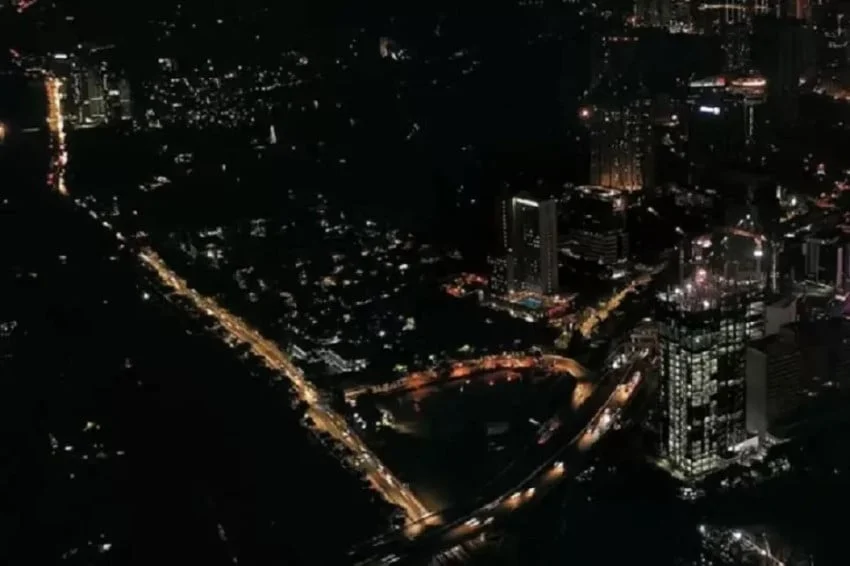
The Jakarta Provincial Government has officially announced a city-wide initiative to observe World Ozone Day, scheduling a symbolic one-hour blackout across the capital on Saturday, September 19, 2026. This environmental campaign, aimed at raising public awareness regarding climate change and the preservation of the Earth’s protective ozone layer, will see participating households, businesses, and government offices dim their lights for sixty minutes, marking a unified commitment to reducing carbon footprints in one of Southeast Asia’s most densely populated metropolitan areas.
The Significance of World Ozone Day
World Ozone Day, officially known as the International Day for the Preservation of the Ozone Layer, is observed annually on September 16 to commemorate the signing of the Montreal Protocol in 1987. This landmark international environmental treaty was designed to protect the ozone layer by phasing out the production and consumption of numerous substances that are responsible for ozone depletion, most notably chlorofluorocarbons (CFCs) and halons.
While the primary focus of the Montreal Protocol has been the recovery of the stratospheric ozone layer, the initiative has evolved to address broader climate concerns. In recent years, the Kigali Amendment has further bolstered this effort by targeting hydrofluorocarbons (HFCs), which, while ozone-friendly, are potent greenhouse gases. Jakarta’s decision to participate in this global movement through a symbolic blackout serves as a local reinforcement of these international goals, highlighting the urgency of transitioning toward sustainable energy practices.
Chronology and Execution of the Initiative
The blackout is scheduled to take place on Saturday, September 19, 2026, shifting the actual anniversary date slightly to a weekend to ensure maximum public participation and minimal disruption to essential weekday operations. According to official announcements from the Jakarta Provincial Government, the initiative will span all five administrative cities of Jakarta—Central, North, South, East, and West Jakarta.
The blackout is not intended to be a total cessation of electrical grid services, which would be technically infeasible and dangerous for essential infrastructure. Instead, the government is calling for a voluntary "lights-off" campaign, targeting non-essential residential lighting, decorative building facade lights, and billboard displays. Public services, hospitals, emergency facilities, and critical traffic control systems are excluded from the directive to ensure public safety remains uncompromised.
Historically, Jakarta has utilized similar "Earth Hour" style events to mobilize citizen participation. These events typically rely on the voluntary cooperation of the private sector, particularly large commercial building owners who manage the skyline’s most prominent illuminations. Coordination with the state-owned electricity company, PLN (Perusahaan Listrik Negara), is expected to facilitate load management during this period, providing data on the actual reduction in energy consumption achieved during the hour.
Energy Consumption and Carbon Emissions in Jakarta
Jakarta’s energy landscape is characterized by high demand driven by rapid urbanization and the proliferation of high-rise commercial developments. As of 2026, the energy sector remains the primary contributor to the city’s greenhouse gas emissions. According to reports from the Jakarta Environmental Agency, commercial and residential buildings account for a significant portion of the city’s total electricity consumption, much of which is still derived from coal-fired power plants in the surrounding regions of West Java and Banten.
Data from the International Energy Agency (IEA) suggests that behavioral changes, such as the voluntary reduction of electricity use during peak or specific hours, can provide measurable, albeit incremental, relief to the grid. While a single hour of reduced lighting may seem minor in the global context, proponents argue that the true value lies in the "psychological shift" it fosters among the 10 million-plus residents of Jakarta. By making the abstract concept of climate change tangible through a visible change in their immediate environment, the government hopes to encourage long-term energy-saving habits.
Official Responses and Strategic Rationale
In a statement released via the Provincial Government’s social media channels, officials emphasized that the blackout is a strategic move to align the city with Indonesia’s Nationally Determined Contributions (NDCs) under the Paris Agreement. The current administration has been under pressure to improve the city’s air quality, which has frequently reached hazardous levels in recent years.

"This is not merely about turning off lights," a representative from the Jakarta Environmental Agency noted in a follow-up briefing. "It is a reflection of our collective responsibility to rethink how we consume energy in an urban setting. Every kilowatt-hour saved is a step toward reducing the reliance on fossil-fuel-intensive power generation."
Local environmental advocacy groups have largely welcomed the move, though some have urged the government to supplement the symbolic gesture with more aggressive policy changes. These include mandatory retrofitting of old buildings for energy efficiency, the expansion of green building certifications, and an accelerated transition to rooftop solar power installations across the capital’s sprawling industrial and commercial zones.
Broader Implications for Urban Sustainability
The upcoming event in Jakarta acts as a case study for urban climate governance in developing nations. Critics often argue that individual energy-saving gestures do not address the structural issues of energy supply. However, urban planners note that such initiatives are vital for building a "culture of sustainability." In a city where energy is often taken for granted, the visible darkness of a one-hour blackout creates a rare opportunity for residents to observe their city from a different perspective—one that is quieter and less reliant on artificial illumination.
Furthermore, the integration of digital monitoring tools in 2026 allows the city to track the success of such campaigns more accurately. Smart grid technologies now provide real-time data that allow authorities to visualize the impact of the blackout on the city’s load profile. If the 2026 event proves successful in terms of public participation and measurable energy reduction, it may serve as a blueprint for future monthly or seasonal "Energy Awareness Days."
Economic and Infrastructure Considerations
From an economic perspective, the temporary dimming of city lights presents a unique challenge for the retail and hospitality sectors. Businesses in central business districts, such as Sudirman and Thamrin, are being encouraged to participate by turning off decorative signage while maintaining essential safety lighting. The economic impact of such a short-duration event is considered negligible compared to the long-term benefits of brand alignment with environmental, social, and governance (ESG) standards, which are increasingly important for global corporations operating in Indonesia.
The collaboration between the provincial government and local business associations is critical. Many building managers have already committed to pre-programming their automated lighting systems to dim at the designated hour, demonstrating a high level of institutional cooperation.
Looking Toward the Future
As the date approaches, the Jakarta Provincial Government is preparing an extensive public information campaign. This includes social media outreach, community-level announcements in neighborhoods (kelurahan), and partnerships with local influencers to drive home the message of conservation. The goal is to ensure that the event is not perceived as an inconvenience, but as a collective act of civic pride.
Ultimately, the World Ozone Day blackout in Jakarta serves as a barometer for the city’s environmental consciousness. As the global community watches the progress of urban centers in the face of the climate crisis, Jakarta’s effort to pause its energetic pace for an hour underscores the complexity of transitioning a mega-city toward a greener future. Whether this initiative translates into sustained policy reform or remains a poignant, temporary spectacle will depend on the government’s ability to turn the momentum of this hour into a year-round commitment to energy efficiency.
Residents are encouraged to keep an eye on official provincial channels for specific instructions regarding the timing and any potential changes to the plan as the date draws closer. As of mid-September, all systems are go for the city to dim its lights, signaling a moment of reflection in the heart of Indonesia’s capital.