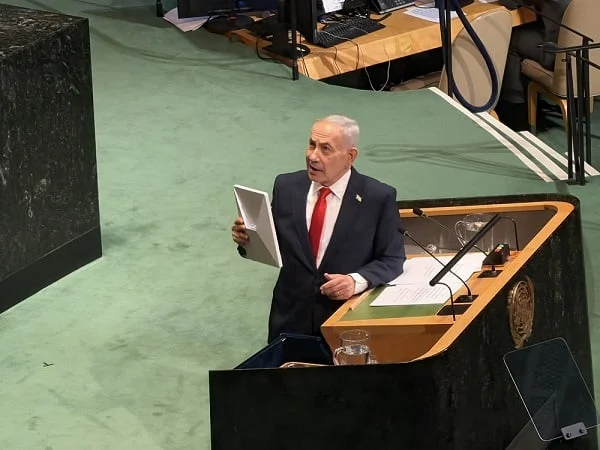
The United Arab Emirates (UAE) officially confirmed that Israeli Prime Minister Benjamin Netanyahu held a high-level meeting with President Sheikh Mohammed bin Zayed Al Nahyan (MBZ) in Abu Dhabi late last week. This confirmation, released via the official Emirates News Agency (WAM) on Monday evening, brought to an end the speculation surrounding the Israeli leader’s discreet visit to the Emirati capital. The meeting took place against a complex geopolitical backdrop, occurring just one month before scheduled Israeli general elections and amidst intense public scrutiny regarding intelligence warnings that allegedly preceded the catastrophic events of October 7, 2023.
The diplomatic engagement between the two leaders underscores the resilience of the Abraham Accords—the 2020 normalization agreement between Israel and several Arab nations—even as the region grapples with the fallout of the ongoing war in Gaza. While the official statement from Abu Dhabi focused on the strengthening of bilateral ties, the timing of the visit has invited intense international analysis regarding the nature of intelligence sharing and the fragility of regional stability.
A Chronology of Diplomatic and Security Developments
To understand the weight of the recent meeting, it is necessary to examine the timeline of events that have defined the Abu Dhabi-Tel Aviv relationship over the past several years:
- August 2020: The signing of the Abraham Accords marks the first time an Arab nation has normalized relations with Israel in over two decades, signaling a historic shift in Middle Eastern diplomacy.
- September 2023: According to reports by the Israeli newspaper Haaretz, President Sheikh Mohammed bin Zayed engaged in a pivotal telephone conversation with Prime Minister Netanyahu roughly ten days before the October 7 Hamas-led attack. During this call, the Emirati leader reportedly urged Netanyahu to take seriously reports of an impending “major surprise” being orchestrated by Hamas leadership, specifically citing Yahya Sinwar.
- October 7, 2023: Hamas militants launched a massive coordinated attack on southern Israel, resulting in the deaths of approximately 1,195 people and the taking of 250 hostages.
- October 2023–Present: Israel initiated a large-scale military operation in the Gaza Strip. The ensuing humanitarian crisis and destruction have drawn condemnation from various corners of the globe, with death tolls among Palestinians reportedly exceeding 73,600.
- Late 2024 (Recent): Prime Minister Netanyahu conducts a clandestine visit to Abu Dhabi, meeting with MBZ to discuss bilateral relations despite the regional diplomatic outcry regarding the humanitarian situation in Gaza.
Intelligence Warnings and the Shadow of October 7
The confirmation of the meeting has been overshadowed by reports of the pre-October 7 intelligence warnings provided by the UAE to Israeli security services. According to various media outlets, including detailed investigative pieces in Israeli media, President MBZ had proactively alerted the Shin Bet—Israel’s domestic security agency—regarding the threats posed by Hamas.
The core of this intelligence reportedly revolved around the belief that Hamas was moving beyond conventional skirmishes toward a larger strategic operation. If these reports are accurate, they reflect a high level of intelligence cooperation between Abu Dhabi and Tel Aviv, aimed at regional containment. However, the revelation has placed the Netanyahu administration under fire for its internal handling of such intelligence, leading to renewed domestic calls for an inquiry into why the military and political leadership failed to neutralize the threat before it materialized.
The Dynamics of the Abraham Accords in Wartime
The Abraham Accords were envisioned as a framework for regional prosperity, trade, and defense cooperation. Despite the intense military conflict in Gaza, both the UAE and Israel have demonstrated a desire to keep these channels open. For the UAE, maintaining the partnership is a strategic hedge, allowing for continued influence in Israeli policy and a seat at the table regarding future regional security architectures. For Israel, the relationship is a vital signal that the country is not fully isolated in the Arab world, even as global protests against its military actions continue to mount.
The meeting in Abu Dhabi was characterized by both parties as a discussion on how to "strengthen and develop" bilateral ties. Economically, the relationship has flourished since 2020. Bilateral trade between Israel and the UAE has surged, with sectors ranging from agricultural technology to cybersecurity and renewable energy seeing significant investment. Despite the political friction, the business communities in both nations have largely maintained their commitment to the partnership.
Official Responses and Diplomatic Posture
While the Emirates News Agency provided a standard diplomatic readout, the silence surrounding the specific details of the intelligence discussion remains notable. International observers note that the UAE is walking a diplomatic tightrope. By hosting Netanyahu, the UAE reaffirms its commitment to the Abraham Accords and its status as a pragmatic regional power. Conversely, the Emirati government has been one of the most vocal critics of the scale of the destruction in Gaza, frequently calling for an immediate ceasefire and increased humanitarian aid.
The Israeli government, for its part, views these high-level engagements as essential to maintaining a "regional front" against Iranian influence and its proxies. By meeting with a leader of the Gulf Cooperation Council (GCC), Netanyahu aims to demonstrate that his government’s foreign policy is not dictated solely by the Gaza conflict but is instead focused on long-term regional integration.
Economic and Strategic Implications
The long-term impact of this meeting will likely be felt in three key areas:
- Intelligence Interdependence: The disclosure of the warnings prior to October 7 suggests that the security relationship between the UAE and Israel is deeper than previously disclosed. Future intelligence sharing will likely be more scrutinized, and there may be increased pressure on the Netanyahu administration to act on regional intelligence with greater urgency.
- Regional Stability: The UAE continues to position itself as a mediator. By maintaining a relationship with Israel while simultaneously engaging with other regional players, Abu Dhabi hopes to prevent the conflict from escalating into a wider regional war. However, the optics of the meeting may complicate the UAE’s standing among populations in the Middle East that are deeply critical of the ongoing war in Gaza.
- Domestic Political Calculus: For Netanyahu, the visit serves as a demonstration of his "statesman" credentials ahead of the upcoming elections. By emphasizing his ability to navigate relationships with major Arab leaders, he seeks to appeal to voters who prioritize national security and regional alliances.
Analysis of the Current Geopolitical Landscape
The resilience of the UAE-Israel relationship in the face of the Gaza conflict is a testament to the "realpolitik" currently governing the Middle East. Traditional ideological alliances are increasingly being superseded by shared interests in security and economic development. However, the human cost of the conflict in Gaza has placed a significant strain on the public acceptance of these ties.
The data concerning the war—with over 73,600 reported Palestinian deaths and the ongoing humanitarian catastrophe—has made the "normalization" process a target for intense criticism. International human rights organizations have repeatedly questioned how normalization can proceed while Israel is being accused of actions that have led to such devastating civilian casualties. The UAE’s challenge is to continue the pragmatic path of the Abraham Accords while appearing to remain responsive to the humanitarian and political demands of the broader Arab and Muslim world.
As the region moves forward, the meeting between Netanyahu and MBZ will likely be remembered as a pivotal moment in the post-October 7 era. It highlights a fundamental tension: the desire for a modern, integrated Middle East versus the harsh realities of historical conflicts that have yet to be resolved. Whether this relationship can survive the current turbulence remains a central question for global diplomats and geopolitical analysts alike.
In conclusion, while the meeting was officially framed as a routine bilateral discussion, its timing and the historical context of the intelligence warnings suggest a deeper, more complex agenda. The UAE and Israel are currently navigating a period of unprecedented friction, yet both remain committed to the institutional framework of their partnership. The future of this alliance will depend on whether both nations can reconcile their strategic interests with the changing political realities of a region in the midst of profound, and often painful, transformation.