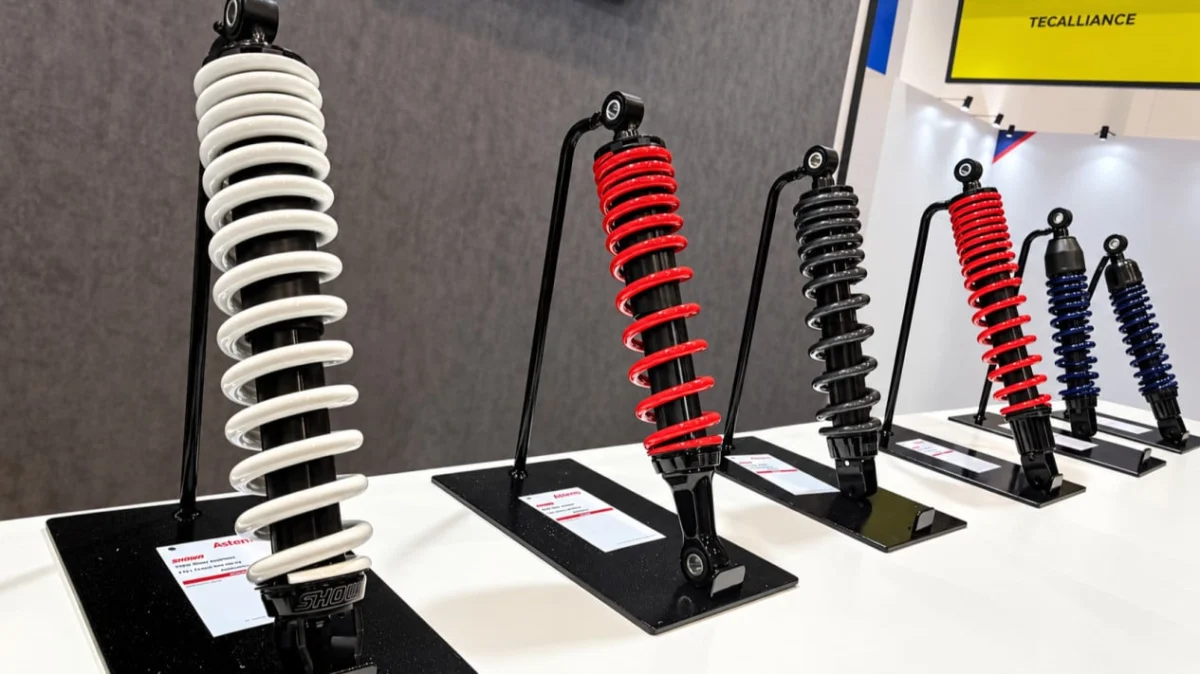
Tangerang, Indonesia — The automotive aftermarket landscape in Indonesia witnessed a significant technological shift on Friday, September 25, 2026, as Hitachi Astemo officially introduced the Showa Evo PD suspension system during the prestigious Automechanika exhibition held at the Nusantara Indonesia Convention Exhibition (NICE) in PIK 2, Tangerang. This launch marks a strategic expansion for the global automotive giant, aiming to bridge the gap between high-performance original equipment manufacturing (OEM) standards and the growing demand for customizable aftermarket components in the world’s third-largest motorcycle market.
Addressing the Dynamic Needs of Indonesian Riders
The core innovation behind the Showa Evo PD is its proprietary Position Dependence (PD) technology. In the context of motorcycle engineering, suspension performance is often a trade-off between comfort during light-load commuting and stability during heavy-load touring or aggressive riding. Traditional suspension setups are typically tuned to a fixed damping coefficient, which may struggle when the motorcycle’s dynamic weight shifts significantly—such as when a rider transitions from solo commuting to carrying a pillion passenger or traversing poorly maintained road surfaces.
The Showa Evo PD system fundamentally alters this paradigm by allowing the damping character to evolve in real-time based on the shock absorber’s stroke position. This dynamic adaptation ensures that the motorcycle maintains an optimal balance between compliance and rigidity, regardless of the terrain or load. By introducing this technology to the aftermarket, Hitachi Astemo is providing a sophisticated upgrade path for the millions of motorcycle owners who seek to enhance their daily riding experience without compromising safety.
Strategic Market Positioning and Industry Context
The selection of Indonesia as the launch pad for this technology is far from coincidental. With a national motorcycle fleet exceeding 120 million units and a growth rate that continues to outpace many global markets, Indonesia represents a critical strategic pillar for Hitachi Astemo. Rakesh Gandhi, Asia Region Aftermarket Business Unit Head at Astemo, emphasized the magnitude of this opportunity during the event.
"With over 120 million motorcycles and a rapidly expanding user base, Indonesia serves as one of the most vital barometers for the global two-wheeler industry," Gandhi stated. "We have observed a significant shift in the behavior of the Indonesian consumer. Younger riders, in particular, are increasingly sophisticated and are actively seeking performance-oriented modifications that reflect their lifestyle and specific riding requirements."
The broader Asia-Pacific region, which encompasses a staggering 600 million motorcycles, serves as the primary theater for Hitachi Astemo’s long-term growth strategy. By leveraging its deep-rooted legacy—which includes world-renowned marques such as Showa, Keihin, Nissin, and Tokico—the company is positioning itself to dominate the premium segment of the aftermarket. These brands have historically served as the gold standard for OEM components, and their transition into the aftermarket space suggests a commitment to maintaining high-quality engineering standards in the retail environment.
The Mechanics of Position Dependence (PD) Technology
The technical sophistication of the Showa Evo PD lies in its ability to modulate damping force across the entire range of suspension travel. Conventional dampers often suffer from "bottoming out" under heavy loads or feeling overly harsh during minor road vibrations. The Showa Evo PD addresses these limitations through a multi-stage damping process:
- Low-Stroke Efficiency: When the motorcycle is operated in solo conditions, the shock absorber functions within a shorter stroke range. In this state, the PD system maintains a lower damping force, allowing the suspension to absorb minor road imperfections, such as cracks and ripples, with increased sensitivity and comfort.
- High-Stroke Stability: As the suspension stroke deepens—triggered by the increased weight of a passenger or the impact of a significant road hazard—the internal valve architecture increases the damping force. This progressive resistance prevents the shock from compressing too rapidly, effectively minimizing body roll and preventing the "bottoming out" sensation that often compromises control.
Beyond the PD technology, the product features a specialized spring design, progressive bump stoppers, and low-friction piston rings. These components work in concert to reduce internal heat generation and ensure consistent performance over extended usage periods, a critical factor for the high-intensity riding conditions frequently encountered in Indonesian urban environments.
Industry Implications and Market Analysis
The introduction of the Showa Evo PD signals a broader trend in the automotive aftermarket: the "premiumization" of vehicle components. As Indonesian riders become more educated about vehicle dynamics, the demand for "plug-and-play" components that offer factory-level performance—but with added versatility—is expected to rise.
From a market analysis perspective, Hitachi Astemo’s move to bring its proprietary OEM technology to the retail sector effectively disrupts the dominance of smaller, independent manufacturers who have previously focused solely on aesthetic or basic performance modifications. By offering a product backed by the engineering pedigree of the Showa brand, the company is likely to capture a significant share of the mid-to-high-end segment of the market.
Furthermore, the timing of this launch at Automechanika—a global trade fair—underscores the international significance of the Indonesian automotive supply chain. The event serves as a meeting point for manufacturers, distributors, and retailers, providing a platform for Hitachi Astemo to consolidate its presence in the domestic market while signaling its intent to influence regional standards for aftermarket quality and performance.
A Legacy of Engineering Excellence
Hitachi Astemo’s identity is built on the convergence of four industry titans: Showa, Keihin, Nissin, and Tokico. Each of these brands brings a specific area of expertise to the table, and the Showa Evo PD is a testament to the synergies created by their integration. Showa, in particular, has long been associated with the pinnacle of motorcycle racing, including MotoGP and World Superbike championships. Bringing this race-proven knowledge into the consumer market for mass-market motorcycles represents a significant democratization of high-performance technology.
The company’s decision to maintain its presence in the OEM sector while expanding into the aftermarket is a dual-track strategy. While OEM contracts provide stable, high-volume demand, the aftermarket sector offers higher margins and a direct connection to the end-user. This connection is essential for brand loyalty and for gathering real-world data on how products perform in diverse, non-laboratory environments.
Looking Ahead: The Future of Motorcycle Suspension
As the automotive industry pivots toward electrification and more advanced rider-assist systems, the importance of foundational mechanical components like suspension cannot be overstated. Even as motorcycles evolve in their powertrain technology, the physical interface between the road and the chassis remains the primary factor in rider safety and fatigue management.
The Showa Evo PD is not merely a replacement part; it is a component designed to enhance the longevity and safety of the motorcycle’s chassis. By improving handling, the system reduces the risk of loss-of-control incidents on uneven surfaces. For the Indonesian rider, who often uses a motorcycle as their primary vehicle for both family transport and commercial activities, this improvement in suspension technology offers tangible, daily benefits.
In the coming months, market observers will be watching to see how the introduction of the Showa Evo PD affects competitor pricing and product development cycles. If the adoption rate of this technology mirrors the rapid growth of the motorcycle market in Southeast Asia, Hitachi Astemo could effectively set a new benchmark for what riders expect from their suspension systems.
The exhibition at NICE, PIK 2, has clearly defined the trajectory for the brand. By focusing on durability, versatility, and advanced engineering, Hitachi Astemo is not just selling a suspension component; it is providing a solution to the evolving challenges of modern motorcycling in Indonesia. As the market continues to mature, the focus on performance-oriented, high-quality aftermarket parts will likely remain a key driver of industry growth, with the Showa Evo PD leading the charge in the suspension category.