SANAA — In a significant escalation of the ongoing conflict in Yemen, the Houthi movement announced on Wednesday, September 16, 2026, that its air defense units successfully intercepted and downed a Royal Saudi Air Force (RSAF) F-15 fighter jet over the strategic province of Marib. The claim, which involves one of the most advanced tactical aircraft in the Saudi inventory, marks a high-stakes development in a war that has persisted for over a decade. While the Houthi-led military command provided visual evidence in the form of video footage, official confirmation from the Saudi-led coalition remains pending, leaving international observers to scrutinize the potential strategic ramifications of the incident.
Chronology of the Incident
According to a statement issued by Houthi military spokesperson Yahya Saree, the engagement occurred during a nighttime mission over Marib, a province that has long served as a focal point for territorial control between Houthi forces and the internationally recognized Yemeni government. Saree asserted that the aircraft was brought down using an indigenously manufactured surface-to-air missile system, signaling a continued advancement in the group’s asymmetric warfare capabilities.
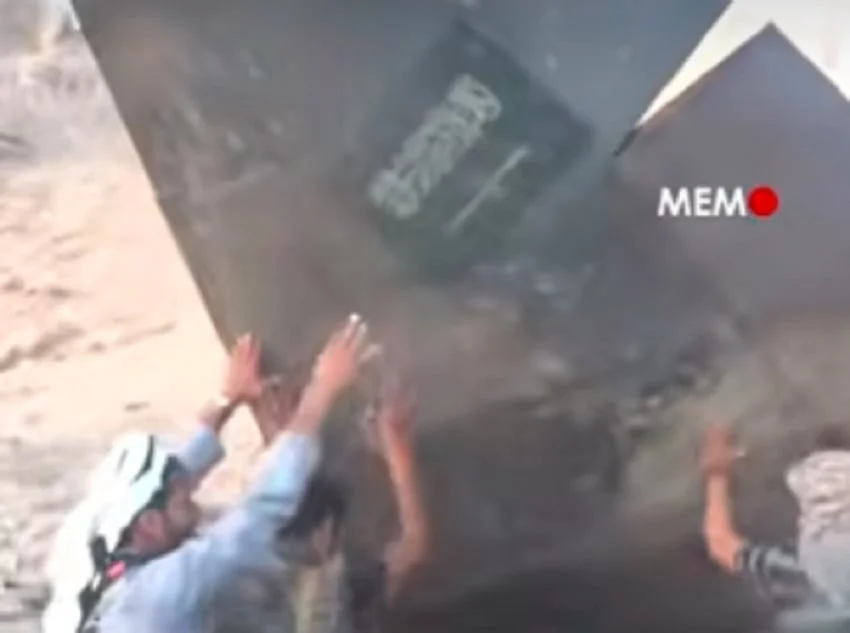
The released video, which has been widely circulated, depicts a bright flash in the night sky followed by footage of debris burning on the ground. Notably, the clips include close-up shots of charred metallic fragments, one of which appears to bear the distinctive markings of the Saudi flag. While these visuals provide compelling documentation, independent verification remains elusive. The fog of war, combined with the difficulty of accessing remote areas of Marib, makes it challenging for international analysts to authenticate the exact timing and location of the footage. Furthermore, Saree claimed that shortly after the initial strike, a search-and-rescue mission involving other Saudi F-15s and Typhoon fighter jets was initiated, leading to a direct aerial skirmish that ultimately forced the coalition aircraft to retreat.
The Significance of the F-15 in Saudi Air Power
The F-15 Eagle, particularly the F-15SA variant operated by the Royal Saudi Air Force, is a cornerstone of the coalition’s air superiority. As a twin-engine, all-weather tactical fighter, it is designed for both air-to-air combat and precision ground-attack missions. The loss of such an asset—if confirmed—would represent a substantial financial and tactical blow to the Saudi military. Each F-15SA is valued at tens of millions of dollars and represents a sophisticated integration of avionics, radar systems, and weapons capability.
Historically, the Houthi movement has demonstrated an evolving capability to threaten coalition air assets. Since the conflict began in 2015, the group has transitioned from using repurposed legacy surface-to-air missiles to deploying modern, modified systems. Analysts suggest that the persistent use of these systems suggests either external logistical support or significant strides in domestic engineering capabilities, both of which complicate the security environment for any aircraft operating in Yemeni airspace.
Contextualizing the Battle for Marib
Marib is arguably the most vital province in Yemen due to its vast oil and gas reserves. For the Houthi movement, capturing or neutralizing the government’s presence in Marib is essential for both economic leverage and symbolic victory. The province has been the site of fierce fighting for years, with both sides expending significant resources to maintain control.
The introduction of effective anti-aircraft measures in the skies over Marib shifts the tactical calculus for the Saudi-led coalition. If the Houthi forces can reliably threaten high-altitude jets, the coalition’s ability to conduct surveillance, reconnaissance, and strike operations will be severely restricted. This creates a defensive vacuum that could shift the momentum of ground engagements in favor of the Houthis, who rely on the absence of coalition air support to move their infantry and heavy equipment more freely.

International and Regional Implications
The silence from the Saudi-led coalition following the announcement is consistent with their historical approach to managing reports of downed aircraft. Typically, the coalition conducts internal investigations before issuing formal statements, aiming to verify the fate of the crew and the circumstances of the incident. However, this delay often creates an information vacuum that is quickly filled by the belligerent party’s propaganda, shaping the immediate narrative for regional audiences.
The geopolitical implications of this event are broad. Firstly, it highlights the failure of long-standing diplomatic efforts to secure a permanent ceasefire. Despite various back-channel negotiations involving regional powers, the conflict in Yemen continues to see periodic spikes in violence. Secondly, the successful targeting of an F-15, if proven, serves as a message to regional neighbors and international backers of the coalition that the Houthi air defense network is not to be underestimated.
Technical Analysis: The Evolution of Houthi Air Defenses
Military analysts have noted a clear pattern in the Houthi military’s evolution. In the early years of the conflict, their anti-aircraft operations were largely reactive. Over the last three years, however, there has been an increased focus on integrating sensor data and mobile missile launchers. The "homemade" nature of these weapons, as described by Saree, often refers to the modification of existing Soviet-era hardware or the integration of Iranian-derived technology into local platforms.
The use of infrared-homing or radar-guided missiles in high-altitude environments presents a constant threat to modern fighters. The fact that the Houthis reportedly engaged other coalition aircraft during a recovery mission suggests a level of coordination and confidence that was not evident in previous years. This suggests that the Houthi air defense units are operating with a degree of decentralized command, allowing them to react quickly to the presence of search-and-rescue assets.
The Human and Humanitarian Dimension
Beyond the tactical impact, the destruction of an F-15 over a populated or semi-populated area like Marib underscores the continued risks to civilians. The wreckage of such aircraft often lands in areas where displacement camps or rural communities exist, posing an immediate danger. Furthermore, the escalation of aerial warfare inevitably leads to a cycle of retaliation, which historically results in increased collateral damage and the further degradation of Yemen’s already fragile infrastructure.
As the international community monitors the situation, the focus will likely remain on whether the Saudi-led coalition will attempt a retaliatory strike or choose to recalibrate its air operations to avoid further losses. The incident serves as a grim reminder that the war in Yemen, while often relegated to the background of international news, remains a volatile and technologically evolving conflict capable of disrupting regional stability at any moment.
Looking Ahead
In the coming days, satellite imagery and open-source intelligence (OSINT) analysts will likely be the primary sources for confirming the event. Experts will be looking for thermal anomalies in satellite data, reports of missing pilots, or additional footage that might confirm the serial numbers of the debris. For now, the Houthi claim serves as a potent reminder of the group’s intent to deny the coalition the advantage of the skies.
The Saudi government and its coalition partners face a difficult decision. A formal acknowledgement of the loss could be seen as a sign of weakness, yet a continued denial in the face of mounting visual evidence risks undermining their credibility. As the situation develops, the outcome of this specific engagement may influence the direction of future diplomatic initiatives, potentially forcing a reassessment of the military strategies currently in play. The conflict, which has already claimed hundreds of thousands of lives and created one of the world’s worst humanitarian crises, remains as intractable as ever, with the skies over Marib now serving as the latest theater for a war that refuses to reach a resolution.