
The Indonesian government, through the Public Housing Savings Management Agency (BP Tapera), has officially transitioned its digital housing service ecosystem by replacing the SiKasep application with the more integrated Tapera Mobile platform. Effective as of April 13, 2026, this strategic migration marks a significant shift in how the state facilitates housing finance for the public, particularly for low-income communities (MBR). The decommissioning of SiKasep is part of a broader initiative to centralize and streamline the accessibility of the Housing Financing Liquidity Facility (FLPP) and Tapera savings funds into a single, user-friendly mobile interface.
The transition aims to eliminate the fragmentation of digital services that previously required users to navigate multiple platforms. By consolidating these functions into Tapera Mobile, BP Tapera intends to provide a more seamless end-to-end experience, from the initial registration of eligibility to the final stages of mortgage (KPR) realization. According to BP Tapera Commissioner Heru Pudyo Nugroho, the launch is a response to the evolving needs of the modern workforce and the government’s commitment to digital transformation within the property sector.
Strategic Objectives and the Push for Accessibility
The primary driver behind the launch of Tapera Mobile is the enhancement of accessibility for Low-Income Communities (MBR) across the Indonesian archipelago. The geographic diversity of Indonesia often poses a challenge for traditional administrative processes. By migrating to a mobile-first strategy, BP Tapera ensures that individuals in remote provinces have the same level of access to housing subsidies as those in urban centers.
Commissioner Heru Pudyo Nugroho emphasized that the presence of Tapera Mobile brings housing finance directly into the hands of the people. This "one-stop-shop" approach allows MBR individuals to manage their housing applications anytime and anywhere, provided they meet the specific income criteria based on regional zoning regulations. The platform serves two primary financing streams: the KPR FLPP, which is available year-round, and the Tapera Fund financing, which is subject to the availability of managed funds.
As of mid-April 2026, BP Tapera’s role as the Operator of Government Investment (OIP) has seen significant capital deployment. Records indicate that since 2022, the agency has facilitated the distribution of FLPP funds for 50,021 housing units, totaling approximately Rp 6.22 trillion. These units are spread across 33 provinces and 364 regencies/cities, illustrating the nationwide reach of the program. However, despite these figures, the current absorption rate stands at only 14.29% of the 350,000-unit target set for the fiscal year. This gap underscores the urgency of the Tapera Mobile launch as a tool to accelerate distribution and meet the national housing demand.
Comprehensive Guide to Activating Tapera Mobile
To ensure a smooth transition from the legacy SiKasep system, BP Tapera has outlined a rigorous yet accessible activation and application process. Prospective debtors are encouraged to follow these steps to secure their eligibility for subsidized housing:
1. Application and Initial Registration
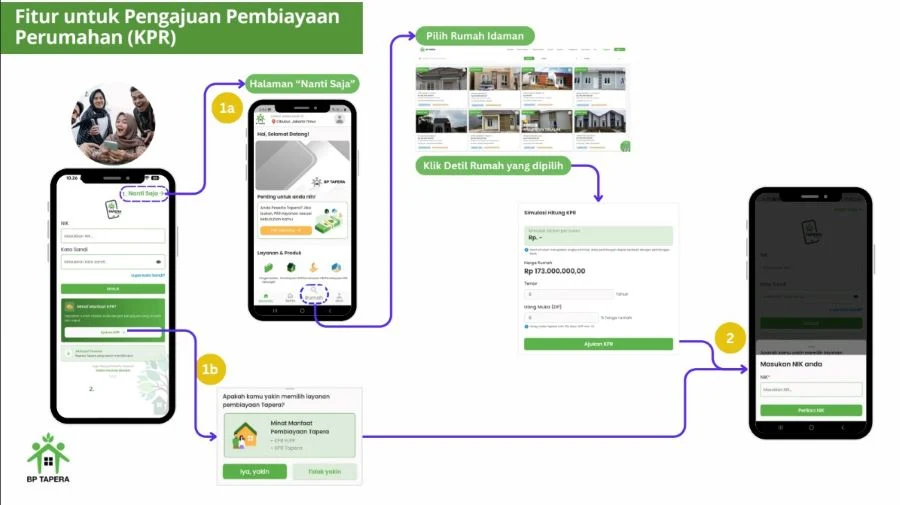
The process begins with downloading the Tapera Mobile application from the Google Play Store or Apple App Store. Upon installation, users must enter their National Identity Number (NIK) to initiate the online application. Users are required to read and accept the terms and conditions before proceeding to create a digital account.
2. Biometric Verification and Data Validation
In an effort to enhance security and prevent identity fraud, the application utilizes advanced biometric verification. Users must take a "selfie" holding their KTP (National ID card) within the designated frame. The app then uses Optical Character Recognition (OCR) technology to automatically populate personal identity fields. Users must validate this information and edit any discrepancies before saving. A final face-motion verification—following specific on-screen prompts—is required to confirm the user’s identity.
3. Account Security and OTP Verification
Following identity verification, users must provide a valid mobile phone number and create a secure password consisting of a combination of numbers, characters, and letters. A six-digit One-Time Password (OTP) is sent via SMS to verify the mobile number. Once the OTP is confirmed, the digital account registration is complete, and the user can proceed to the housing search module.
4. Property Selection and Mortgage Application
The platform includes a robust search engine with filters for location, price, and developer. Once a user identifies a suitable property, they can click the "Apply for KPR" button. The system then performs an automated "Subsidi Checking" to verify if the applicant has previously received government housing assistance. If the check is successful, the user selects a distribution bank and schedules an appointment.
5. Tracking and Realization
One of the key improvements in Tapera Mobile is the transparency of the application status. Applicants can track their progress through five distinct stages: application submission, follow-up, SP3K (Letter of Approval for Mortgage Principle), Habitability Verification (Layak Huni), and the final Signing of the Credit Agreement (Akad). This real-time tracking reduces uncertainty and allows applicants to coordinate more effectively with bank sales teams.
Contextual Background: The National Housing Backlog
The launch of Tapera Mobile does not occur in a vacuum; it is a critical component of Indonesia’s effort to address a housing backlog estimated at over 15 million units. The government’s "3 Million Houses Program" is a cornerstone of national social policy, aiming to provide decent living conditions while simultaneously stimulating the construction and real estate sectors, which are vital for economic growth.
However, the path to achieving these targets is fraught with challenges. Industry stakeholders, including the Indonesian Real Estate Association (REI) Banten branch, have recently highlighted obstacles such as land scarcity and conflicting government policies. For instance, the national focus on food self-sufficiency has led to the protection of "Lahan Baku Sawah" (LBS) or protected rice fields. While essential for food security, these regulations limit the available land for residential development, particularly for low-cost housing projects that require large tracts of land to remain economically viable for developers.
Furthermore, global economic volatility, including ongoing conflicts in the Middle East, has raised concerns regarding the stability of the property market. Fluctuations in energy prices and global supply chains can lead to increased costs for construction materials, potentially impacting the affordability of homes for the MBR segment. In this context, the efficiency provided by Tapera Mobile is intended to offset some of these systemic pressures by reducing administrative costs and accelerating the turnover of housing units.
Analysis of Implications and Future Outlook
The migration from SiKasep to Tapera Mobile is more than a technical update; it represents a fundamental change in the relationship between the state and its citizens regarding social welfare. By digitizing the entire lifecycle of a housing loan, the government is creating a data-driven ecosystem that can better predict demand and allocate resources.
For the banking sector, the integration of Tapera Mobile simplifies the lead generation process. Banks can now receive pre-verified applicants, reducing the time spent on manual background checks. For developers, the platform provides a direct window to a massive pool of qualified buyers, potentially shortening the sales cycle for subsidized housing projects.
However, the success of Tapera Mobile will depend on two critical factors: digital literacy among the target demographic and the stability of the underlying IT infrastructure. While smartphone penetration in Indonesia is high, navigating a multi-step financial application requires a certain level of digital proficiency. BP Tapera has acknowledged this by providing detailed tutorials on their official website and maintaining support channels.
From a policy perspective, the 14.29% absorption rate mentioned by Commissioner Heru suggests that while the digital tools are now in place, structural issues—such as the supply of houses that meet the "Habitability" (Layak Huni) standards—must still be addressed. The "Habitability" stage in the tracking process is a crucial safeguard, ensuring that government funds are only used for homes that meet strict safety and quality criteria.
In conclusion, the transition to Tapera Mobile is a decisive step toward modernizing Indonesia’s housing finance landscape. By replacing the aging SiKasep system, BP Tapera is positioning itself to better handle the complexities of the national housing backlog. As the agency strives to meet its 350,000-unit target, the success of this mobile platform will be a bellwether for the government’s broader digital governance ambitions. The move signals a future where essential social services are not just available, but are accessible through a single, transparent, and efficient digital gateway.