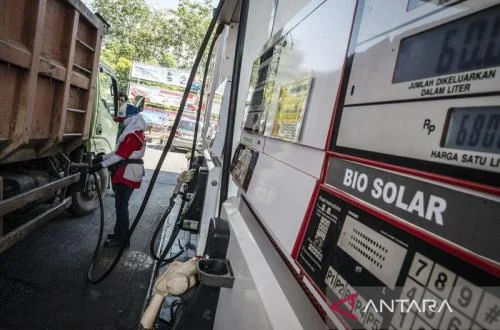
JAKARTA – The Indonesian Ministry of Energy and Mineral Resources (ESDM) has affirmed that the mandatory implementation of the 50 percent biodiesel blend program, known as B50, is generating substantial economic advantages for the nation. This policy is also heralded as a pivotal strategic initiative aimed at bolstering national energy resilience and self-sufficiency.
According to Dwi Anggia, Spokesperson for the Ministry of ESDM, this transformative policy marks a new era where national energy sovereignty is increasingly driven by domestic commodities, reducing the longstanding reliance on imported fossil fuels. With the B50 blend, half of every liter of diesel consumed across Indonesia will originate from crops cultivated and harvested by local Indonesian farmers, primarily palm oil. This fundamental shift underscores a conscious effort to leverage Indonesia’s rich agricultural resources for strategic national interests.
"The B50 program delivers tangible economic benefits to the country. It is projected to save Indonesia approximately Rp170 trillion (around US$10.8 billion) in foreign exchange by the end of 2026," Anggia stated in a press release on Friday. This substantial saving is anticipated to provide critical fiscal space, enabling the government to reallocate funds towards vital national development projects and insulate the domestic economy from the volatile swings of global oil markets.
A Decade of Biodiesel Mandates: From B20 to B50
Indonesia’s journey towards energy independence through biodiesel is not a new phenomenon; it represents a carefully orchestrated, decade-long strategic pivot. The B50 program is the latest iteration in a series of progressively higher biodiesel mandates, each designed to incrementally reduce the nation’s reliance on imported petroleum diesel while simultaneously boosting the domestic palm oil industry.
The first significant step in this direction was the B20 program, launched in 2016, which mandated a 20 percent blend of fatty acid methyl ester (FAME) derived from palm oil with petroleum diesel. This initial phase was primarily aimed at stabilizing crude palm oil (CPO) prices, which had faced significant volatility in international markets, thereby protecting the livelihoods of millions of smallholder palm oil farmers. The success of B20, both in terms of CPO price support and initial emission reductions, paved the way for more ambitious targets.
In 2020, the government escalated the mandate to B30, requiring a 30 percent blend. This transition involved extensive technical trials to ensure engine compatibility and fuel quality across a wide range of vehicles and industrial machinery. The B30 program further solidified Indonesia’s commitment to biodiesel, demonstrating the technical feasibility and economic viability of higher blends. It also significantly increased domestic absorption of palm oil, contributing to the nation’s balance of trade by reducing diesel imports.
The momentum continued with the introduction of B35 in February 2023. This 35 percent blend further intensified the benefits, pushing the envelope on foreign exchange savings and greenhouse gas emission reductions. The progression from B20 to B30, then to B35, and now the strategic planning for B50, illustrates a deliberate and phased approach. Each step has been underpinned by rigorous research, development, and extensive collaboration between government agencies, the palm oil industry, and automotive manufacturers to ensure a smooth and effective transition. This phased implementation has allowed stakeholders to adapt to the technical and logistical challenges associated with higher blends, building confidence in the program’s long-term sustainability and effectiveness.
Macroeconomic Impact: Fueling Growth and Job Creation
The projected Rp170 trillion (approximately US$10.8 billion) in foreign exchange savings by 2026 is a cornerstone of the B50 program’s economic benefits. This massive reduction in import bills is crucial for several reasons. Firstly, it strengthens Indonesia’s current account balance, a key indicator of economic health. A healthier current account reduces vulnerability to global financial shocks and currency fluctuations, providing greater stability for investors and businesses. Secondly, the saved foreign currency can be strategically redirected towards other critical imports, such as capital goods for infrastructure development or advanced technology, thereby fostering broader economic growth. The program acts as a buffer against the inherent volatility of global oil prices, which can significantly impact national budgets and inflation rates in a net oil-importing country like Indonesia. By increasing the domestic component of its fuel supply, Indonesia gains greater control over its energy costs and enhances its economic sovereignty.
Beyond the direct financial savings, the B50 program is also a powerful engine for job creation, with an estimated 2.1 million new jobs projected across Indonesia. This figure highlights the profound "domino effect" of agricultural-based industrial downstreaming on community welfare. These jobs are not confined to a single sector but span the entire value chain:
- Agriculture: A significant portion of new jobs will be in the palm oil sector itself, from cultivation and harvesting to plantation management. This directly benefits smallholder farmers, who constitute a large segment of Indonesia’s agricultural workforce, providing them with stable income and improved livelihoods.
- Processing and Manufacturing: Jobs will be created in CPO mills, biodiesel refineries, and related chemical processing plants. These are often higher-skilled positions, contributing to technological advancement and industrial capacity building.
- Logistics and Distribution: The increased production and distribution of biodiesel necessitate a robust logistics network, creating jobs in transportation, storage, and supply chain management.
- Support Services: A myriad of indirect jobs will emerge in sectors supporting the core industry, including equipment manufacturing, maintenance, research and development, and financial services.
This extensive job creation not only reduces unemployment but also contributes to poverty alleviation and income inequality reduction, particularly in rural areas where palm oil cultivation is prevalent. The program thus serves as a powerful tool for inclusive economic development, integrating vast segments of the population into the national economic fabric.
The Strategic Role of Palm Oil: Sustainability and Global Leadership
Indonesia is the world’s largest producer of palm oil, a versatile commodity that forms the backbone of its biodiesel program. The strategic decision to utilize palm oil as the primary feedstock for biodiesel is rooted in its high yield per hectare compared to other oil crops, making it an economically efficient and scalable solution for national energy needs.
However, the expansion of palm oil plantations has historically faced scrutiny regarding environmental impacts, particularly deforestation and biodiversity loss. Recognizing these concerns, the Indonesian government has made significant strides in promoting sustainable palm oil production. The Indonesian Sustainable Palm Oil (ISPO) certification system is a mandatory national standard designed to ensure that palm oil is produced in an environmentally sound and socially responsible manner. This includes strict regulations on land use, protection of high conservation value areas, and fair labor practices. Furthermore, many Indonesian palm oil producers also adhere to international standards such as the Roundtable on Sustainable Palm Oil (RSPO), demonstrating a commitment to global best practices.
The B50 program, by increasing domestic demand for palm oil, strengthens the economic incentive for sustainable practices. It provides a stable market for certified sustainable palm oil, encouraging farmers and companies to adopt more responsible cultivation methods. This domestic demand also reduces Indonesia’s vulnerability to fluctuations in international CPO prices and trade barriers imposed by other countries, which sometimes cite environmental concerns. By internalizing a significant portion of its palm oil production into its energy matrix, Indonesia asserts greater control over its key agricultural commodity, enhancing both energy and economic security.
Contribution to Climate Targets: A Greener Energy Future
Beyond its profound economic benefits, the B50 mandate is a crucial pillar in Indonesia’s commitment to achieving its climate change mitigation targets. The Ministry of ESDM projects that the transition to this higher biodiesel blend will reduce greenhouse gas (GHG) emissions by a substantial 44.46 million tons of CO2 equivalent by the end of 2026. This significant reduction underscores biodiesel’s role as a cleaner alternative to fossil diesel.
The use of biodiesel contributes to emission reductions in several ways:
- Lower Tailpipe Emissions: Biodiesel generally produces fewer particulate matter, unburnt hydrocarbons, and carbon monoxide emissions compared to conventional diesel.
- Carbon Neutrality (in theory): While the combustion of biodiesel releases CO2, this carbon was absorbed from the atmosphere by the palm trees during their growth cycle, theoretically making it carbon neutral over its lifecycle, provided land use change emissions are minimized.
- Displacement of Fossil Fuels: By replacing a portion of fossil diesel, biodiesel directly reduces the amount of geologically stored carbon released into the atmosphere.
This projected 44.46 million tons CO2 reduction is a significant step towards Indonesia’s Nationally Determined Contribution (NDC) under the Paris Agreement. Indonesia has committed to reducing its greenhouse gas emissions by 31.89 percent unconditionally and 43.2 percent conditionally (with international support) by 2030, relative to a business-as-usual scenario. The B50 program, along with other renewable energy initiatives, plays a vital role in achieving these ambitious targets, demonstrating Indonesia’s proactive stance in addressing climate change while pursuing sustainable development.
Ensuring Optimal Implementation: Technicalities and Coordination
To guarantee the optimal implementation and success of the B50 program, the Ministry of ESDM maintains continuous monitoring of technical and operational execution across the entire supply chain. This involves rigorous quality control measures for the biodiesel blend, ensuring it meets national standards and is compatible with existing diesel engines. The technical aspects are crucial, as higher biodiesel blends can sometimes present challenges related to fuel stability, cold flow properties, and material compatibility in older engine systems.
The government’s strategy includes intensive coordination with various stakeholders:
- Automotive Manufacturers: Collaboration with vehicle manufacturers is essential to ensure that engines are compatible with B50 or can be easily adapted. This involves sharing technical specifications, conducting joint trials, and providing guidance on necessary adjustments for existing fleets.
- Fuel Distributors and Retailers: Ensuring that B50 is consistently available across all fuel stations and distribution points requires seamless coordination with Pertamina (the state-owned oil and gas company) and other fuel retailers.
- Palm Oil Producers and Biodiesel Refineries: Close collaboration with these industries is vital to guarantee a steady and sufficient supply of FAME for blending, maintaining quality, and ensuring efficient logistics from plantation to refinery to distribution.
- Research Institutions: Ongoing research and development are critical to address any unforeseen technical challenges, improve biodiesel quality, and explore even higher blends, including the long-term vision of B100 (pure biodiesel).
Dwi Anggia underscored that the transition to B50 is far more than a mere attempt at energy diversification. This carefully planned and rigorously tested roadmap represents a strategic instrument of the state, meticulously designed with the overarching goals of maximizing public welfare and fostering economic prosperity. It is an integrated approach that links agricultural development, industrial growth, environmental protection, and energy security under a unified national agenda.
Broader Implications and Future Outlook
The B50 program carries significant broader implications for Indonesia’s energy future and global standing. By reducing reliance on imported fossil fuels, Indonesia enhances its energy security, making it less susceptible to geopolitical tensions in oil-producing regions or disruptions in global supply chains. This strategic autonomy is invaluable for a developing nation with growing energy demands.
Economically, the program supports the valorization of a key domestic commodity, palm oil, transforming it from primarily an export raw material into a strategic energy source. This adds significant value within the country, creating a more robust and resilient domestic economy. It also positions Indonesia as a leader in the bioenergy sector, potentially influencing regional and global trends in renewable fuel adoption.
Looking ahead, the B50 program is a stepping stone towards even more ambitious goals. Research into B100 (100% palm oil biodiesel) is already underway, with trials being conducted on various types of vehicles and industrial applications. The ultimate vision is to fully harness Indonesia’s vast palm oil resources to achieve complete energy independence for its diesel consumption, potentially even becoming a net exporter of advanced biofuels. This long-term vision aligns with Indonesia’s broader energy transition framework, which aims to increase the share of renewable energy in the national energy mix, diversify energy sources, and achieve net-zero emissions targets in the coming decades. The B50 program, therefore, is not just a policy; it is a declaration of intent, signaling Indonesia’s unwavering commitment to a sustainable, independent, and prosperous future.