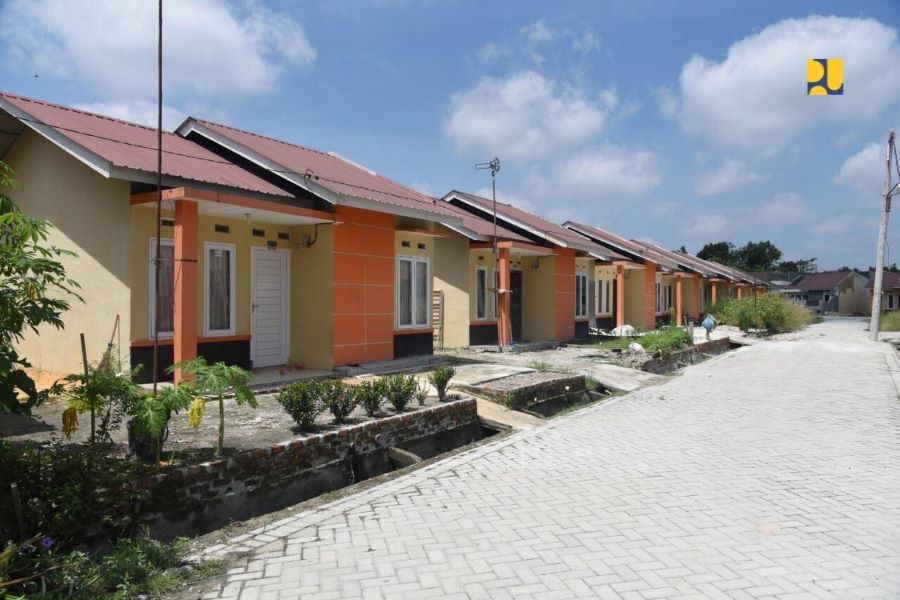
The Indonesian Ministry of Housing and Settlements (PKP) has officially reported that the distribution of subsidized housing through the Housing Financing Liquidity Facility (FLPP) has surpassed the 100,000-unit mark as of mid-July 2026. Specifically, 102,900 units have been successfully channeled to eligible citizens, marking a significant milestone in the government’s ambitious social welfare agenda. Despite the challenges inherent in large-scale infrastructure projects, Minister of Housing and Settlements Maruarar Sirait expressed firm confidence that the year-end target of 350,000 units remains well within reach. This optimism is rooted in the accelerated pace of distribution observed during the first year of President Prabowo Subianto’s administration, which has prioritized the "Three Million Houses Program" as a cornerstone of its domestic policy.
Speaking at a formal press conference following the inauguration of the new headquarters for the Housing Savings Management Agency (BP Tapera) in Jakarta, Minister Sirait—popularly known as Minister Ara—emphasized that while the FLPP is an established program, its current execution has seen unprecedented momentum. The Minister, who also serves as the Chairman of the BP Tapera Committee, highlighted that the synergy between government agencies, private developers, and financial institutions has reached a level of coordination necessary to bridge the national housing backlog. The 102,900 units realized by July represent nearly 30% of the annual goal, with the government expecting a traditional surge in housing completions and mortgage approvals during the third and fourth quarters of the fiscal year.
Historical Trajectory and Strategic Growth
The current target of 350,000 units for 2026 represents a substantial escalation in the government’s commitment to affordable housing compared to previous years. To understand the scale of this ambition, one must look at the historical data of FLPP distribution. In 2023, the government successfully facilitated the distribution of 228,000 subsidized units. By 2025, under the transition to the current administration, that figure rose to 278,000 units. The jump to a 350,000-unit target in 2026 signals a strategic shift toward aggressive expansion in the housing sector, aimed not only at providing shelter but also at stimulating the broader economy through construction and real estate activities.

Minister Ara noted that this upward trend is a testament to the "Prabowo Effect," where streamlined regulations and a focus on "working breakthroughs" have revitalized the sector. The government’s strategy involves a "Three Million Houses" annual roadmap, which is bifurcated into different categories: two million houses for rural and coastal areas to be built through community-based initiatives, and one million urban apartments or landed houses to be developed in collaboration with commercial developers. The FLPP distribution specifically targets the Low-Income Community (MBR) segment, ensuring that those with limited financial means can access credit with fixed, low-interest rates—typically around 5%—for tenures of up to 20 years.
BP Tapera and the Drive for Institutional Excellence
Central to the success of this housing drive is BP Tapera. The recent relocation to its new central office is viewed as more than a mere change of address; it is a strategic move to centralize operations and enhance the quality of service for participants, developers, and lending banks. During the inauguration, Minister Ara issued a stern challenge to the leadership and staff of BP Tapera, demanding high levels of integrity and a commitment to transparency. He acknowledged that the agency faces significant public expectations and must navigate complex challenges, including the management of public funds and the verification of eligible recipients.

"BP Tapera is at a crossroads of high public hope and developer expectations," Minister Ara stated. "The agency is demanded to be highly integrated, adhering strictly to targets and regulations while simultaneously being innovative in its breakthroughs, particularly in human resource management."
The push for digital transformation within BP Tapera is a key component of this institutional strengthening. By migrating to more robust digital platforms, the agency aims to accelerate the consultation process for workers and employers, streamline the verification of subsidized housing developers, and provide real-time tracking of fund distribution. This transparency is intended to prevent the historical issues of "ghost units" or the misallocation of subsidies to individuals who do not qualify as MBR.

Regional Performance: West Java as the National Engine
While the national target is broad, the realization of these goals is heavily dependent on regional performance. Data from BP Tapera indicates that West Java continues to be the primary engine of subsidized housing distribution in Indonesia. By mid-2026, West Java alone accounted for 62,291 units, representing approximately 24% of the national distribution. The value of financing in this province alone has reached approximately Rp12.55 trillion.
The concentration of distribution in West Java is attributed to its high population density, the proliferation of industrial zones, and the massive influx of workers seeking affordable living near economic hubs. However, the Ministry of Housing and Settlements is also looking to diversify this growth. Under the new directive, there is an increased focus on provinces outside of Java to ensure that the "Three Million Houses Program" achieves equitable geographic distribution, reducing the housing backlog in Sumatra, Sulawesi, and Kalimantan.

The Multiplier Effect on the National Economy
The drive to reach 350,000 subsidized units is not merely a social service; it is an economic catalyst. Economists note that the housing sector has a massive multiplier effect, impacting over 170 sub-sectors, including cement, steel, paint, furniture, and logistics. By hitting the 350,000-unit target, the government effectively injects trillions of rupiah into the domestic market, creating hundreds of thousands of jobs in construction and related services.
Furthermore, the "Three Million Houses" initiative is designed to address the "backlog" of housing, which currently stands at over 12 million units. By providing stable housing, the government aims to improve public health outcomes, increase labor productivity, and provide a sense of security for the younger generation and young families who are currently priced out of the commercial real estate market.

Challenges and Strategic Mitigation
Despite the optimistic outlook, several hurdles remain. The rising cost of building materials and the scarcity of land in urban peripheries present constant pressure on developers of subsidized housing. Because the selling price of FLPP houses is capped by the government to remain affordable for MBR, developers often operate on thin margins. To mitigate this, Minister Ara has hinted at potential policy adjustments, including tax incentives for developers and the utilization of "idle land" owned by state-owned enterprises (BUMN) or the government for housing projects.
Heru Pudyo Nugroho, the Commissioner of BP Tapera, reinforced the agency’s commitment to overcoming these hurdles. He emphasized that the move to the new headquarters serves as a momentum builder for the agency to refine its fund management strategies. "The transition to this new facility is a marker of our commitment to managing sustainable financing for the MBR. We are focused on ensuring that the funds entrusted to us are utilized efficiently to meet the housing needs of the people," Nugroho said.

Looking Toward the Year-End Goal
As the second half of 2026 begins, the Ministry of PKP and BP Tapera are preparing for a period of intensive activity. The government plans to strengthen its collaboration with the Association of Indonesian Real Estate Developers (REI) and other industry bodies to identify and resolve bottlenecks in the permitting process. Additionally, the role of channeling banks, such as Bank BTN and other regional development banks (BPD), will be critical in ensuring that mortgage applications are processed with speed and accuracy.
The strategy for the remaining months of the year involves a "bottlenecking clearance" approach, where the Ministry will directly intervene in regions where housing projects are stalled due to local bureaucratic delays. By combining high-level political will from the Presidency with technical improvements at the agency level, the government believes the gap between the current 102,900 units and the 350,000-unit target can be closed.

In conclusion, the mid-year report of 2026 serves as both a milestone and a call to action. While the figure of 100,000 units demonstrates progress, the road to 350,000 units requires sustained effort. The optimism shared by Minister Maruarar Sirait is backed by a restructured institutional framework and a clear mandate from the current administration. If successful, 2026 will be remembered as the year Indonesia significantly scaled its housing solutions, providing a blueprint for sustainable urban and rural development for years to come. The eyes of the public and the property industry remain fixed on the year-end results, which will serve as a definitive measure of the "Three Million Houses Program’s" viability.