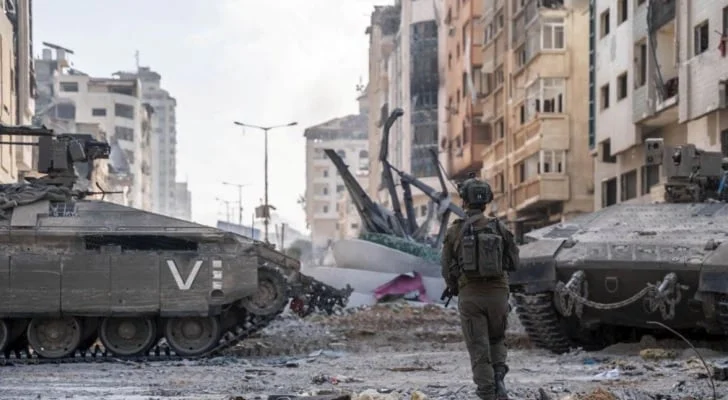
The political landscape in Israel is undergoing a profound transformation, characterized by an hardening consensus against the two-state solution and an aggressive acceleration of settlement expansion in the occupied West Bank. Analysts, including political commentator Zeidon Alkinani, suggest that the current administration under Prime Minister Benjamin Netanyahu is leveraging a narrative of existential threat to consolidate domestic support, effectively sidelining international calls for a Palestinian state. This shift occurs against a backdrop of escalating regional tensions, profound diplomatic isolation, and a domestic political discourse that increasingly views the status quo as the only viable path for national security.
The Political Architecture of the 2026 Election Cycle
As Israel looks toward the 2026 general elections, the internal debate has narrowed significantly. According to political observers, there is a burgeoning consensus among the major political parties that transcends traditional left-right divides regarding the Palestinian question. This consensus is defined by a categorical rejection of Palestinian self-determination. For many Israeli political factions, the post-October 7 security environment has rendered the concept of a sovereign Palestinian state not only politically unpalatable but, in their view, a direct threat to the existence of the Jewish state.
Netanyahu’s government has been instrumental in framing this stance. By consistently promoting the expansion of settlements—which the Israeli administration classifies as legal under their own domestic jurisprudence, despite overwhelming international consensus deeming them illegal under international law—the government has solidified a base that prioritizes territorial control over diplomatic concessions. This narrative is presented to the Israeli public as a necessary defense against an existential threat, transforming the electoral discourse into a referendum on security and national identity.
Chronology of Conflict: From October 7 to the Present
The current crisis is deeply rooted in the events of October 7, 2023, which served as a catalyst for a massive realignment in Israeli policy.
- October 7, 2023: Hamas-led militants launched an unprecedented attack on southern Israel, resulting in significant casualties and the taking of hostages. This event shattered the Israeli public’s sense of security and triggered a state of war.
- Late 2023 – Early 2024: The Israeli Defense Forces (IDF) initiated a sustained military campaign in Gaza. During this period, the rhetoric within the Knesset shifted toward a more hawkish stance, with the government emphasizing that the military objective is the total dismantling of Hamas, regardless of international diplomatic pressure.
- Mid-2024: The expansion of settlements in the West Bank reached record levels, according to reports from NGOs such as Peace Now and the UN Office for the Coordination of Humanitarian Affairs (OCHA).
- Late 2024: International legal pressure mounted, with the International Court of Justice (ICJ) and the International Criminal Court (ICC) beginning to scrutinize Israeli actions. Despite these developments, the Israeli government remained defiant, framing the legal interventions as politically motivated.
- 2025 (Projected): Ongoing preparation for the 2026 elections, with political parties competing to demonstrate the strongest stance against Palestinian statehood and international interference.
Data on Settlement Expansion and Demographic Shifts
The expansion of settlements remains a central pillar of the current government’s policy. Data provided by the Israeli Central Bureau of Statistics and independent monitoring groups indicate a consistent upward trend in the population of settlers in the West Bank.
As of the most recent reporting, there are an estimated 700,000 to 750,000 settlers living in the West Bank and East Jerusalem. This represents a significant increase over the past decade. The government’s budgetary allocations for infrastructure development in these areas have also seen a sharp increase, signaling a long-term commitment to territorial integration. Analysts note that this infrastructure—roads, security outposts, and utilities—is designed to make the prospect of a contiguous Palestinian state physically impossible.
International Reaction and the Impunity Debate
The disparity between international legal standards and the realities on the ground has created a significant diplomatic rift. The United Nations has repeatedly issued resolutions condemning settlement activity as a violation of the Fourth Geneva Convention. Similarly, European Union member states have expressed concern that the trajectory of the current Israeli government is effectively closing the window for a negotiated peace.
However, Zeidon Alkinani and other analysts point to a perceived "global impunity" enjoyed by the Netanyahu administration. Despite the threat of arrest warrants from the ICC and formal condemnations from the UN General Assembly, the Israeli government has largely managed to maintain its strategic alliances, most notably with the United States. This diplomatic shield has allowed the government to continue its policy of what critics term "political intimidation," targeting international legal mechanisms and those who advocate for them.
The government’s response to international criticism is consistent: it labels the legal challenges as a form of "lawfare" aimed at undermining Israel’s right to defend itself. By characterizing the international legal community as biased, the government effectively insulates itself from domestic backlash regarding its isolation on the global stage.
Implications for Regional Stability and Internal Cohesion
The long-term implications of this political trajectory are profound. Domestically, the hardening of the political center poses a risk to the democratic fabric of Israel. As the discourse moves further to the right, dissenting voices—whether from the media, academia, or civil society—face increased pressure.
Regionally, the rejection of a Palestinian state removes the primary incentive for moderate Arab states to pursue normalization or long-term cooperation. The "Abraham Accords," once heralded as a new era of regional integration, are now under immense strain. The perception that Israel is uninterested in a political solution for the Palestinians has forced even the most pragmatic regional actors to distance themselves from public alignment with Tel Aviv.
Furthermore, the "existential crisis" narrative creates a feedback loop. By convincing the electorate that the state is under constant, existential threat, the government justifies the use of extraordinary measures, the suspension of normal diplomatic channels, and the prioritization of security over civil liberties. This environment makes it increasingly difficult for any opposition party to present an alternative vision for the future of Israel that includes a path toward reconciliation or a two-state solution.
Expert Analysis: The Path Forward
Political analysts suggest that the 2026 election will be a defining moment. If the current trend continues, Israel may face a permanent shift in its international standing, potentially leading to a status as a pariah state in some quarters of the globe.
"The issue is not just the settlement policy," notes an expert in Middle Eastern geopolitics. "The issue is the abandonment of the international legal framework that has governed state relations since the post-WWII era. By choosing to ignore the consensus of the international community, Israel is essentially gambling its long-term security for short-term territorial gains."
As the election approaches, the international community will be watching closely to see if there is any movement within the Israeli electorate to challenge the prevailing consensus. However, given the deep-seated trauma of the October 7 attacks and the subsequent regional conflict, the appetite for a paradigm shift remains low. The government, for its part, remains confident that its current course is the only one that ensures the survival of the state in a hostile neighborhood.
Conclusion
Israel stands at a precarious juncture. The convergence of a hardline government, a fractured international reputation, and a domestic political environment defined by fear and existential anxiety has created a volatile mix. While the current administration enjoys a level of internal support built on the promise of security and territorial integrity, the long-term consequences of this policy are yet to be fully realized. As the 2026 election cycle begins in earnest, the world will wait to see if the Israeli public chooses to sustain the current trajectory or if a new vision for the state’s future will emerge from the current period of profound uncertainty. The decisions made in the coming months will likely define the character of the nation for the next generation.