The Ministry of Social Affairs has identified a critical structural issue within Indonesia’s social welfare system, uncovering a growing phenomenon of dependency and demotivasi—or a lack of motivation to achieve self-sufficiency—among long-term recipients of government assistance. Based on recent internal evaluations conducted by the ministry, millions of citizens have remained on social assistance rolls for extended periods, inadvertently creating barriers for other vulnerable populations desperately in need of state intervention. This revelation has catalyzed renewed efforts by the government to overhaul the distribution mechanism, pivot toward more accurate data validation, and implement comprehensive systemic reforms.
Main Facts and Scope of the Demotivasi Phenomenon
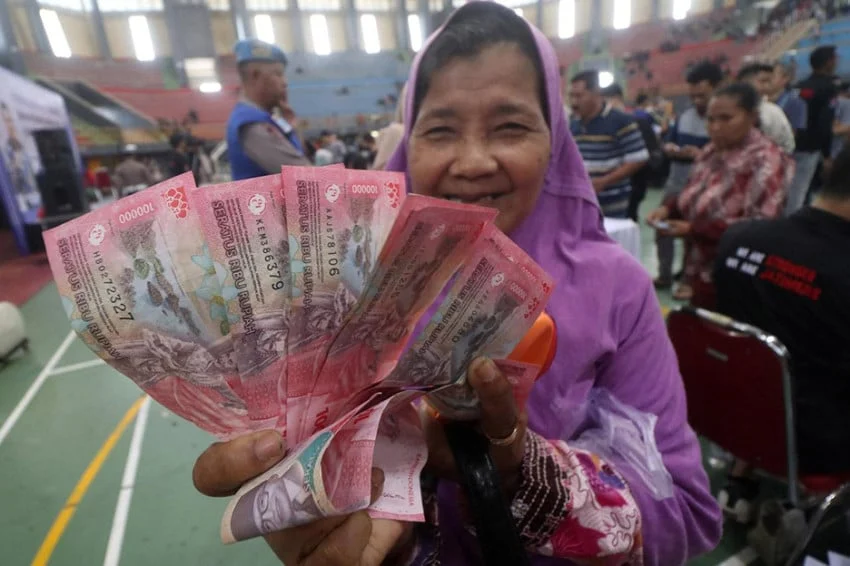
The core of the issue centers on the extended duration for which social assistance, commonly known as bansos (bantuan sosial), has been disbursed to specific households without rigorous upward-mobility filtering. According to Ministry of Social Affairs data, approximately 4.5 million Indonesian citizens have continuously received social assistance for more than five years. Even more striking is that a subset of 36,460 recipients has maintained active status on the beneficiary rolls for over 18 years.
This prolonged dependency has introduced what policy experts term "demotivasi"—a psychological and economic state where beneficiaries rely entirely on state subsidies rather than seeking independent livelihoods or upgrading their economic capacities. Furthermore, because national budgets and database quotas are finite, the persistence of long-term recipients creates a severe displacement effect. Vulnerable groups who genuinely require immediate aid, such as neglected elderly citizens, individuals with severe disabilities, and marginalized homeless populations, are frequently excluded from receiving assistance simply because the system’s database capacity is saturated by legacy recipients.
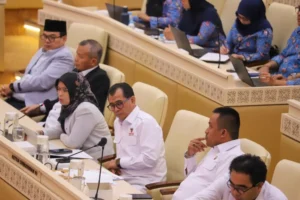
Andi Kurniawan, a Senior Expert at the Ministry of Social Affairs, highlighted this systemic flaw during the Discussion on Methodology for Desil Determination and Poverty Measurement in Indonesia. He emphasized that the current architecture of social assistance distribution inherently produces high exclusion errors. Consequently, individuals who have successfully elevated their economic status often remain registered as impoverished, while genuinely destitute citizens fall through the cracks of the bureaucratic framework.
Chronology and Background Context of Social Assistance Reform
To understand how this situation developed, it is necessary to examine the historical trajectory of Indonesia’s social safety net. Over the past two decades, particularly following the 1998 Asian Financial Crisis and subsequent economic shocks, the Indonesian government rapidly expanded various targeted cash and non-cash transfer programs. These initiatives included the Family Hope Program (Program Keluarga Harapan – PKH), non-cash food assistance (Bantuan Pangan Non-Tunai – BPNT), and various regional subsidy schemes designed to protect the poorest deciles from poverty spikes.
While these programs succeeded in preventing mass destitution during systemic crises, the administrative mechanisms for tracking individual upward mobility remained underdeveloped. For years, local data collection relied heavily on localized reporting (musyawarah desa or kelurahan) which lacked dynamic real-time updates. Consequently, once a household entered the database, it frequently remained there indefinitely unless an explicit local report flagged a major life change.
The realization that legacy recipients were locking out new vulnerable populations prompted a series of diagnostic evaluations by the Ministry of Social Affairs throughout the early 2020s. By late 2024 and moving into 2026, empirical data analysis revealed the full extent of the issue: millions of households had institutionalized state aid as a permanent baseline income. Recognizing that incremental updates were insufficient, the executive branch initiated a decisive legal and operational pivot through Presidential Instruction (Inpres) Number 4 of 2025, mandating the establishment of a unified data repository known as the National Socio-Economic Single Data (Data Tunggal Sosial Ekonomi Nasional – DTSEN).
Implementation of the National Socio-Economic Single Data (DTSEN)
The introduction of the National Socio-Economic Single Data (DTSEN) represents the cornerstone of the government’s strategy to rectify historical misallocations in social spending. Governed by Inpres No. 4/2025, DTSEN aims to integrate fragmented databases managed by various ministries and state agencies—such as the Ministry of Social Affairs, Statistics Indonesia (BPS), the Ministry of Home Affairs, and the Ministry of Finance—into a single, interoperable digital ecosystem.
Under the DTSEN framework, beneficiary verification is no longer static. The system utilizes cross-sectoral registry data, including national identity numbers (NIK), electronic tax records, property ownership registries, and utility consumption metrics. This multidimensional approach allows the government to dynamically assess whether a household previously categorized in the lowest income deciles has experienced upward economic mobility.
By cross-referencing welfare lists with financial inclusion initiatives—such as the recent policy mandating automatic bank accounts for citizens reaching 17 years of age—the government can trace financial behaviors, formal employment statuses, and transactional histories with greater precision. This technological integration is designed to filter out individuals who no longer meet the statutory poverty thresholds, thereby freeing up fiscal space to absorb new applicants from marginalized demographics.
Official Responses, Methodological Debates, and Expert Analysis
The disclosure of widespread demotivasi has sparked extensive debate among economists, social policy researchers, and government stakeholders regarding the future design of Indonesia’s welfare architecture. Policymakers face the dual challenge of fiscal sustainability and social stability. Abruptly terminating long-term assistance without adequate transition mechanisms risks plunging vulnerable households into sudden financial distress.
During the methodology discussion on desil determination, experts underscored the necessity of moving beyond simple income-based metrics toward multidimensional poverty measurements. Measuring deprivation solely by cash flow often fails to capture hidden vulnerabilities, such as access to health care, educational attainment, and geographic isolation. Therefore, experts argue that graduation programs—initiatives that combine temporary financial support with mandatory skills training, micro-entrepreneurship mentoring, and graduation exit strategies—must accompany the DTSEN rollout.
Andi Kurniawan reiterated that the Ministry of Social Affairs is committed to redesigning the inclusion and exclusion criteria to ensure optimal resource allocation. "By design, the exclusion value of the current system is indeed very high, which means structural reforms are not merely optional; they are imperative for a just distribution of state resources," Kurniawan noted. This sentiment reflects an institutional consensus that social assistance must function as a temporary bridge toward economic independence rather than a permanent entitlement.
Broader Socio-Economic Implications and Future Outlook
The implications of restructuring Indonesia’s social assistance framework extend far beyond administrative efficiency, touching upon macroeconomic stability, fiscal health, and social equity.
From a fiscal perspective, eliminating ghost beneficiaries and long-term ineligible recipients reduces deadweight loss in the national budget. The billions of rupiah previously misallocated to households that have achieved self-sufficiency can be reallocated toward high-impact developmental programs, universal health coverage subsidies, or targeted educational grants for children from impoverished backgrounds. This reallocation optimizes fiscal multipliers, ensuring that every unit of state expenditure generates maximum social welfare return.
Socially, addressing the demotivasi phenomenon encourages labor force participation and entrepreneurial initiative among working-age populations who previously relied solely on state transfers. By instituting time-bound graduation milestones, the welfare system incentivizes recipients to re-enter the formal economy, secure stable employment, and build long-term financial resilience.
However, the success of this transition relies heavily on the execution quality of the DTSEN. Potential risks include data latency, administrative friction during local validation, and temporary resistance from communities accustomed to long-standing entitlements. To mitigate these risks, the central government must maintain transparent communication channels, collaborate closely with regional administrations, and provide robust social protection cushions for households genuinely navigating the difficult transition from welfare dependency to economic self-reliance.
As Indonesia continues its trajectory toward advanced-economy status, the ongoing reform of the social assistance ecosystem marks a critical maturation of its public policy framework. By confronting systemic bottlenecks head-on and modernizing data infrastructure, the state aims to build a more resilient, equitable, and accountable social safety net for all citizens.