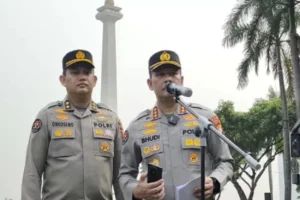
The recent police operation conducted by the Central Java Regional Police (Polda Jateng) and the Sukoharjo Resort Police at the Hamalatul Quran Islamic Boarding School in Mojolaban, Sukoharjo, has ignited a firestorm of criticism from religious leaders, legal experts, and human rights advocates. The raid, which took place in the early hours of Thursday, October 29, 2026, is being scrutinized for its aggressive methodology and potential violation of the fundamental rights of the students—many of whom are minors.
KH Abdussalam Shohib, widely known as Gus Salam, who serves as the Chairman of the Indonesian Santri Service Movement (GPSI) and the caretaker of the Mamba’ul Ma’arif Islamic Boarding School in Denanyar, Jombang, has emerged as the leading voice calling for a comprehensive investigation into the conduct of the officers involved. Gus Salam’s critique centers on the perceived lack of professional ethics and the disregard for the psychological welfare of the female students residing in the facility.
Chronology of the Incident
According to reports from local witnesses and school staff, the incident began in the pre-dawn hours of Thursday, October 29, 2026. Security forces allegedly arrived at the Hamalatul Quran complex under the cover of darkness, approaching the dormitory buildings housing female students.
Witnesses described a scene of chaos and panic as doors were reportedly forced open by personnel. The students, many of whom were sleeping, were allegedly subjected to intimidation, verbal outbursts, and, in some instances, the sight of long-barreled firearms. The intensity of the raid, which occurred shortly before the dawn (Subuh) prayer, left the student body in a state of severe psychological distress. The lack of prior communication with the school’s leadership regarding the intent or the necessity of such an intrusive operation has been cited as a major procedural failure.
Professional Ethics and Human Rights Concerns
The core of the criticism directed at the Polda Jateng and the Sukoharjo Police lies in the doctrine of "humanistic policing," a concept frequently championed by the National Police leadership under the current administration. Critics argue that the tactics employed in the Hamalatul Quran raid stand in direct contradiction to these stated goals.
Gus Salam emphasized that regardless of the underlying criminal investigation, the operational protocol must account for the specific demographics involved. "We are talking about female students, many of whom are children. To enter their private quarters while they are sleeping, to subject them to such aggressive behavior, and to ignore the basic moral and ethical boundaries is not just a tactical error; it is a profound failure of the state’s responsibility to protect the vulnerable," Gus Salam stated during a press briefing on October 31, 2026.
Legal experts have noted that while the police possess the legal mandate to execute search warrants and conduct investigations, such operations are bound by the Criminal Procedure Code (KUHAP) and the National Police’s own internal regulations regarding the treatment of suspects and witnesses. The forced entry and subsequent intimidation of non-combatant minors raise serious questions about the adherence to these regulations.
Psychological Impact on Minors
The psychological fallout from the raid is a primary concern for educators and child advocacy groups. Adolescents and children residing in a residential academic environment are considered a protected group. The trauma associated with being awakened by armed officers and treated as suspects can lead to long-term anxiety, fear of authority, and disruption of the educational process.
"The experience described by the students is textbook trauma," says a representative from a regional child protection agency, who requested anonymity. "When you remove the sense of security from a child’s sanctuary, the impact is lasting. Educational institutions, especially Islamic boarding schools (pesantren), operate on a foundation of trust. That trust has been severely undermined by this event."
Contextualizing the Raid: The Role of the Police
While the police have yet to issue a detailed public statement regarding the specific criminal case that necessitated the raid, sources within the investigation suggest that the operation was related to an ongoing probe into alleged criminal activities. However, the lack of transparency has led to widespread speculation and public outcry.
The incident occurs against a backdrop of increasing tension between law enforcement agencies and community-based organizations in Central Java. In recent months, there have been several high-profile investigations involving public figures and religious institutions, creating a sensitive environment for police-community relations. The detention of other officers in the same region for allegations of misconduct—specifically involving the mistreatment of women—has further eroded public confidence in the regional police force’s adherence to professional standards.
Broader Implications and Demands for Accountability
The demand for an investigation into the Hamalatul Quran raid is not merely a request for a review of tactical errors; it is a call for institutional accountability. Gus Salam’s insistence that the National Police Chief (Kapolri) intervene reflects a lack of faith in the internal oversight mechanisms of the Central Java regional police.
Several key demands have emerged from the coalition of observers:
- Internal Audit: An immediate, transparent internal audit of the operational chain of command that authorized the raid.
- Review of Standard Operating Procedures (SOPs): A comprehensive review of how police conduct raids on protected, vulnerable, or educational sites, with an emphasis on preventing future occurrences of intimidation.
- Public Accountability: A formal statement from the authorities explaining the necessity of the timing and the intensity of the raid, alongside an apology to the affected students and their families.
- Psychological Support: Provision of professional counseling services for the students affected by the trauma of the raid.
Institutional Trust and the Future of Pesantren
The relationship between the state and the pesantren system is a vital component of Indonesia’s social fabric. Islamic boarding schools are not only centers of religious education but also hubs of community welfare. When the state treats these institutions as hostile territory, the resulting alienation can be detrimental to broader national stability.
"The police must realize that they are part of the community, not a force occupying it," said a senior academic specializing in civil-military relations. "The excessive use of force in a sensitive environment like a girl’s dormitory sends a message that the law is a blunt instrument, rather than a tool for justice."
As the discourse surrounding the Hamalatul Quran incident continues to grow, the pressure on the National Police leadership to address these grievances will likely intensify. The outcome of this case will serve as a bellwether for the future of police-community relations in Indonesia. If the police can demonstrate that they are capable of self-correction and genuine accountability, they may restore the public’s confidence. Conversely, if the allegations of abuse and procedural negligence are swept aside, it could lead to long-term friction between law enforcement and the nation’s influential religious educational sector.
For now, the eyes of the nation remain fixed on Sukoharjo. The call for justice is clear: law enforcement must operate within the boundaries of the law, respect the dignity of the citizens they are sworn to protect, and ensure that the pursuit of justice does not come at the expense of the very children they are tasked with safeguarding.
The case also highlights the necessity for legislative bodies, such as the House of Representatives (DPR), to exert their oversight functions. The House Commission III, which oversees legal and human rights matters, is expected to be petitioned to summon the Chief of the Central Java Police to provide a full account of the incident. Such a hearing would offer the public a venue to understand whether the raid was an isolated failure of individual command or a systemic issue within the regional police force’s operational culture.
As of the latest reports, the Hamalatul Quran boarding school is working to restore normalcy to its students’ lives, focusing on counseling and the resumption of academic activities. However, the demand for a formal, independent investigation remains the priority for community leaders who argue that without transparency, the cycle of trauma and mistrust will continue to fester, undermining the very rule of law that the police are mandated to uphold.