The Indonesian National Police Traffic Corps, widely known as Korlantas, has officially commenced its nationwide traffic enforcement campaign, designated as Operation Patuh 2026. Running simultaneously across the archipelago from October 26 through November 8, this two-week strategic initiative is designed to enforce road safety compliance, curb escalating traffic violation rates, and reduce the frequency of preventable roadway fatalities. Law enforcement authorities have identified eleven primary infractions as the core focus of this year’s operation, with maximum financial penalties reaching up to IDR 750,000 for the most hazardous offenses.
The nationwide enforcement sweep arrives at a critical juncture for Indonesia’s transportation infrastructure, where rapid urbanization, surging vehicle ownership, and persistent behavioral challenges among motorists continue to strain public safety. By combining technological enforcement tools with traditional policing methods, Korlantas aims to recalibrate road user discipline and foster a culture of mutual accountability on major thoroughfares, toll roads, and municipal streets alike.
Comprehensive Scope of Targeted Infractions
Operation Patuh 2026 casts a wide net over hazardous driving behaviors that frequently contribute to severe traffic accidents. According to detailed operational guidelines issued by Korlantas, the eleven targeted violations encompass a spectrum of careless and illegal actions committed by both automobile and motorcycle operators.
Foremost among the targeted infractions is the use of mobile communication devices while operating a moving vehicle. Law enforcement officials emphasize that distracted driving remains a primary catalyst for sudden collisions, as momentary lapses in visual and cognitive attention drastically impair reaction times. Consequently, drivers caught utilizing smartphones for texting, browsing, or calling face the steepest financial penalty under the operation’s schedule.
In addition to mobile device usage, authorities are aggressively cracking down on seatbelt compliance among vehicle occupants. Drivers and front-seat passengers who fail to secure themselves with safety belts will face immediate penalties. For motorcyclists, compliance with national safety standards is non-negotiable; riding without a properly fastened helmet certified by the Indonesian National Standard (SNI) is strictly prohibited and heavily monitored throughout the operational window.
The enforcement framework also addresses widespread disregard for traffic control devices and road markings. Motorists who deliberately ignore regulatory signs, lane dividers, and traffic lights—specifically those engaging in hazardous red-light running—will be systematically intercepted or recorded by automated systems. Furthermore, driving against the flow of traffic, commonly known as counter-flowing or ghost-riding, along with operating vehicles at speeds exceeding legally mandated limits, constitutes a major enforcement priority due to the catastrophic risk of head-on collisions.
Public transport lanes and non-motorized infrastructure are similarly protected under Operation Patuh 2026. Unauthorized vehicles, including private cars and motorcycles that infiltrate dedicated bus rapid transit lanes, commonly referred to as busways, will face stringent legal consequences. Similarly, motorists who utilize pedestrian sidewalks for parking or bypassing congested traffic streams will be penalized for endangering vulnerable road users and violating pedestrian rights.
Motorcycle-specific regulations form another vital pillar of the enforcement campaign. Operators carrying more than one passenger—commonly observed in overloading scenarios that compromise vehicle stability and braking efficiency—will be ticketed. Finally, irregularities concerning Vehicle Registration Number Plates, officially known as Tanda Nomor Kendaraan Bermotor (TNKB), are under intense scrutiny. This includes the use of unauthorized custom plates, altered digits, or deliberate attempts to obscure or conceal plates to evade Electronic Traffic Law Enforcement (ETLE) cameras.
Comprehensive Schedule of Fines and Legal References
To ensure absolute transparency and uphold the rule of law, Korlantas has published a definitive breakdown of the statutory fines and corresponding legal articles under the Indonesian Road Traffic and Transportation Law (UU LLAJ) applicable during Operation Patuh 2026:
- Using a mobile phone while driving: Maximum fine of IDR 750,000, governed by Article 283.
- Violating road markings or traffic signs: Maximum fine of IDR 500,000, governed by Article 287 paragraph (1).
- Disregarding or running red lights: Maximum fine of IDR 500,000, governed by Article 287 paragraph (2).
- Driving against the flow of traffic (counter-flowing): Maximum fine of IDR 500,000, governed by Article 287 paragraph (1).
- Exceeding established speed limits: Maximum fine of IDR 500,000, governed by Article 287 paragraph (5).
- Entering and driving through dedicated busway lanes: Maximum fine of IDR 500,000, governed by Article 287 paragraph (1).
- Utilizing non-compliant or altered vehicle registration plates (TNKB): Maximum fine of IDR 500,000, governed by Article 280.
- Failing to wear a seatbelt while operating a vehicle: Maximum fine of IDR 250,000, governed by Article 289, applicable to both the driver and the front-seat passenger.
- Operating or riding a motorcycle without an SNI-certified helmet: Maximum fine of IDR 250,000, governed by Article 291 paragraph (1).
- Transporting more than one passenger on a standard motorcycle: Maximum fine of IDR 250,000, governed by Article 292, applicable to motorcycles without sidecars.
- Parking or operating vehicles on pedestrian sidewalks: Maximum fine of IDR 250,000, governed by Article 275 paragraph (1).
Enforcement Methodology: The Dual Approach of ETLE and Manual Ticketing
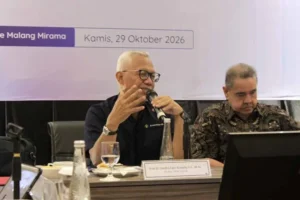
A defining characteristic of Operation Patuh 2026 is its heavy reliance on modern technological infrastructure while retaining traditional enforcement mechanisms as a necessary secondary measure. Head of Korlantas, Brigadier General Aries Syahbudin, confirmed that the corps is prioritizing Electronic Traffic Law Enforcement (ETLE) systems to capture violations objectively, efficiently, and transparently across major metropolitan areas and national transit corridors.
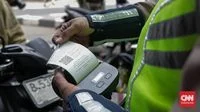
Despite the widespread deployment of static and mobile ETLE cameras, Brigadier General Aries emphasized that police leadership has not foreclosed the possibility of issuing manual tickets when circumstances warrant direct intervention. Officers deployed in the field are instructed to evaluate real-time situations carefully, ensuring that legal enforcement remains responsive to unpredictable road conditions.
Crucially, Brigadier General Aries underscored that officers engaged in Operation Patuh 2026 must prioritize educational, persuasive, and humanistic approaches in their daily interactions with the public. Rather than adopting an aggressively punitive posture, field personnel are encouraged to utilize dialogue and instructive warnings to foster long-term behavioral changes among motorists, reserving formal citations for clear and dangerous non-compliance.
Echoing this measured institutional stance, Jakarta Metro Police Chief Commissioner General Dadang Hartanto elaborated on the dual-track enforcement strategy implemented within the capital region. Commissioner General Dadang clarified that while law enforcement officers possess the authority to execute both electronic and manual enforcement protocols, penalization represents the final line of defense rather than the primary objective of the campaign.
"Enforcement is the final step, and frankly, it is not an outcome we actively desire to maximize," Commissioner General Dadang stated during an operational briefing. "However, when violations cross the threshold into behavior that actively endangers public safety and disrupts the flow of security on the road, legal action must be taken. We utilize both conventional methods and ETLE systems to achieve this balance."
Background Context and Strategic Implications
The timing and scale of Operation Patuh 2026 reflect ongoing systemic concerns regarding traffic safety across Indonesia. Statistical data compiled by transportation authorities consistently highlight that human error accounts for the vast majority of roadway incidents. By launching a synchronized, two-week national campaign prior to the year-end holiday season, Korlantas seeks to preemptively lower accident statistics and minimize fatalities that frequently spike during periods of elevated mobility.
The integration of advanced ETLE technology with localized community outreach represents a maturing regulatory framework. By reducing direct physical interactions between motorists and traffic police during minor stops, the system simultaneously minimizes opportunities for administrative friction and maximizes geographic coverage. However, the retention of manual ticketing ensures that jurisdictions lacking comprehensive camera deployment, as well as complex violations involving obscured plates or aggressive driving, escape neither accountability nor legal consequence.
Industry analysts and transportation observers note that the success of Operation Patuh 2026 will ultimately depend on consistent post-operation monitoring and sustained public compliance rather than temporary deterrence. As urban centers continue to grapple with congestion and evolving mobility patterns, rigorous enforcement of foundational rules—such as helmet usage, lane discipline, and the prohibition of distracted driving—remains an indispensable prerequisite for building a safer, more predictable national transportation ecosystem.