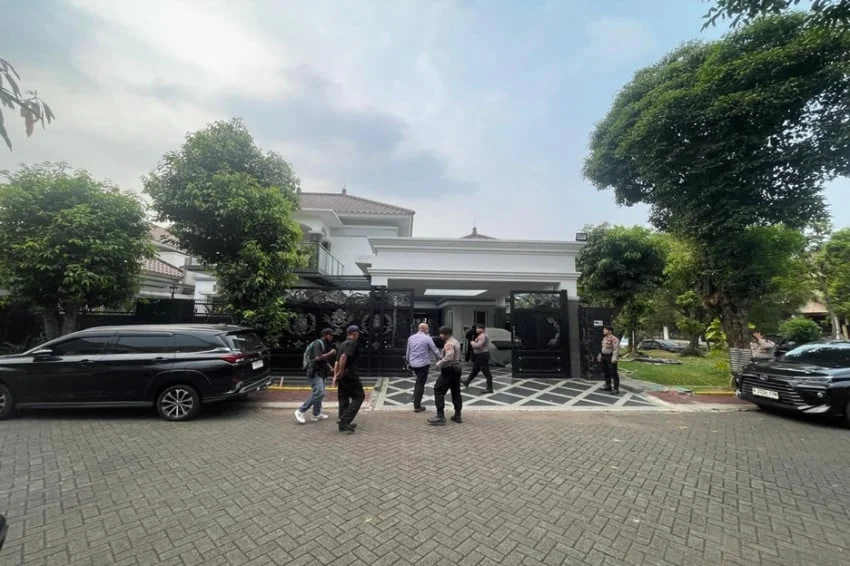
The Corruption Eradication Commission (KPK) executed a targeted search operation at the private residence of Yayat Sudrajat, a member of the Indonesian National Police (Polri) also known by the alias Lippo, located in the Cibubur area of Depok, West Java, on Thursday, September 10, 2026. This tactical maneuver marks a significant escalation in the commission’s ongoing efforts to unravel a complex web of bribery allegations centered on public infrastructure projects within the Bekasi Regency government. The search, which took place throughout the morning and early afternoon, resulted in the seizure of several physical documents and electronic evidence that investigators believe will provide critical insight into the illicit flow of funds associated with regional procurement contracts.
Contextualizing the Bekasi Regency Bribery Scandal
The investigation into the Bekasi Regency bribery scandal has been a protracted affair for the KPK, evolving from localized allegations of graft into a sprawling probe involving multiple stakeholders, including private contractors, local government officials, and now, active law enforcement personnel. The case primarily concerns the manipulation of tender processes for various infrastructure projects, ranging from road construction and drainage systems to the development of public facilities.
Corruption in regional infrastructure projects remains one of the most pervasive challenges in Indonesian governance. According to data from the KPK’s public reports over the past decade, the procurement sector consistently ranks as the highest risk area for corruption. The modus operandi typically involves a "tribute" system, where contractors pay significant kickbacks—often ranging from 5% to 15% of the total project value—to government officials and influential intermediaries to secure winning bids. The involvement of a police officer, such as Yayat Sudrajat, suggests that the scope of this corruption may extend beyond bureaucratic bribery into the realm of organized protection or the suppression of investigations.
Chronology of the Investigation
The current phase of the investigation stems from the issuance of a new Surat Perintah Penyidikan (Sprindik), or Investigation Warrant, which allowed the KPK to broaden its net and examine individuals previously on the periphery of the case.
- Initial Discovery: The case first surfaced following reports of irregularities in the bidding process for several high-value projects in Bekasi Regency. Initial arrests targeted local government officials and private developers.
- Expansion of Inquiries: As the KPK analyzed financial records and communication logs recovered from earlier suspects, investigators began to notice recurring patterns of interference. This led to the identification of several external parties, including Yayat Sudrajat, who allegedly played a role in facilitating communication between stakeholders or providing "security" for the illicit transactions.
- September 2026 Escalation: With the formalization of the new Sprindik, the KPK intensified its field activities. The decision to search Yayat Sudrajat’s residence on September 10 was the culmination of weeks of surveillance and intelligence gathering designed to preserve evidence before it could be destroyed or concealed.
The Role of Electronic Evidence
The seizure of electronic evidence during the search in Cibubur is arguably the most significant development of the day. In modern corruption cases, digital footprints—consisting of encrypted messaging logs, bank transaction histories, and cloud-stored project documents—have replaced traditional paper trails as the primary source of prosecutorial evidence.
KPK Spokesperson Budi Prasetyo emphasized the importance of these items, stating that the commission is currently conducting a forensic analysis on the recovered devices. "The documents and electronic evidence secured today are pivotal for our team to map the network of actors involved in this case. We are looking for links that establish a direct connection between the procurement tenders and the financial benefits received by the parties under investigation," Prasetyo noted during a press briefing at the KPK headquarters in Jakarta.
The use of forensic digital extraction tools will allow the KPK to recover deleted communications and identify metadata associated with the illicit projects. This data is essential for building a case that can withstand the scrutiny of the Corruption Court (Tipikor), where the burden of proof rests heavily on the prosecution to demonstrate clear intent and systemic corruption.
Official Responses and Institutional Cooperation
The involvement of a police officer in a corruption investigation led by the KPK necessitates a delicate balance between inter-agency cooperation and the independence of the anti-corruption body. Historically, the relationship between the KPK and the National Police (Polri) has been subject to institutional friction. However, in this instance, officials from both institutions have maintained a professional stance, emphasizing the rule of law.
The National Police headquarters have indicated that they are prepared to cooperate fully with the KPK’s inquiry. "We are committed to supporting the efforts to eradicate corruption, regardless of the individuals involved. If any member of our institution is found to be in violation of the law, the internal disciplinary processes will run parallel to the criminal proceedings conducted by the KPK," stated a high-ranking police spokesperson in response to the news of the search.
Legal analysts suggest that this collaboration is a positive sign for institutional reform. By allowing the KPK to operate without interference, the police force is signaling a departure from the "corps spirit" that has historically shielded officers from external accountability.
Broader Impact and Implications for Governance
The implications of this search extend far beyond the individual case of Yayat Sudrajat. For the residents of Bekasi Regency, the ongoing scandal represents a tangible loss of public funds that were intended for essential services. When infrastructure projects are won through bribery rather than merit, the quality of construction often suffers, leading to premature deterioration of roads and bridges, and ultimately, a waste of public taxes.
From a macro-perspective, the KPK’s persistent pursuit of this case serves as a warning to other public officials and private contractors that the commission is intensifying its focus on the "middlemen" and "enablers" of corruption. Often, the individuals who organize and protect bribery networks are harder to track than the officials receiving the money. By targeting someone with the operational influence of a police officer, the KPK is attempting to dismantle the protective layer that allows systemic corruption to thrive.
Furthermore, the search underscores the necessity of transparency in local government procurement. The KPK has frequently recommended the implementation of e-procurement systems that minimize human interaction. However, as this case demonstrates, the digital systems themselves can be compromised if the people overseeing them are corruptible.
Analysis of Future Prospects
As the investigation moves into its next phase, the KPK faces the challenge of translating the seized evidence into formal charges. The defense for the accused will likely contest the legality of the search and the admissibility of the electronic evidence. However, given the KPK’s track record in high-profile corruption cases, it is expected that the commission will prioritize the corroboration of these documents with bank records and testimony from whistleblowers.
If the evidence leads to an indictment, it would set a significant precedent for how law enforcement personnel are held accountable when their professional roles are leveraged for private gain. For the Indonesian public, the outcome of this case will be a litmus test for the effectiveness of the nation’s anti-corruption architecture.
In the coming weeks, the KPK is expected to summon additional witnesses, potentially including high-ranking officials within the Bekasi Regency government who may have been aware of or involved in the alleged bribery schemes. The search at the Cibubur residence is likely just one of several strategic actions planned by the commission to dismantle this network entirely.
As the legal proceedings continue, the focus will remain on the integrity of the evidence collected and the capacity of the judicial system to deliver an impartial verdict. The transparency of these proceedings will be crucial in maintaining public trust in the institutions tasked with safeguarding the nation’s financial integrity. For now, the KPK has signaled that its investigation is far from over, and that it remains focused on securing justice for the people of Bekasi Regency against the corrosive influence of corruption.