The Indonesian political landscape has been thrust into a period of intense scrutiny following the emergence of a massive illegal wiretapping scandal that allegedly compromised the communications of President Prabowo Subianto, along with a broad spectrum of high-ranking state officials, prominent business leaders, and civil society figures. In response to these revelations, Haedar Nashir, Chairman of the Pimpinan Pusat (PP) Muhammadiyah, has issued a formal call for the National Police (Polri) to conduct a thorough, objective, and transparent investigation into the breach, which has been described as one of the most significant security failures in the nation’s recent history.
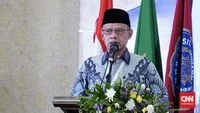
Speaking at the Universitas Muhammadiyah Surabaya on Thursday, November 5, Haedar emphasized that the integrity of the state rests upon the rule of law. He urged authorities to move beyond political maneuvering and ensure that the legal process remains insulated from external pressures. "Every process related to the law must be enforced fairly, objectively, and transparently. I am confident that this is the foundation of our nation, as we are a country governed by law," Haedar stated.
The Scope of the Breach: A Chronology of Surveillance
The ongoing investigation by the Bareskrim (Criminal Investigation Agency) of the Indonesian National Police has uncovered a sophisticated surveillance network that operated between 2025 and 2026. The scale of the operation is unprecedented, reportedly targeting the inner circle of President Prabowo Subianto, alongside cabinet members, key political figures, media moguls, and leaders of major religious organizations.
The investigation reached a critical juncture this week as investigators officially named four high-ranking police officers as suspects. The list includes:
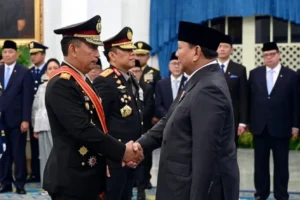
- Listyo Sigit Prabowo: Former Chief of National Police and current Head of the Presidential Staff Office (KSP).
- Irjen Pol Ahrie Sonta Nasution: Head of the Legal Division (Kadivkum) of the National Police.
- Irjen Eko Hadi Santoso: Widyaiswara Kepolisian Utama TK1 at the Sespim Lemdiklat Polri.
- "SU": An individual identified as the coordinator/handler overseeing the operational activities and the systematic deletion of surveillance logs.
Preliminary findings suggest that the illegal operation utilized unauthorized interception technologies to bypass standard security protocols. The intent behind the surveillance remains the primary focus of the Bareskrim inquiry, with investigators currently auditing digital footprints to determine if the data collected was used for political leverage, extortion, or intelligence gathering for non-state actors.
Institutional Implications and Political Stability
The involvement of a former National Police Chief, who now holds a strategic position within the Presidential Staff Office, has caused shockwaves through Jakarta’s political elite. Security analysts note that the breach represents a profound "insider threat" scenario, complicating the administration’s efforts to project stability.
In his remarks, Haedar Nashir signaled that while the investigation must proceed without hindrance, the nation must avoid falling into a state of paralysis. He expressed his support for President Prabowo’s administration to continue its mandate, emphasizing that governance must remain focused on constitutional duties, economic prosperity, and the welfare of the people.
"We support the President’s efforts to continue leading this nation based on the constitution, for the greatest benefit of the people, for unity, justice, and prosperity," Haedar added. This statement is interpreted as an attempt to prevent the scandal from devolving into a full-blown constitutional crisis or a destabilizing movement against the executive branch.
The Danger of Polarization
Beyond the legal implications, the wiretapping scandal has ignited a firestorm on social media and within civil society, with factions debating the motivations of the accused officers and the vulnerability of the current administration. Haedar warned against the dangers of this climate, urging the public to exercise restraint.
"Since this matter is already being handled by the authorities, the public is asked to remain calm and avoid being divided," he said. He acknowledged that while political discourse and dissenting opinions are essential components of a democratic society, there is a fine line between healthy debate and dangerous confrontation. He cautioned that if the public allows itself to be polarized, it could lead to civil unrest that would only exacerbate the current economic challenges facing the Indonesian populace.
Contextualizing Cybersecurity and Privacy in Indonesia
The scandal serves as a stark reminder of the fragile state of cybersecurity within Indonesia’s governmental infrastructure. Despite the enactment of the Personal Data Protection (PDP) Law, the government has struggled to protect sensitive data from both external hackers and internal misuse.
Data security experts suggest that this case highlights the need for a comprehensive overhaul of how state security agencies handle digital surveillance. Currently, the legal framework governing the use of wiretapping tools by law enforcement is often opaque, leading to situations where intelligence capabilities can be weaponized for private or political agendas.
The involvement of high-ranking police officials suggests that the technology used was either diverted from official state stockpiles or procured through illicit gray-market channels. If confirmed, this would imply a systemic failure in the oversight mechanisms of the National Police’s technical units.
Muhammadiyah’s Role in National Healing
Amidst the turmoil, Haedar took the opportunity to address the internal constituents of Muhammadiyah, one of Indonesia’s largest Islamic organizations. He urged members to maintain the organization’s integrity and focus on its primary mission: providing service to the community.
"Make Muhammadiyah a home for everyone. The organization must remain a beacon of light, providing tangible benefits to the lives of many. Many of our fellow citizens are struggling, and we must be there to serve them," he stated. This directive is a strategic pivot, aiming to insulate the organization from the political fallout of the scandal and refocus the collective energy of its millions of members toward humanitarian efforts, education, and economic empowerment.
The Path Forward: Legal and Ethical Mandates
As the Bareskrim continues its interrogation of the four suspects, the legal community is watching closely to see if the investigation will extend to other high-ranking officials or private entities that may have benefited from the surveillance data.
For the Indonesian National Police, this investigation is a test of its own credibility. The public is demanding accountability, and there is a growing expectation that the trial process—when it begins—will be held in an open court to ensure that no party is shielded from the consequences of their actions.
The scandal has forced the Prabowo administration to confront the reality that its greatest security threat may not be external, but rather the very institutions charged with protecting the state. The coming weeks will be critical as the government attempts to reconcile the need for institutional reform with the necessity of maintaining order.
In conclusion, the call by Haedar Nashir serves as a stabilizing influence, emphasizing that while the rule of law must be absolute, the nation’s progress cannot be held hostage by the misdeeds of a few. Whether this scandal leads to a deeper, more profound reform of the police force remains to be seen, but for now, the message from one of Indonesia’s most respected voices is clear: Justice must be served, and the nation must move forward with caution, maturity, and a renewed commitment to its democratic values.