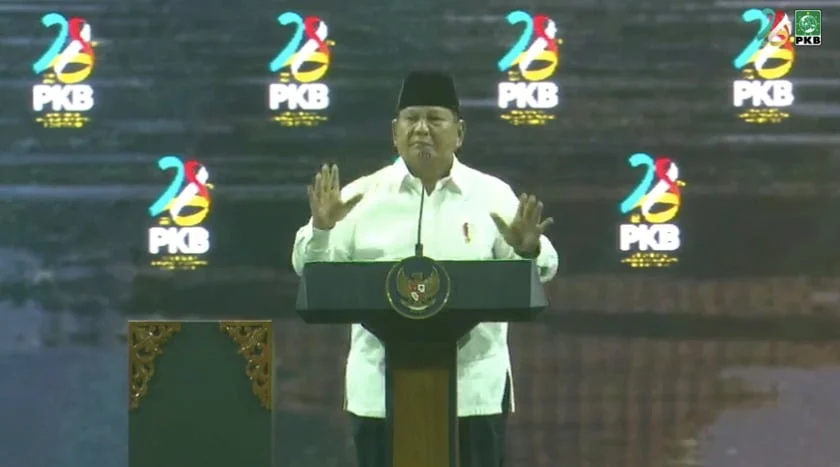
President Prabowo Subianto, speaking at the 28th anniversary celebration of the National Awakening Party (PKB), delivered a pointed critique of certain media outlets, referring to unnamed entities as "Londo Ireng" and accusing them of disproportionately focusing on negative aspects of government performance despite significant achievements. The remarks, made during the Puncak Harlah ke-28 PKB at the Jakarta Convention Center (JCC) in Jakarta on Thursday evening, July 23, 2026, underscored a growing tension between the executive branch and segments of the Indonesian press. President Subianto highlighted the government’s efforts in renovating tens of thousands of schools, citing 27,000 repaired institutions, only for specific media to "seek out schools that have not been repaired and place them on the front page." He asserted his awareness of the media in question but chose to withhold their names "for the time being," adding, "You already know them."
The Context of the PKB Anniversary and Presidential Address
The 28th anniversary of the Partai Kebangkitan Bangsa (PKB) is a significant event in Indonesia’s political calendar, marking nearly three decades since the party’s establishment in 1998, following the fall of the New Order regime. Founded by prominent figures from Nahdlatul Ulama (NU), Indonesia’s largest Islamic organization, PKB has consistently played a crucial role in national politics, often serving as a coalition partner in various administrations. Its Harlah (Hari Lahir or anniversary) celebrations are typically grand affairs, bringing together party elites, NU figures, and allied political leaders, offering a platform for political statements and strategic alignments.
President Prabowo Subianto’s attendance and speech at the PKB Harlah in July 2026 are indicative of the strong ties between his administration and the party. PKB, led by Muhaimin Iskandar, has been a key component of the ruling coalition, contributing to the legislative majority and supporting the government’s agenda. For President Subianto, delivering a speech at such an event provides an opportunity to consolidate political support, communicate his administration’s vision, and address perceived challenges or criticisms. Having been inaugurated as president in October 2024 (assuming a typical electoral cycle), by July 2026, President Subianto would be approximately 21 months into his five-year term. This period is often characterized by intensified efforts to implement initial policy programs, manage public expectations, and navigate the complex dynamics of national governance and media scrutiny. His remarks, therefore, come at a juncture where his administration would be keen to project an image of progress and effective leadership, while simultaneously confronting critical narratives.
Unpacking "Londo Ireng": Historical and Cultural Resonance
The term "Londo Ireng" translates literally to "Black Dutchman" or "Black Westerner." In the Indonesian context, particularly in Javanese culture, this phrase carries a rich and often pejorative historical connotation. It typically refers to indigenous Indonesians who, by their actions, attitudes, or allegiance, are perceived to have adopted the characteristics or served the interests of colonial masters, often at the expense of their own people or national interests. During the Dutch colonial era, it was sometimes used to describe native elites or officials who collaborated with the colonial administration, or who were seen as having internalized colonial values to the detriment of local customs and sovereignty.
In contemporary Indonesian political discourse, "Londo Ireng" has been invoked to criticize individuals or groups perceived as betraying national interests, being unduly influenced by foreign agendas, or exhibiting a lack of genuine patriotism by undermining national efforts or focusing excessively on perceived flaws. When President Subianto uses this term in reference to media outlets, it implies a severe accusation: that these media are not acting in the national interest, but rather are serving a destructive agenda, potentially even acting as internal saboteurs or agents of foreign-inspired negativity. This loaded terminology goes beyond simple criticism of bias; it questions the patriotism and integrity of the targeted entities.
Presidential Grievances: Media Coverage and Government Achievements
President Subianto’s specific grievance revolved around media’s perceived tendency to highlight shortcomings rather than achievements. He specifically cited the government’s extensive school renovation program. "We have repaired 27,000 schools," he stated, illustrating a tangible government investment in education infrastructure. He then contrasted this with media behavior: "There are also media outlets that, even though we have repaired 27,000 schools, they look for schools that have not been repaired, they put it on the front page. They think we don’t understand."
This particular complaint touches upon a common point of contention between governments and the press globally. While governments often prefer to showcase successes and positive developments, the media’s role, particularly in a democratic society, is also to act as a watchdog, holding power accountable and exposing areas needing improvement. For a government, investing in public infrastructure like school renovation is a significant undertaking, often involving substantial budgets and logistical challenges. The figure of 27,000 schools suggests a nationwide program with considerable impact, likely part of a broader human capital development strategy for Indonesia. However, a media outlet focusing on the remaining unrepaired schools, or highlighting quality issues in the repaired ones, would argue it is performing its duty to inform the public about ongoing challenges and ensuring transparency in government spending and effectiveness. President Subianto’s frustration suggests he perceives this focus as deliberate malice or an attempt to undermine public trust in his administration’s efforts, rather than constructive criticism.
Chronology of Events and Immediate Reactions
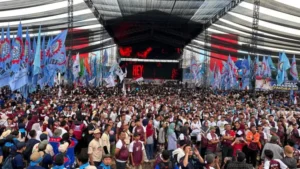
The Harlah ke-28 PKB commenced with various preliminary events leading up to the main celebration at the JCC on July 23, 2026. These typically include internal party meetings, cultural performances, and speeches from party officials. The main event, featuring President Prabowo Subianto as the guest of honor, was highly anticipated. The President arrived to a warm reception, underscoring the political alliance between his party and PKB. His speech covered a range of topics, including national development, economic stability, and social welfare, before shifting focus to media scrutiny.
The "Londo Ireng" remarks were delivered with a tone of clear exasperation, yet also with a hint of warning, as he explicitly stated his knowledge of the specific media entities but chose not to name them "at this time." This veiled threat, coupled with the loaded term, immediately generated buzz within the convention hall and, subsequently, across social media platforms as reports began to emerge.
Initial reactions from attendees, primarily PKB cadres and coalition partners, were largely supportive of the President’s stance. Many within political circles often share a sentiment that certain media outlets can be overly critical or biased. However, outside the immediate political echo chamber, the remarks quickly drew concern. While no immediate official statements from media organizations were reported on the same evening, the stage was set for a broader discussion on press freedom and government-media relations in the subsequent days.
Supporting Data and Broader Context of Media-Government Relations
Indonesia’s media landscape is diverse and dynamic, encompassing numerous print, broadcast, and online outlets. Post-Reformasi (1998), the country has largely enjoyed significant press freedom, moving away from the tight controls of the New Order era. However, challenges persist, including media ownership concentration, political affiliations of media moguls, and the economic pressures facing news organizations. Trust in media, while generally higher than in some other institutions, can be volatile, especially in an era of increasing digital misinformation and partisan reporting.
Government spending on education, particularly school infrastructure, is a perennial concern in Indonesia. While data on school conditions varies, reports from the Ministry of Education, Culture, Research, and Technology (Kemendikbudristek) often highlight the persistent challenges of dilapidated schools, especially in remote areas, despite ongoing renovation efforts. For instance, according to general government reports, thousands of schools across the archipelago still require significant upgrades or reconstruction to meet minimum safety and learning standards. The "27,000 schools repaired" figure, while substantial, must be seen in the context of potentially hundreds of thousands of schools nationwide, many of which are in varying states of disrepair. This disparity often forms the basis of media reports that focus on the "glass half empty" perspective, aiming to push for further government action.
President Prabowo Subianto has a history of expressing strong opinions regarding media coverage. Throughout his political career, he has at times praised media for patriotic reporting and at other times criticized it for perceived unfairness or bias, particularly during election campaigns. His administration’s approach to media engagement is crucial for maintaining a healthy democratic discourse. While official channels for communication exist, the President’s direct public criticism underscores a perceived gap between the government’s narrative and media’s portrayal.
Official Responses and Analytical Interpretations
Following President Subianto’s remarks, various stakeholders offered their perspectives.
From the PKB: Muhaimin Iskandar, as the chairman of PKB, while not directly commenting on the "Londo Ireng" phrase, generally reiterated the party’s full support for President Subianto’s administration. He emphasized the importance of national unity and constructive collaboration, subtly framing the President’s concerns as a call for more balanced reporting that supports national development efforts. Other PKB officials echoed similar sentiments, highlighting the government’s genuine efforts in improving public services.
From Media Organizations and Watchdog Groups: Independent journalism associations, such as the Alliance of Independent Journalists (AJI) and the Indonesian Journalists Association (PWI), expressed concern over the President’s remarks. They typically issued statements emphasizing the media’s constitutional role as a watchdog in a democracy, responsible for scrutinizing government actions and informing the public, even if the information is critical. They called for greater transparency from the government and urged public officials to engage with media criticisms constructively rather than resorting to loaded terms that could be seen as intimidating or delegitimizing. Concerns were raised about the potential chilling effect on investigative journalism, arguing that such generalized accusations could foster an environment of self-censorship.
From Political Analysts: Political observers offered various interpretations. Some viewed the "Londo Ireng" comment as a strategic move by President Subianto to rally his base and consolidate support against perceived internal detractors, a tactic often employed by populist leaders. By framing media critics as "traitors" or unpatriotic (via the "Londo Ireng" connotation), he could potentially discredit dissenting narratives and reinforce his administration’s image as working tirelessly for the nation. Others suggested it reflected genuine frustration from the President, who likely believes his administration’s significant efforts are not being adequately recognized. They pointed out that many leaders, when facing complex governance challenges, often feel that media focuses disproportionately on problems rather than solutions or progress. Analysts also highlighted the potential implications for press freedom, noting that such strong language from the head of state could set a precedent for future interactions between the government and the press, potentially increasing tensions and making objective reporting more challenging.
Broader Impact and Implications for Governance
President Prabowo Subianto’s "Londo Ireng" remarks carry significant implications for several aspects of Indonesian governance and public life:
Press Freedom and Government-Media Relations: The most immediate impact is on the relationship between the government and the media. While Indonesia boasts a relatively free press, comments from the highest office, especially those using historically charged language, can be perceived as an attempt to curtail critical reporting. This could lead to increased self-censorship among journalists or, conversely, harden the resolve of independent media to uphold their watchdog function. A strained relationship between the government and the press can impede the free flow of information, which is vital for an informed citizenry and a healthy democracy.
Political Discourse and National Unity: The use of terms like "Londo Ireng" can polarize public discourse. It frames criticism not as legitimate dissent but as something akin to betrayal, potentially exacerbating divisions within society. In a diverse nation like Indonesia, promoting national unity and fostering constructive dialogue is crucial, and language that demonizes critics can undermine these efforts. It also sets a precedent for how public officials engage with opposition or critical voices, potentially leading to a more confrontational political environment.
Public Perception and Trust: The public’s perception of both the government and the media can be influenced by such exchanges. Those who already distrust certain media outlets might find validation in the President’s words, while those who value press freedom might view the remarks as concerning. The long-term effect could be a further erosion of trust in both institutions if the debate descends into accusatory rhetoric rather than a focus on factual reporting and policy outcomes.
Accountability and Transparency: A vibrant and independent press is a cornerstone of accountability. If media outlets are intimidated or discouraged from reporting on government shortcomings, it could reduce transparency and create opportunities for inefficiency or corruption to go unchecked. The government’s ability to receive and act upon constructive criticism is essential for effective governance, and a hostile environment for the press can hinder this feedback loop.
In conclusion, President Prabowo Subianto’s "Londo Ireng" remarks at the PKB anniversary, while reflecting a possible frustration with media coverage, have ignited a significant debate on press freedom, the role of media in a democracy, and the nature of political discourse in Indonesia. As his administration continues its work, the manner in which it navigates these tensions will be a key indicator of its commitment to democratic principles and its approach to managing public information and scrutiny.