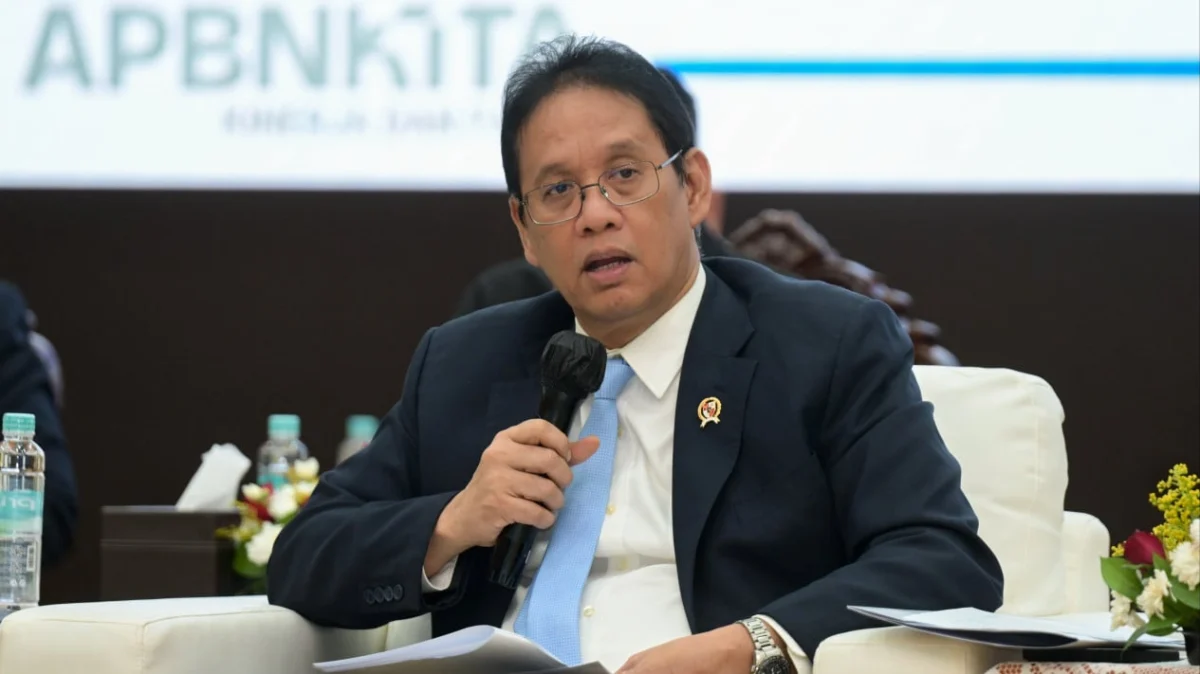
Jakarta, VIVA – Indonesia’s Minister of Finance, Purbaya Yudhi Sadewa, has provided a firm assurance that the outstanding debt obligations for the Jakarta-Bandung High-Speed Rail (KCJB), popularly known as Whoosh, will not place an undue burden on the State Budget (APBN). Speaking from the Ministry of Finance in Jakarta on Thursday, July 23, 2026, Minister Sadewa reiterated the government’s steadfast commitment to minimizing the utilization of direct APBN funds for settling the project’s financial liabilities. This declaration aims to alleviate public concerns regarding the fiscal implications of the ambitious infrastructure project, which has seen its costs escalate significantly since its inception.
"While Whoosh is ultimately a government-backed project, we are working assiduously to minimize, as much as possible, the amount of APBN funds directly used to service its debt. The financing will be managed through our established mechanisms," Minister Purbaya explained, emphasizing a strategic approach to debt management that prioritizes fiscal prudence. This statement comes amidst ongoing scrutiny of major national infrastructure projects and their potential impact on state finances, particularly in a global economic climate marked by volatility and uncertainty.
The Genesis of Whoosh: A Flagship Infrastructure Project
The Jakarta-Bandung High-Speed Rail project was initially conceived as a pivotal infrastructure development aimed at revolutionizing inter-city connectivity between Indonesia’s capital, Jakarta, and the provincial capital of West Java, Bandung. The project, officially launched in 2015, was envisioned as a symbol of Indonesia’s modernization and its ambition to adopt cutting-edge transportation technology. It was also touted as a testament to Indonesia’s ability to execute large-scale, complex projects. From its very beginning, a key promise made by the government was that the project would not rely on state budget funding or state guarantees, instead being financed purely through a business-to-business (B2B) scheme involving a consortium of Indonesian state-owned enterprises (SOEs) and Chinese railway companies.
The Indonesian consortium, PT Pilar Sinergi BUMN Indonesia (PSBI), comprised entities like PT Kereta Api Indonesia (Persero) (KAI), PT Wijaya Karya (Persero) Tbk (WIKA), PT Jasa Marga (Persero) Tbk (JSMR), and PT Perkebunan Nusantara VIII (PTPN VIII). This consortium partnered with China Railway International Co. Ltd. to form PT Kereta Cepat Indonesia China (KCIC), the joint venture responsible for the project’s development and operation. The initial financing structure involved a significant loan from the China Development Bank (CDB), covering approximately 75% of the project cost, with the remaining 25% funded by equity contributions from the consortium partners.
The Unfolding of Cost Overruns and APBN Involvement
Despite the initial assurances, the Whoosh project encountered a series of challenges that led to substantial cost overruns, necessitating a reassessment of its financing strategy. The original estimated cost of the project was approximately USD 6.07 billion. However, due to various factors including land acquisition issues, changes in design, rising material costs, and unforeseen geological complexities along the route, the projected cost ballooned. By early 2022, it became evident that the project faced an estimated cost overrun of around USD 1.2 billion, pushing the total estimated cost closer to USD 7.27 billion.
This significant increase presented a dilemma for the Indonesian government. Adhering strictly to the initial no-APBN policy would have put immense pressure on the state-owned enterprises involved, potentially jeopardizing their financial health. Recognizing the strategic importance of completing the project and avoiding further delays, President Joko Widodo issued Presidential Regulation No. 93 of 2021, which revised Presidential Regulation No. 107 of 2015. This crucial amendment allowed for the use of state budget funds, specifically for capital injections into PT KAI as the lead of the Indonesian consortium, and authorized state guarantees for KCIC’s loans. This move marked a significant departure from the project’s original financing philosophy and sparked considerable public debate regarding fiscal responsibility and transparency in large-scale infrastructure projects. The government’s decision was framed as a necessary measure to ensure the project’s completion and prevent it from becoming a "stranded asset."

Minister Purbaya’s Strategic Approach to Debt Settlement
In light of the revised financing structure and the government’s direct involvement, Minister Purbaya Yudhi Sadewa’s latest statement holds considerable weight. His assurance that the Whoosh debt will not burden the APBN implies a sophisticated and multi-pronged strategy to manage the financial obligations without diverting critical funds from other national priorities. While specific details of the financing mechanism remain undisclosed, the Minister hinted at leveraging various instruments outside the direct state budget, particularly through Special Mission Vehicles (SMVs).
"No, I have many SMVs (Special Mission Vehicles)," Purbaya stated, signaling that these specialized entities would play a crucial role. This indicates a proactive approach to isolating the project’s financial risks and liabilities from the core APBN, ensuring that the government’s overall fiscal health remains robust. SMVs are typically government-owned entities or special purpose vehicles created to undertake specific tasks, often involving financing, asset management, or infrastructure development, with a degree of operational autonomy and distinct funding sources. They are designed to manage particular projects or assets, often raising funds independently or through specific government assignments, thereby not directly impacting the consolidated state budget in the same way direct government expenditure would.
The Role of Special Mission Vehicles (SMVs)
Special Mission Vehicles are integral to the Indonesian government’s strategy for financing large-scale projects without solely relying on direct APBN allocations. These entities can serve various functions, such as acting as financing arms, asset managers, or project implementers. For instance, PT Sarana Multi Infrastruktur (Persero) (SMI) is a well-known SMV under the Ministry of Finance, established to accelerate infrastructure development in Indonesia by providing financing, advisory services, and project preparation. SMI mobilizes funds from various sources, including bond issuance, international loans, and public-private partnerships (PPPs), to support infrastructure projects across sectors.
Another example is the Indonesia Infrastructure Fund (IIF), which also operates with a mandate to support infrastructure financing. These entities typically have the capacity to issue bonds, secure loans from multilateral institutions, or attract private investment, effectively diversifying the funding base beyond direct government coffers. By channeling funds through SMVs, the government can ring-fence project-specific risks, access a wider range of financial markets, and ensure more disciplined project management and repayment structures, often tied to project revenues rather than general tax receipts. The use of an SMV for Whoosh debt management could involve structuring a special financing vehicle that acquires the debt, potentially through securitization or by issuing its own bonds, with a clear repayment plan tied to the operational revenues of the high-speed rail or other designated sources. This mechanism allows for off-balance-sheet financing from the perspective of the main APBN, thus fulfilling the minister’s promise.
Panda Bonds: A Different Priority
Minister Purbaya also addressed the potential use of Panda Bonds—Renminbi-denominated bonds issued by non-Chinese entities in mainland China’s bond market—for Whoosh debt. He clarified that, for the time being, the priority for funds raised through Panda Bonds remains firmly on covering the state budget deficit.
"These (Panda Bonds) are currently for covering our deficit. We will see in the future whether they can be used for that (Whoosh)," he stated. This indicates a clear distinction in the government’s fiscal strategy: immediate macroeconomic stability and deficit management take precedence for broader funding instruments like Panda Bonds, while specific project debts, even those with state involvement, are to be managed through more targeted mechanisms like SMVs.

Indonesia has strategically tapped into the Panda Bond market to diversify its funding sources and reduce reliance on traditional dollar-denominated debt. These bonds offer access to a large investor base in China and can provide more favorable interest rates under certain market conditions. However, the primary objective of such issuances is to bolster the government’s overall financial position and ensure the stability of the national budget, particularly in managing fiscal deficits that arise from various expenditures, including routine operations, social programs, and other infrastructure developments. In recent years, Indonesia has maintained a disciplined approach to fiscal management, aiming to keep the APBN deficit within healthy limits, typically below 3% of the GDP, in line with statutory requirements. Therefore, allocating these funds to address a specific project debt like Whoosh, while possible in the long run, is not the immediate priority when the general budget requires stabilization.
Broader Economic and Fiscal Implications
Minister Purbaya’s assurances are crucial for maintaining investor confidence and demonstrating the government’s commitment to fiscal discipline. Infrastructure development, while vital for economic growth and competitiveness, can impose significant financial strains if not managed prudently. The Whoosh project, despite its challenges, represents a major leap in Indonesia’s transportation infrastructure. Since its operational launch in October 2023, Whoosh has seen growing ridership, demonstrating its potential to contribute to the local economy by facilitating business travel, tourism, and general mobility between Jakarta and Bandung. The high-speed rail has significantly reduced travel time to approximately 30-45 minutes, a stark contrast to the typical 2-3 hours by conventional train or car, thereby boosting economic activity in both regions.
The government’s strategy of minimizing direct APBN exposure for Whoosh debt, instead leveraging SMVs, is a sophisticated approach to infrastructure financing. It reflects a maturing understanding of how to balance ambitious development goals with the imperative of fiscal sustainability. By ring-fencing liabilities within specialized entities, the government can protect the APBN from direct shocks and ensure that funds remain available for essential public services, social safety nets, and other critical investments. This approach also encourages greater financial accountability and self-sufficiency for the projects themselves, as SMVs are often structured with performance metrics and revenue-generating mandates.
The Whoosh Impact and Future Outlook
Operationally, the Whoosh high-speed rail has begun to demonstrate its value. Passenger numbers have steadily climbed, indicating strong demand for efficient, modern transportation. Its success is not just measured in ridership but also in its potential to stimulate economic corridors, encourage urbanization along its route, and enhance Indonesia’s global image as a forward-thinking nation. The project’s impact extends to reducing road congestion, lowering carbon emissions compared to road transport, and fostering technological transfer through the partnership with China.
Looking ahead, the successful management of Whoosh’s debt will set an important precedent for future large-scale infrastructure projects in Indonesia. The government’s ability to navigate complex financing challenges while upholding its commitment to fiscal health will be closely watched by international investors and credit rating agencies. The reliance on SMVs and strategic allocation of broader funding instruments like Panda Bonds underscore a deliberate and nuanced financial architecture being built to support Indonesia’s ambitious development agenda. As the country continues its trajectory towards becoming a major economic power, prudent fiscal management, coupled with strategic infrastructure investment, will remain paramount.
The Minister’s statement on July 23, 2026, therefore, is not merely an update on a single project but a broader reaffirmation of Indonesia’s commitment to responsible economic governance. It signals that even for monumental undertakings like the Whoosh high-speed rail, the long-term financial stability of the nation will not be compromised, paving the way for sustainable growth and continued progress.