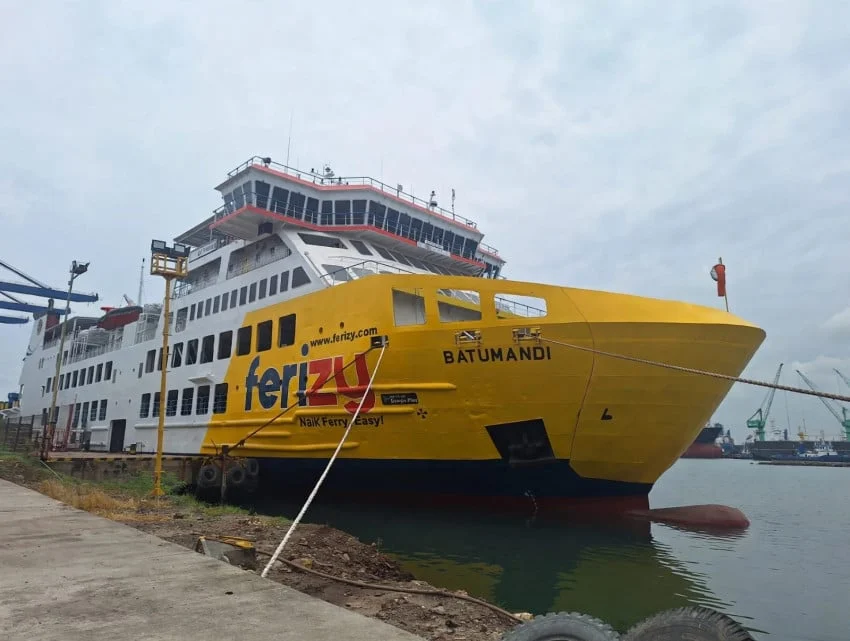
PT Biro Klasifikasi Indonesia (Persero), operating as BKI, has initiated a thorough and exhaustive review of the technical records, historical documentation, and compliance files associated with the passenger-vehicle ferry KMP Batu Mandi. This decisive action follows a sudden and severe fire incident that engulfed the vessel while it was transiting the strategic waters of the Sunda Strait, specifically located in close proximity to Pulau Merak Besar off the coast of Cilegon, Banten. The incident, which sent shockwaves through Indonesia’s national maritime transport sector, has prompted immediate regulatory and classification oversight to determine the procedural and operational context surrounding the disaster.
The comprehensive technical review encompasses a meticulous examination of the ship’s classification status, historical survey logs, maintenance records, and statutory and class certification histories. These elements fall squarely within the direct regulatory purview and operational jurisdiction of BKI. By executing this deep-dive investigation into the vessel’s documentation, the state-owned classification society aims to furnish regulatory bodies, investigators, and maritime stakeholders with verified, highly accurate technical insights. This data-driven approach is deemed vital for understanding the background of the ship prior to the outbreak of the fire, ensuring transparency, and assisting ongoing multi-agency inquiries into the maritime mishap.
Chronology of the Sunda Strait Incident and Evacuation Efforts
The maritime emergency involving KMP Batu Mandi unfolded on the afternoon of October 20, 2026. The ferry was operating along one of Indonesia’s busiest maritime corridors—the crucial artery connecting Merak Port in Java to Bakauheni Port in Sumatra—when unexpected flames erupted onboard. Plumes of thick black smoke quickly billowed from the vessel, triggering emergency protocols by the ship’s master and crew.
Emergency response teams stationed at the Port of Merak, alongside the Indonesian Navy (TNI AL), the Water Police, the National Search and Rescue Agency (BASARNAS), and the Port Authority and Harbormaster Office (KSOP), were immediately mobilized. A rapid deployment of tugboats and rescue vessels was executed to intercept the burning ferry and secure the safety of those onboard. Hundreds of passengers, alongside vehicle drivers and ship crew members, were successfully evacuated from the distressed vessel in a tense, highly coordinated rescue operation.
While the swift response from joint rescue teams prevented any immediate catastrophic loss of life, the incident disrupted passenger and cargo traffic across the Sunda Strait. Ferries operating along the Merak-Bakauheni route experienced delays as maritime traffic control adjusted schedules to accommodate emergency response vessels and clear the navigational lanes surrounding Pulau Merak Besar.
Scope of the BKI Technical Audit and Classification Framework
Detailing the institutional response, Arief Budi Permana, Director of Classification Operations at BKI, issued an official statement outlining the parameters of the investigation. He emphasized that the institution’s primary objective at this stage is to review all pertinent technical archives to maintain absolute data integrity.
"In connection with the incident, BKI is conducting a review of the vessel’s relevant technical documents and historical records, which include the classification status, survey history, and certifications that fall within the scope of BKI’s authority," stated Arief Budi Permana in an official release.
Arief further noted that this documentary scrutiny serves as a foundational step to guarantee that any information disseminated to stakeholders, government regulators, and the broader public is firmly anchored in verified data rather than speculation. BKI formally expressed its profound concern regarding the incident, conveying solidarity with the affected passengers, crew members, and their families, while expressing hope that all survivors and injured parties would receive swift and comprehensive medical and psychological support.
As an authorized entity entrusted with statutory vessel classification, mandatory marine surveys, and safety certification assignments under Indonesian maritime law, BKI reiterated its unwavering commitment to upholding the highest safety thresholds across the national fleet. This commitment is continuously operationalized through rigorous technical inspections, scheduled periodic surveys, and meticulous verification protocols designed to ensure compliance with both national maritime statutes and international conventions, such as the International Convention for the Safety of Life at Sea (SOLAS).
Understanding the Boundaries of Classification Reviews
Industry observers and maritime analysts have underscored the necessity of distinguishing between a classification society’s administrative-technical audit and a formal forensic fire investigation. Addressing this operational boundary, Arief explicitly clarified that while the review of KMP Batu Mandi’s technical track record constitutes a vital contribution to overall maritime safety awareness, it operates strictly within institutional boundaries.
The document review conducted by BKI does not, by itself, determine the definitive root cause of the fire onboard KMP Batu Mandi. Determining the precise origin and mechanical or human triggers of the blaze remains the statutory domain of specialized accident investigation bodies, principally the National Transportation Safety Committee (KNKT – Komite Nasional Keselamatan Transportasi). BKI’s findings, however, will serve as an indispensable reference point for KNKT investigators as they cross-reference maintenance compliance against physical evidence gathered from the wreckage.
The Broader Implications for Indonesia’s Ro-Ro Ferry Sector
The fire aboard KMP Batu Mandi has once again thrust the spotlight onto the safety management systems, maintenance protocols, and regulatory oversight governing Indonesia’s extensive fleet of Roll-on/Roll-off (Ro-Ro) ferries. The Merak-Bakauheni crossing is arguably the most economically vital ferry route in the archipelago, facilitating the daily movement of tens of thousands of passengers, commercial logistics trucks, private vehicles, and essential commodities between Java and Sumatra.
Any disruption or safety failure along this critical logistics corridor carries immediate ripple effects through the national supply chain, impacting commodity prices, distribution timelines, and public confidence in domestic maritime transport. In the wake of the October 20 incident, transportation economists and maritime safety advocates have called for heightened vigilance, suggesting that classification societies, shipowners, and port authorities must collectively re-evaluate preventive maintenance schedules, particularly concerning aging vessels operating at high utilization rates.
Furthermore, the incident has reignited discussions regarding onboard fire prevention, detection systems, and passenger evacuation readiness. Maritime safety experts emphasize that Ro-Ro ferries present unique engineering challenges due to their large, open vehicle decks where flammable materials, commercial fuel loads, and dense vehicle packing can accelerate the spread of fire if suppression systems fail or if safety protocols are bypassed.
Next Steps and Regulatory Outlook
Moving forward, PT Biro Klasifikasi Indonesia is expected to submit its compiled technical dossiers and survey histories to the Ministry of Transportation and the KNKT. This collaborative inter-agency approach is designed to ensure accountability, transparency, and the implementation of corrective measures across similar vessel classes operating in Indonesian waters.
As the maritime community awaits the final investigative findings from the KNKT, the proactive technical audit conducted by BKI underscores the vital role played by classification societies in maintaining the structural and operational integrity of the national fleet. The lessons drawn from the KMP Batu Mandi incident are anticipated to shape future regulatory refinements, reinforcing safety standards and driving a renewed emphasis on risk mitigation across Indonesia’s bustling inter-island ferry network.