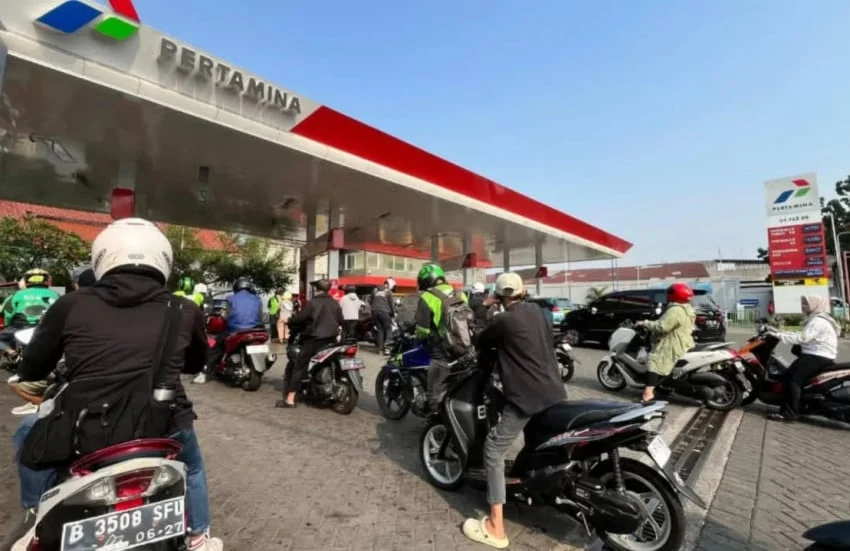
The stability of national energy distribution remains a critical pillar for Indonesia’s economic momentum, public mobility, and overall industrial productivity. In the wake of localized distribution hurdles and surging domestic demand, energy policy observers and industry stakeholders have renewed their calls for structural enhancements within the nation’s fuel supply chain. Maintaining a seamless flow of subsidized and non-subsidized fuel from refineries to final dispensing stations requires an intricate web of logistics, rigorous oversight, and proactive inter-agency coordination.
Recent evaluations by energy analysts highlight the imperative for state-owned energy giant PT Pertamina (Persero) and relevant government bodies to elevate their monitoring mechanisms. By leveraging digital transformation, real-time data tracking, and decentralized regional cooperation, policymakers aim to preemptively neutralize logistical bottlenecks before they manifest as disruptive queues at public refueling stations (SPBU) across the archipelago.
The Imperative for Real-Time Supply Chain Monitoring
Speaking on the necessity of modernized oversight, Sofyano Zakaria, an energy policy observer and the Director of the Center for Public Policy Studies (Puskepi), emphasized that vigilance must be continuous rather than reactive. According to Zakaria, Pertamina and the central government must rigorously monitor fuel inventories in real-time to safeguard against supply disruptions that trigger public anxiety and chaotic queues at gas stations.
This comprehensive monitoring framework extends far beyond simple terminal stock levels. It encompasses the operational readiness of the nation’s massive fleet of fuel tank trucks, the structural reliability of maritime and land distribution corridors, and the throughput capacity of individual retail service stations. Ensuring that every link in this complex logistical chain operates harmoniously is vital to preventing localized deficits.
"The government must also assist Pertamina in identifying the root causes whenever a scarcity occurs. This includes investigating whether the issue stems from absolute product availability, logistical disruptions, infrastructural limitations, or sudden spikes in domestic consumption," Zakaria explained during a telephone interview.
The complexity of Indonesia’s geography—spanning thousands of inhabited islands with diverse topographical challenges—makes logistics a primary determinant of energy security. A disruption in maritime shipping lanes, adverse weather conditions affecting inter-island freight, or pipeline maintenance can temporarily restrict supply to specific regions. Consequently, real-time visibility allows logistics managers to reroute shipments dynamically, mitigating localized shortages before they escalate into systemic crises.
Learning from Regional Disruptions: The Bali Case Study
Energy authorities and market observers continue to reference past distribution anomalies as cautionary tales for future policy formulation. A prime example highlighted by analysts is the localized distribution friction previously experienced in Bali, where sudden surges in tourism-driven demand coupled with minor logistical delays created localized supply tightness.
Such incidents underscore the vulnerability of regional fuel markets to rapid demographic shifts and economic revivals. Zakaria stressed that Pertamina and government regulators must ensure that operational failures witnessed in regions like Bali are not repeated elsewhere in the country.
To evaluate the success of supply chain interventions, observers look toward several key performance indicators:
- Inventory availability across all storage terminals and retail outlets.
- A measurable reduction in waiting times and physical queues at SPBU locations.
- The adherence to precise delivery schedules by transport fleets.
- Enhanced service quality and responsiveness at the pump level.
- A noticeable decline in public grievances and consumer complaints regarding fuel accessibility.
By continuously auditing these metrics, regulatory bodies can maintain tight quality control over the distribution network and uphold consumer confidence in the national energy apparatus.
Collaborative Governance: The Role of Ministries, Regional Governments, and Law Enforcement
Addressing the multifaceted challenges of fuel distribution transcends the operational mandate of a single corporate entity. It demands a synchronized, multi-stakeholder approach involving the Ministry of Energy and Mineral Resources (ESDM), the Downstream Oil and Gas Regulatory Agency (BPH Migas), local government administrations (Pemda), and law enforcement agencies.
Zakaria underlined the critical importance of intensifying coordination among these entities. Regional governments possess granular knowledge of their respective territories, enabling them to anticipate demographic surges, localized economic activities, and infrastructure constraints that might influence fuel demand patterns. Local governments play a pivotal role in communicating regional peculiarities to central authorities, facilitating tailored supply allocations.
Concurrently, law enforcement agencies carry the heavy responsibility of safeguarding the integrity of the subsidized fuel distribution system. The misappropriation, illegal hoarding, and illicit resale of subsidized products—such as Solar (diesel) and Pertalite (RON 90 gasoline)—by rogue elements remain persistent challenges. These illegal practices not only drain state finances allocated for energy subsidies but also artificially induce localized scarcity, directly harming ordinary citizens and commercial transport operators who rely on legitimate access.
Active enforcement and swift legal action against perpetrators are indispensable for preserving market order. By clamping down on illegal distribution networks, security forces help ensure that subsidized fuels reach their intended beneficiaries: lower-income households and micro, small, and medium enterprises (MSMEs).
Broader Implications for National Energy Resilience
The broader macroeconomic implications of maintaining a stable fuel supply are profound. Energy is the lifeblood of transport, manufacturing, agriculture, and retail sectors. Any friction in fuel availability inevitably exerts upward pressure on logistics costs, which subsequently ripples through the supply chain to affect consumer goods prices and inflation rates.
Recent strategic milestones, such as the operational optimization and upgrading of domestic refining facilities like the Balikpapan Refinery—which has recently achieved near-full operational capacity, securing up to 99% of national fuel inventory requirements—demonstrate that Indonesia possesses robust primary production capabilities. However, production capacity alone is insufficient if downstream distribution channels suffer from logistical bottlenecks or regulatory loopholes.
The challenge, therefore, lies in bridging the gap between upstream refining capacity and downstream retail availability. As Indonesia’s domestic energy consumption continues to climb alongside economic expansion and population growth, the demand for sophisticated, technology-driven supply chain management will only intensify.
Path Forward and Strategic Recommendations
To fortify Indonesia’s energy distribution infrastructure against future shocks, industry experts recommend a sustained focus on several strategic initiatives:
- Digital Integration: Expanding the integration of Internet of Things (IoT) sensors and automated inventory tracking across all storage depots and mobile transport units to provide unhindered visibility to dispatchers.
- Predictive Analytics: Utilizing historical consumption data alongside predictive modeling to anticipate demand spikes driven by seasonal holidays, tourism cycles, and industrial expansions.
- Infrastructure Modernization: Continuing investments in jetty upgrades, pipeline expansions, and storage terminal capacities, particularly in remote and outer islands.
- Transparent Communication: Maintaining open communication channels between Pertamina, BPH Migas, and the public to prevent panic buying during minor logistical adjustments.
Through unwavering adherence to these principles, reinforced by stringent oversight and collaborative governance, Indonesia can secure a resilient, efficient, and transparent energy supply chain capable of supporting sustainable national development for years to come.