Jakarta (ANTARA) – Her Majesty Queen Máxima of the Netherlands has successfully concluded a significant working visit to Indonesia, spanning from Monday, November 24, to Thursday, November 27, 2025. The visit underscored a crucial focus on advancing financial health and inclusive development across the archipelago. Queen Máxima engaged with a diverse range of stakeholders, from rural entrepreneurs and urban youth to high-level government officials and international development organizations, all in her capacity as the United Nations Secretary-General’s Special Advocate (UNSGSA) for Inclusive Finance for Development. Her itinerary, carefully crafted to highlight both progress and challenges in financial inclusion, took her to key economic hubs and burgeoning communities in Central Java, Jakarta, and West Java, reinforcing Indonesia’s strategic importance in the global financial inclusion agenda.
The Mandate of the UNSGSA: A Global Advocate for Financial Inclusion
Queen Máxima’s presence in Indonesia was distinctly in her role as the UNSGSA, a position she has held since 2009. This distinguished mandate empowers her to advocate globally for universal access to affordable, effective, and safe financial services. The UNSGSA’s office works with governments, regulators, and the private sector to promote policies and innovations that expand financial inclusion, recognizing its foundational role in achieving sustainable development goals, poverty reduction, and women’s economic empowerment. Unlike a state visit, her engagements as UNSGSA are focused on technical dialogue, sharing best practices, and catalyzing partnerships that foster greater financial resilience among vulnerable populations. Her commitment stems from a belief that financial access—from basic savings accounts and credit to insurance and digital payment systems—is not merely a convenience but a fundamental enabler of individual and communal prosperity, allowing people to manage risks, invest in their futures, and seize economic opportunities.
Indonesia: A Dynamic Landscape for Financial Inclusion
Indonesia, with its vast archipelago, diverse population, and rapidly digitizing economy, presents both immense opportunities and complex challenges for financial inclusion. The nation has made significant strides in recent years, with the financial inclusion rate steadily climbing, largely driven by the proliferation of digital financial services and mobile banking. According to data from the Financial Services Authority (OJK), Indonesia’s financial inclusion index reached 85.10 percent in 2022, a notable increase from previous years. However, disparities persist, particularly in remote areas, among women, and micro, small, and medium-sized enterprises (MSMEs). MSMEs, which form the backbone of the Indonesian economy, contributing over 60 percent to the GDP and employing more than 97 percent of the workforce, often face significant hurdles in accessing formal credit and financial literacy resources. Queen Máxima’s visit aimed to delve into these nuances, examining how innovative solutions and policy frameworks can bridge existing gaps and ensure that financial growth is genuinely inclusive.
A History of Engagement: Queen Máxima’s Enduring Connection with Indonesia
This visit marked Queen Máxima’s fifth trip to Indonesia, underscoring her sustained interest and commitment to the country’s development trajectory. Her previous visits in her UNSGSA capacity occurred in 2012, 2016, and 2018, each time focusing on different facets of financial inclusion and monitoring progress. These repeated engagements highlight a long-term collaborative relationship, allowing for continuity in dialogue and strategic guidance. Beyond her role as UNSGSA, Queen Máxima also accompanied King Willem-Alexander on a state visit to Indonesia in 2020, demonstrating the broader diplomatic ties between the Netherlands and Indonesia. Born on May 17, 1971, and married to King Willem-Alexander in Amsterdam in 2002, her background in international finance prior to her royal duties further enhances her expertise and credibility in this specialized advocacy role. The recurrent nature of her visits signifies a deep-seated belief in Indonesia’s potential and its role as a regional leader in demonstrating effective financial inclusion strategies.
Detailed Itinerary: A Journey Through Indonesia’s Financial Landscape
The three-day working mission, officially spanning from Tuesday, November 25, to Thursday, November 27, was meticulously planned to cover a spectrum of financial inclusion initiatives and challenges.
Tuesday, November 25: Central Java Focus – Empowering MSMEs and Women
Queen Máxima commenced her intensive schedule in Central Java, a region celebrated for its vibrant artisanal industries and burgeoning MSME sector. Her first stop was a garment factory in Sragen Regency. This visit provided a firsthand look at the working conditions and financial needs of industrial laborers. Discussions likely centered on the importance of digital wage payments, access to savings mechanisms, and financial literacy programs for factory workers, many of whom are rural migrants sending remittances home. Sources familiar with the visit indicated that conversations highlighted how stable, formal financial access could significantly improve workers’ economic resilience and planning for the future.
Following the factory visit, Queen Máxima traveled to Kampung Batik Laweyan in Solo (Surakarta), a historic batik village renowned for its intricate textile heritage and entrepreneurial spirit. Here, she engaged with local artisans, predominantly women, who manage small businesses rooted in traditional crafts. The focus of these discussions was on "financial health"—a holistic concept encompassing not just access to financial products but also the ability to manage finances effectively, cope with financial shocks, and invest in future growth. Artisans likely shared their experiences with microfinance, digital payment platforms for sales, and the challenges of scaling their businesses while maintaining cultural integrity. The visit underscored the critical role of MSMEs, particularly those led by women, in driving local economies and preserving cultural heritage, while also highlighting their persistent need for tailored financial solutions.
The day culminated with Queen Máxima attending an event hosted by Women’s World Banking at Pura Mangkunegaran, the historical palace in Solo. This gathering brought together a diverse group of young people, university students, and entrepreneurs. The interactive session provided a platform for participants to share their experiences with various financial products and services, from mobile banking applications to small business loans. Queen Máxima actively listened to their stories, gaining insights into the practical impact of financial inclusion initiatives on their daily lives and entrepreneurial aspirations. The discussions emphasized the transformative power of financial literacy and access for the younger generation, enabling them to build more secure financial futures and contribute to innovation.
Wednesday, November 26: Jakarta and West Java – Policy, Development, and Affordable Housing
The second day of the visit shifted its focus to policy dialogues and broader development initiatives, starting in Jakarta. In the morning, Queen Máxima visited the local United Nations office, where she participated in a roundtable discussion with various development organizations. This high-level dialogue provided an opportunity to align strategies, share insights on global best practices in financial inclusion, and discuss coordinated efforts to support Indonesia’s development goals. The discussions likely touched upon the UN Sustainable Development Goals (SDGs), particularly those related to poverty eradication (SDG 1), gender equality (SDG 5), and decent work and economic growth (SDG 8), all of which are deeply intertwined with financial inclusion.
Subsequently, Queen Máxima held a meeting with representatives from the International Finance Corporation (IFC), a member of the World Bank Group, in Jakarta. The discussions centered on the development of lending programs that contribute to economic growth and financial health. The IFC plays a crucial role in promoting private sector development in emerging markets, often through investments in financial institutions that expand access to finance for underserved segments. This meeting likely explored innovative financing models, risk-sharing mechanisms, and digital solutions that can accelerate inclusive economic development in Indonesia.
In the afternoon, Queen Máxima traveled to the Gran Harmoni Cibitung subsidized housing complex in Bekasi Regency, West Java. This complex is notable for providing low-emission homes to low- and middle-income communities, addressing a critical need for affordable housing. During her visit, she was warmly welcomed into a resident’s home, engaging in direct conversation with first-time homeowners. This interaction offered a poignant perspective on the life-changing impact of secure housing and the financial mechanisms that make it accessible. The visit highlighted the innovative partnership models required to deliver affordable housing solutions, particularly for those with limited access to formal credit.
Further demonstrating the innovative approaches being explored, Queen Máxima inspected a "waste bank" facility within the housing complex. This ingenious system allows residents to pay their house installments by depositing recyclable waste, effectively turning environmental stewardship into a means of financial contribution. This model, which promotes both sustainability and financial inclusion, drew significant appreciation from the Queen. She also observed the contract signing process for dozens of prospective homeowners, a moment symbolizing the realization of their dreams for secure housing. This segment of the visit underscored how integrated solutions, combining social, environmental, and financial elements, can create powerful pathways to economic empowerment.
Later on Wednesday afternoon, Queen Máxima visited Deloitte Indonesia in Jakarta. Her discussions with employers focused on how companies can contribute to the financial health of their employees and clients. This session delved into corporate responsibility in promoting financial literacy, offering access to beneficial financial products, and implementing fair wage practices. The dialogue emphasized that a financially healthy workforce is more productive, resilient, and engaged, benefiting both individuals and the broader economy. It also touched upon how professional service firms can advise their clients on implementing similar inclusive financial strategies.
Thursday, November 27: Policy Dialogue and Presidential Engagement
The final day of Queen Máxima’s visit was dedicated to high-level policy discussions and a pivotal meeting with Indonesia’s head of state.
Queen Máxima participated in a crucial agenda on financial literacy with key Indonesian financial authorities: the Otoritas Jasa Keuangan (OJK – Financial Services Authority), Bank Indonesia (BI – Central Bank), and the Kementerian Keuangan (Kemenkeu – Ministry of Finance). This collaborative session highlighted the coordinated efforts of these institutions in developing and implementing national strategies to enhance financial literacy and consumer protection. Discussions likely revolved around the effectiveness of existing educational programs, the role of digital platforms in disseminating financial knowledge, and strategies to reach underserved populations with critical financial information. The collaboration underscored Indonesia’s commitment to building a financially literate populace capable of making informed decisions.
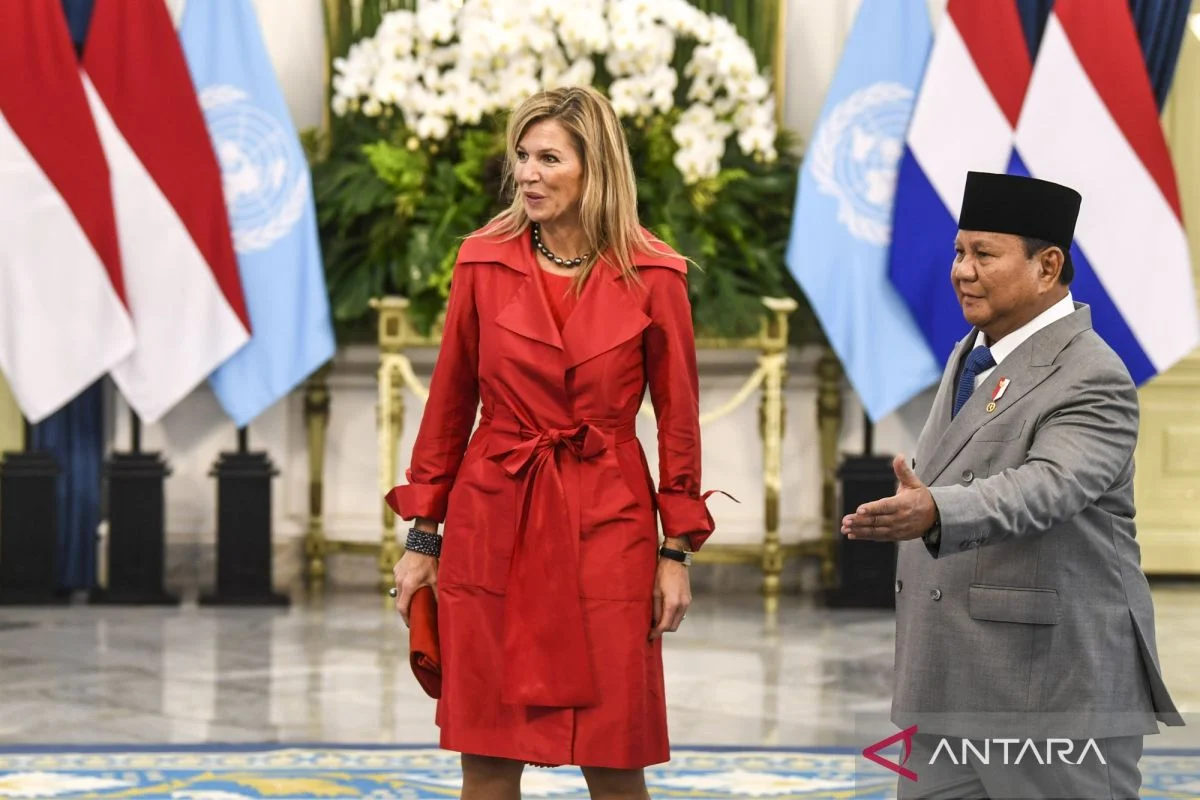
The culmination of her visit was a meeting with President Prabowo Subianto at the Merdeka Palace in Jakarta. This significant engagement provided Queen Máxima with the opportunity to convey her findings, observations, and impressions from her extensive tour. The meeting, which included a private discussion and a luncheon, served as a platform to reinforce the importance of financial inclusion within Indonesia’s national development agenda and to discuss potential areas for continued collaboration and support. President Subianto likely reiterated Indonesia’s commitment to inclusive economic growth and its appreciation for the UNSGSA’s ongoing advocacy. Such high-level dialogues are instrumental in translating on-the-ground observations into actionable policy recommendations and securing political will for financial inclusion initiatives.
Overarching Themes and Impact of the Visit
Queen Máxima’s visit reinforced several overarching themes critical to Indonesia’s financial inclusion journey:
- Digital Transformation: The pervasive role of digital financial services (DFS) was a recurring thread, from mobile payments for batik artisans to digital platforms for housing loan applications. The visit highlighted the potential of technology to leapfrog traditional barriers to access, but also underscored the need for robust digital literacy and consumer protection frameworks.
- Women’s Economic Empowerment: Many of her engagements, particularly in Sragen and Solo, emphasized the central role of women as entrepreneurs, workers, and financial decision-makers. Empowering women with financial tools is recognized as a powerful catalyst for family well-being and broader economic development.
- Holistic Financial Health: Beyond mere access to products, the visit championed the concept of "financial health," advocating for programs that teach individuals how to save, manage debt, and plan for the future, thereby building true financial resilience.
- Multi-Stakeholder Collaboration: The diverse range of her meetings—from local communities to international bodies and government ministries—underscored the necessity of a collaborative ecosystem involving public, private, and non-profit sectors to achieve comprehensive financial inclusion.
- Innovation in Affordable Housing: The waste-to-payment model observed in Bekasi exemplified how creative solutions can address multiple development challenges simultaneously, linking environmental sustainability with affordable housing and financial access.
The visit is expected to have several implications. It serves to elevate the profile of financial inclusion within Indonesia’s national discourse, potentially galvanizing further policy action and resource allocation. By bringing global best practices and a high-profile international advocate, it can inspire new partnerships and innovative pilot projects. Furthermore, the detailed observations and insights shared with President Subianto and key financial authorities could directly inform policy adjustments and strategic priorities in Indonesia’s ongoing efforts to achieve universal financial access and improve the financial health of its citizens. The focus on concrete, on-the-ground initiatives alongside high-level policy dialogue ensures that the advocacy is both practical and strategically impactful.
Looking Ahead: The Future of Financial Inclusion in Indonesia
Queen Máxima’s latest visit reaffirms Indonesia’s pivotal role in the global financial inclusion landscape. As the nation continues its economic growth trajectory, ensuring that all segments of society have access to and can effectively utilize financial services remains a paramount objective. The discussions and observations from this visit will undoubtedly contribute to the ongoing refinement of Indonesia’s national financial inclusion strategy, pushing towards more innovative, equitable, and sustainable models. The engagement of the UNSGSA provides not only a spotlight on Indonesia’s efforts but also a valuable conduit for international expertise and partnership, fostering a future where financial resilience is a reality for all Indonesians. The long-term impact of such high-level advocacy lies in its capacity to translate global principles into local action, driving tangible improvements in the lives of millions.