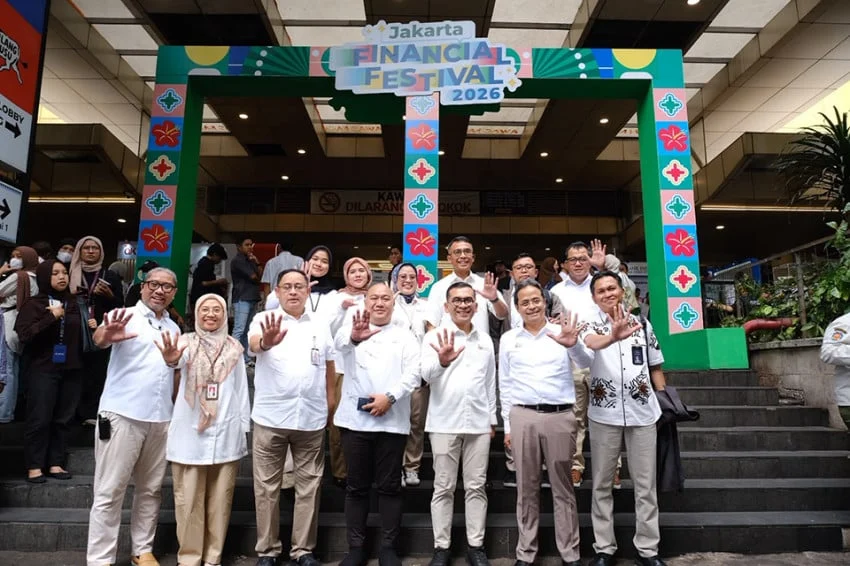
The inaugural Jakarta Financial Festival (FinFest) 2026, held at the iconic Blok M Square in South Jakarta, concluded its two-day run on October 24, 2026, marking a significant milestone in the national effort to bolster financial literacy and inclusion. The event, which served as the regional highlight of the Month of Financial Inclusion (Bulan Inklusi Keuangan), brought together regulators, private sector financial institutions, and thousands of Jakarta residents in an immersive experience designed to bridge the gap between complex financial products and the general public.
Co-organized by the Jakarta Provincial Government, the Financial Services Authority (OJK), Bank Indonesia, and the Communication Forum for the Financial Services Industry (FKIJK) of DKI Jakarta, the festival acted as a central hub for financial education. By creating a pedestrian-friendly, interactive environment in one of Jakarta’s busiest commercial districts, organizers successfully reached a demographic that might otherwise be intimidated by traditional banking environments.
Chronology and Event Dynamics
The festival commenced on the morning of October 23, 2026, with an opening ceremony that emphasized the urgency of digital financial adoption. Throughout the first day, the venue saw a steady stream of visitors, ranging from students and small business owners to retirees interested in investment instruments.
The layout of the festival was strategically designed to foster engagement. Unlike traditional banking halls, the FinFest booths were built with "edutainment" concepts in mind. Financial advisors were stationed at interactive kiosks, providing real-time consultations on savings plans, credit management, and digital payment systems.
By the second day, October 24, the momentum intensified. Workshops on financial planning, micro-entrepreneurship, and cybersecurity in digital banking were conducted, drawing large crowds. The closing ceremony, held on Saturday evening, served as the formal wrap-up, where officials reviewed the performance metrics that ultimately defined the event as a benchmark for future regional financial outreach programs.
Quantifying Success: Impact Metrics
The data released by the OJK Jabodebek office provides a clear picture of the event’s efficacy. With a total attendance nearing 7,500 over 48 hours, the festival effectively translated foot traffic into tangible financial activity.
Perhaps the most critical indicator of success was the opening of over 1,000 new financial accounts. This metric serves as a direct proxy for financial inclusion, indicating that the event successfully converted non-banked or under-banked individuals into active participants in the formal financial system. Furthermore, the mobilization of over Rp 5 billion in funds—ranging from new savings deposits to initial capital investments—demonstrates the latent economic power of the participants and their willingness to engage with financial products when provided with accessible, trustworthy guidance.
These figures align with the broader national target of achieving 90% financial inclusion by 2024, a goal the government has been pushing vigorously through various grassroots campaigns. The success at Blok M Square suggests that localized, high-visibility events are significantly more effective than broad-scale digital campaigns alone.
Official Perspectives and Institutional Synergy
Edwin Nurhadi, the Head of OJK Jabodebek, expressed his satisfaction with the results during the closing remarks. "Alhamdulillah, the reports indicate that the two-day execution was a resounding success. The level of public enthusiasm exceeded our initial projections," Nurhadi stated. He emphasized that the primary objective was not merely to promote specific products, but to demystify the financial sector for the average citizen.
The collaboration between the public and private sectors was a cornerstone of the event. The FKIJK DKI Jakarta played a vital role in coordinating the participating banks and financial technology firms, ensuring that the services offered were diverse and competitive. This synergy is intended to serve as a blueprint for future events. By pooling resources, the regulatory bodies and the industry can reduce the cost of customer acquisition while simultaneously fulfilling their corporate social responsibility mandates.
Recognition of Excellence: The Bank Jakarta Case
A highlight of the closing ceremony was the recognition of institutions that went above and beyond in their engagement efforts. Bank Jakarta, in particular, was the standout performer, securing two major awards: "Most Educative Booth" and "Most Attractive Booth."
The criteria for these awards were based on visitor feedback, the quality of financial literacy materials distributed, and the innovative use of digital kiosks to explain complex products like insurance and investment funds. Bank Jakarta’s success underscores a shifting trend in the banking industry: the move toward "customer-centric" design. By prioritizing education over aggressive sales tactics, the institution managed to build higher trust levels with potential clients, which, according to analysts, is the most sustainable way to drive long-term customer retention.
Broader Implications for Financial Inclusion
The FinFest 2026 serves as a microcosm of the challenges and opportunities within the Indonesian financial landscape. While the nation has seen a surge in digital banking, a significant portion of the population remains wary of formal institutions due to concerns over fraud, complexity, and high fees.
- Building Trust through Presence: The physical nature of the festival allowed for face-to-face interactions, which remain the most effective method for building trust in the Indonesian market.
- Standardization of Literacy: The event helped standardize the message of financial literacy, ensuring that visitors received consistent, accurate, and regulated information, which is a major countermeasure against the prevalence of illegal online lending platforms.
- Digital Integration: Many of the accounts opened were linked to digital banking applications, facilitating an immediate transition into the digital ecosystem. This is crucial for the government’s efforts to reduce reliance on cash and improve the transparency of the national economy.
Future Outlook and Sustainability
The success of FinFest 2026 is expected to influence the OJK’s strategy for the upcoming year. Given the positive response, there is a strong push to institutionalize this format, perhaps expanding it to other major transit hubs or residential districts across Jakarta.
For the participants, the impact is expected to be long-term. Financial inclusion is not a one-time transaction; it is a lifecycle process. The "Having Fund 2026" initiative, mentioned in parallel events by institutions like MNC University and MNC Sekuritas, highlights a growing trend of targeting specific demographics, such as students, to instill financial habits early.
Moving forward, the challenge will be to ensure that these newly opened accounts remain active. Financial regulators are now tasked with monitoring these accounts to ensure that the initial enthusiasm translates into habitual saving and responsible borrowing. If the momentum from the Blok M Square event can be sustained, the city is well-positioned to see a significant uptick in the financial health of its residents.
In conclusion, the Jakarta Financial Festival 2026 has set a high bar for future outreach initiatives. By combining regulatory oversight with private sector innovation and a public-facing, accessible venue, the organizers have proven that when financial literacy is made engaging and convenient, the public is more than willing to participate in the formal economy. As Jakarta continues to evolve into a regional financial hub, the integration of all segments of society into the financial system remains a non-negotiable priority for sustainable economic growth. The success at Blok M Square is not just a statistical achievement; it is a testament to the effectiveness of collaborative governance and the growing financial sophistication of the Indonesian public.