The media landscape in Southeast Asia’s largest economy is undergoing a profound transformation as major domestic players pool their resources to reshape the future of information dissemination. In a landmark development for the Indonesian corporate and broadcasting sectors, PT Republik Media Anak Bangsa (RMAB), PT Media Nusantara Citra Tbk (MNCN), and PT Sinergi Terang Abadi (STA) have officially formalized a high-stakes strategic partnership. The collaboration aims to construct a comprehensive, fully integrated media ecosystem capable of navigating the complexities of the digital age while simultaneously projecting Indonesian perspectives onto the international stage.
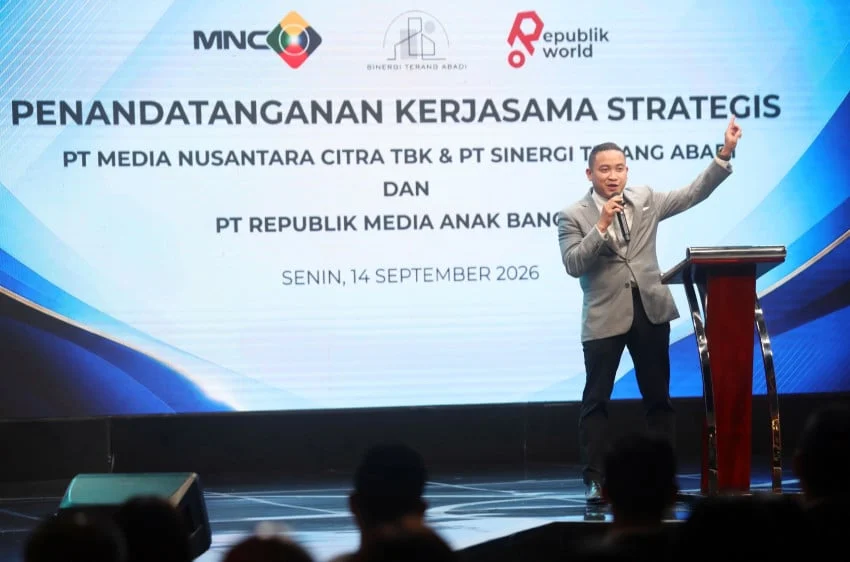
The official signing ceremony took place at the prestigious iNews Tower in Jakarta, drawing prominent figures from the nation’s media and corporate elite. Among the key signatories were Norman Joesoef, Founder and Chairman of Republikorp Group; Hary Tanoesoedibjo, Executive Chairman of MNC Group; and Angela Tanoesoedibjo, CEO of iNews Media Group and Co-CEO of MNC Group. This tripartite alliance signals a convergence of technological innovation, expansive broadcasting networks, and strategic content production designed to fortify Indonesia’s sovereign position in the global information hierarchy.
Strategic Vision for the Global Arena
Speaking to members of the press following the formal signing proceedings, Norman Joesoef elaborated on the broader geopolitical and cultural ambitions underpinning the collaboration. He emphasized that Indonesia, as an emerging global economic power and a leader within the ASEAN region, must transcend its historical role as a passive consumer of foreign-produced media. Instead, Joesoef argued, the nation must actively transition into a producer and global distributor of accurate, balanced, and credible journalism.
"For the international level, we certainly want to compete with the big names so that Indonesia is not merely a recipient of news, but also a creator and deliverer of news that provides accurate information to the international world," Joesoef stated in the aftermath of the ceremony.
In an era dominated by cross-border digital platforms, algorithmic content curation, and transnational media conglomerates, developing nations frequently struggle to ensure their domestic narratives are represented fairly and comprehensively abroad. By combining the vast syndication and broadcasting infrastructure of MNCN with the innovative developmental frameworks of RMAB and STA, the newly formed alliance seeks to bridge this gap. The objective is to build a robust international broadcasting and digital distribution apparatus that can project Indonesian viewpoints, cultural achievements, and economic realities to audiences across continents with clarity and authority.
The Anatomy of the Partnership: Key Stakeholders
To fully understand the gravity of this partnership, it is essential to examine the individual strengths and strategic footprints of the three corporate entities involved. PT Republik Media Anak Bangsa operates under the broader umbrella of the Republikorp Group, a dynamic conglomerate known for its diverse portfolio spanning technology, strategic industries, and modern media solutions. Republikorp’s involvement brings a forward-looking technological perspective to the alliance, focusing on digital resilience, advanced content delivery systems, and next-generation media infrastructure.
On the other hand, PT Media Nusantara Citra Tbk (MNCN) stands as a titan of the Indonesian media landscape. As the media arm of MNC Group, MNCN commands an extensive empire encompassing free-to-air television networks (RCTI, MNC TV, GTV, and iNews), an unmatched library of intellectual property, robust production houses, and a rapidly expanding digital and social media footprint. MNCN’s traditional dominance in linear broadcasting, paired with its aggressive pivot toward digital streaming and web-based portals, provides the operational backbone required to scale the ambitions of the new partnership.
The third pillar of the alliance, PT Sinergi Terang Abadi (STA), brings critical strategic synergies to the table. While operating with a focus on synergistic business developments and integrated market solutions, STA acts as a vital bridge connecting the operational capacities of RMAB and the vast media infrastructure of MNCN. Together, the combined resources of these three entities create a formidable operational ecosystem capable of weathering the rapid structural shifts currently disrupting traditional media business models worldwide.
Chronology and Background Leading to the Alliance
The path toward this high-level integration has been shaped by years of rapid digital disruption within the Indonesian media sector. Over the past decade, traditional print and broadcast media have faced intense pressure from global social media platforms, shifting consumer habits, and the rapid migration of advertising revenue toward digital ecosystems.
In response, Indonesian media companies have increasingly sought consolidation and strategic partnerships to achieve economies of scale. Preliminary discussions between Republikorp Group, MNC Group, and STA regarding a potential collaborative framework began taking shape in late 2025, driven by a shared recognition that fragmented domestic players would struggle to compete effectively against deep-pocketed multinational technology firms.
By early 2026, exploratory talks evolved into concrete negotiations surrounding joint content development, cross-platform distribution, and technological resource sharing. The culmination of these extensive planning phases resulted in the formalization of the agreement on Monday, September 14, 2026, at the iNews Tower. Industry analysts view the timing of this alliance as particularly strategic, coinciding with Indonesia’s broader national push toward digital transformation and the strengthening of its creative economy.
Broader Economic and Industrial Implications
The formation of the RMAB-MNCN-STA alliance carries significant implications for the broader Indonesian economy and the domestic media industry at large. By pooling infrastructure, data analytics capabilities, and content production resources, the partnership is expected to drive operational efficiencies and stimulate innovation across the sector.
- Enhanced Content Quality and Diversity: With MNCN’s massive production infrastructure backed by the strategic insights of RMAB and STA, audiences can anticipate a higher caliber of investigative journalism, educational programming, and cultural content. The integration aims to elevate production standards to meet international benchmarks, making Indonesian media products more attractive to global buyers and streaming platforms.
- Monetization and Digital Resilience: The advertising landscape has shifted irrevocably toward digital platforms. By creating a unified ecosystem, the alliance can offer advertisers targeted, cross-platform campaigns that span television, digital portals, mobile applications, and social media channels, thereby maximizing advertising yield and revenue retention within the domestic market.
- Countering Misinformation and Enhancing Credibility: In an age characterized by the proliferation of unverified information and algorithmic echo chambers, the strengthening of established, credible media institutions is paramount. The alliance’s stated commitment to delivering accurate and balanced news serves as a bulwark against misinformation, reinforcing public trust in journalistic integrity.
- Job Creation and Talent Development: Expanding the operational footprint of Indonesia’s media industry naturally generates employment opportunities for journalists, digital engineers, content creators, broadcast technicians, and administrative professionals. Furthermore, collaborative training initiatives within the integrated ecosystem will likely foster a new generation of media talent equipped to handle the demands of a globalized media environment.
Official Responses and Future Outlook
While the formal announcement marks a major milestone, leadership from all three entities emphasized that the signing is merely the foundational step of a long-term strategic roadmap. Executive Chairman of MNC Group Hary Tanoesoedibjo noted that the partnership reflects a shared vision for national progress, emphasizing that the modern media landscape requires unprecedented levels of cooperation to remain competitive.
Similarly, Angela Tanoesoedibjo highlighted the importance of agility in modern broadcasting. As CEO of iNews Media Group and Co-CEO of MNC Group, she pointed out that integrating television broadcasting with cutting-edge digital platforms and strategic corporate partnerships will enable the group to reach broader demographic segments, particularly tech-savvy younger generations who consume news and entertainment predominantly through digital devices.
Market observers and financial analysts have responded favorably to the announcement, noting that strategic consolidations of this nature are essential for the long-term sustainability of Indonesia’s creative and information sectors. As the alliance begins rolling out its joint initiatives in the coming months, stakeholders will be closely monitoring how effectively the tripartite structure translates its ambitious vision into measurable market outcomes.
Ultimately, the partnership between RMAB, MNCN, and STA represents more than a standard corporate merger or routine business agreement. It stands as a concerted national effort to redefine Indonesia’s voice on the world stage—ensuring that as the global village continues to shrink through digital connectivity, the stories told about Indonesia, and by Indonesia, are authored with independence, accuracy, and unwavering global ambition.