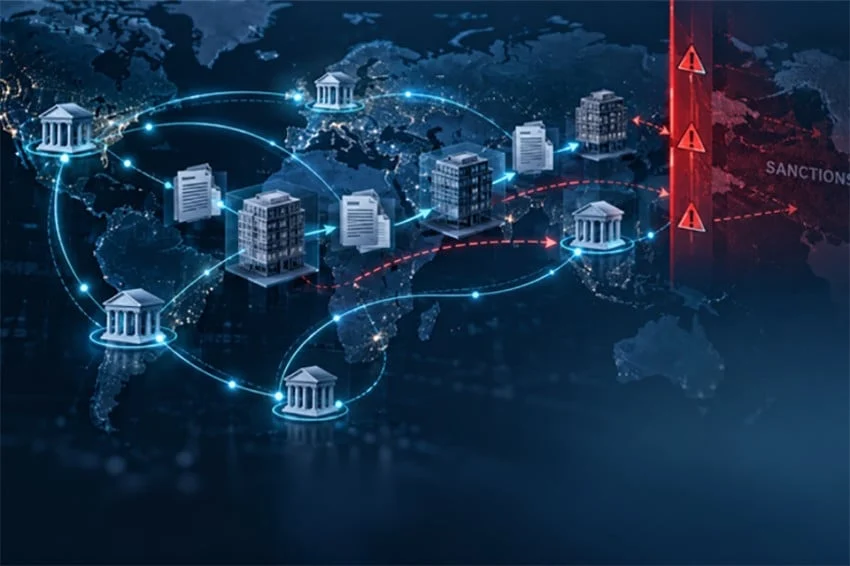
The global financial landscape is witnessing a profound realignment as Russian entities pivot away from Western-dominated payment infrastructures. At the heart of this shift is A7, a specialized cross-border payment platform that has emerged as a critical instrument for maintaining trade connectivity despite rigorous international sanctions. Following successful operational rollouts in Nigeria and Zimbabwe, A7 has announced an aggressive expansion strategy aimed at capturing market share across the African continent. This strategic move signifies a broader effort by Moscow to circumvent the isolation imposed by the United States and its allies, effectively creating a parallel financial ecosystem that facilitates trade outside the reach of the SWIFT network.
The initiative, detailed by executives during the recent RBC Foreign Trade Forum in Moscow, underscores a deepening economic engagement between Russia and various African nations. By providing a reliable mechanism for settling international invoices, A7 is positioning itself as an essential bridge for Russian exporters in the agriculture and metallurgical sectors, while simultaneously supporting the growing portfolio of Russian investment projects across Africa.
The Genesis of A7 and the Post-SWIFT Financial Reality
The geopolitical catalyst for the development of A7 can be traced back to early 2022, when the United States, the European Union, and their partners moved to exclude several major Russian financial institutions from the Society for Worldwide Interbank Financial Telecommunication (SWIFT). This decision effectively severed the primary artery for Russian international trade, forcing the Kremlin and state-backed financial entities to seek alternative methods for processing cross-border payments.
Developed in 2024 by Promsvyazbank (PSB)—a Russian state-owned bank primarily tasked with servicing the defense industry—A7 was conceptualized as a bespoke solution to mitigate the impact of these financial barricades. Unlike traditional commercial banking platforms, A7 was built from the ground up to operate within a sanctioned environment, prioritizing resilience and the ability to process transactions in jurisdictions that have maintained neutral or positive trade relations with Moscow.
As of late 2026, the platform has successfully on-boarded approximately 15,000 corporate clients. Its rapid adoption is largely attributed to the urgent needs of Russia’s primary export sectors. With the agricultural sector facing challenges in settling payments for grain shipments and the metallurgical industry grappling with logistics for raw material exports, A7 provided the necessary infrastructure to keep these industries afloat despite the tightening regulatory net.
Strategic Expansion into the African Market
The decision to target Africa as the primary theater for growth is not incidental. Many African nations have adopted a pragmatic approach to international relations, prioritizing their own economic development and food security over aligning with Western sanctions against Russia.
Stanislav Lazarev, the Deputy Managing Director for Sales at A7, articulated the company’s vision during the RBC Foreign Trade Forum. According to Lazarev, the expansion is not merely a commercial pursuit but a strategic necessity to secure the viability of Russian investments in the region. "Our services are engineered to provide a seamless interface for importers and exporters, ensuring that trade flows are not disrupted by the geopolitical volatility inherent in the current global financial system," Lazarev noted.
The initial deployments in Nigeria and Zimbabwe have served as a proof-of-concept. In these markets, A7 has successfully demonstrated that it can facilitate transactions that would otherwise be rejected or frozen by international correspondent banks. By building an independent banking infrastructure centered around Russian-led projects, A7 aims to create a "sanction-proof" corridor that allows for the movement of capital and goods with minimal exposure to Western oversight.
The Technological Edge: Integrating Stablecoins into Trade Finance
A pivotal moment in the evolution of the A7 platform occurred in October 2026, with the launch of "A7 International." This feature represents a significant leap in the platform’s utility, as it integrates blockchain-based assets into traditional trade settlement processes.
The innovation centers on the use of USDT (Tether), a stablecoin pegged to the U.S. dollar. By allowing businesses to settle overseas invoices using USDT, A7 effectively bypasses the traditional correspondent banking system, which relies on the U.S. dollar clearing network—the very system the U.S. government uses to monitor and block sanctioned transactions. The A7 International mechanism allows for the conversion of these digital assets into local fiat currencies, which can then be directly credited to a recipient’s bank account.
This mechanism has proven highly attractive to businesses operating in environments where U.S. dollar liquidity is scarce or where banks are wary of handling transactions involving Russian counterparties. By utilizing a decentralized ledger for the transfer of value, A7 provides a layer of obfuscation and speed that traditional legacy systems struggle to match. Data from the first three quarters of 2026 reflects the effectiveness of this approach: A7 reported a 54% year-on-year increase in total transaction volume, with the frequency of payments rising by 83% during the same period.
Navigating Regulatory Headwinds and Sanctions
The rapid ascent of A7 has not gone unnoticed by the U.S. Department of the Treasury. Last month, Washington imposed formal sanctions on the platform, alleging its involvement in facilitating financial transactions for Iranian entities—a move that underscores the U.S. strategy of targeting the "connective tissue" between sanctioned regimes.
The company has denied these allegations, characterizing the sanctions as a politically motivated attempt to stifle a competitor in the global financial arena. Despite these measures, A7 continues to operate, asserting that its activities are fully compliant with the legal frameworks of the jurisdictions in which it is active.
Analysts note that the effectiveness of U.S. sanctions in this context is increasingly challenged by the existence of non-Western financial networks. "When you remove a major economy from the global financial system, you do not force them into total isolation; instead, you incentivize the creation of alternative, localized, or regional payment systems," explains one financial analyst specializing in emerging markets. "Once these systems achieve a certain level of critical mass, they become significantly harder to dismantle through sanctions alone."
Broader Implications for Global Finance
The expansion of A7 and the increased usage of stablecoins for cross-border trade have broader implications for the future of the global financial architecture. The trend points toward a "bifurcation" of the world economy: one segment continuing to operate within the Western-led, dollar-denominated system, and another segment increasingly reliant on decentralized, blockchain-backed, or regional clearinghouses.
- Erosion of Dollar Dominance: While the U.S. dollar remains the primary reserve currency, the proliferation of platforms like A7 reduces the global dependency on the U.S. clearing system for everyday trade.
- The Role of Stablecoins: The case of A7 proves that stablecoins are transitioning from speculative retail assets to essential tools for institutional trade finance, particularly in high-risk or sanctioned environments.
- African Economic Sovereignty: Many African nations are viewing the availability of alternative payment channels as a means to increase their own bargaining power. By diversifying their trade partners and payment methods, these countries are seeking to insulate their economies from the collateral damage of Great Power competition.
Looking Ahead: The Sustainability of the A7 Model
As A7 prepares for further expansion across the continent, the platform faces significant challenges. The primary obstacle is not the lack of demand, but the potential for secondary sanctions that could pressure African commercial banks to cease cooperation with the platform. To mitigate this risk, A7 is reportedly exploring partnerships with local digital banks and non-bank financial institutions that have less exposure to the U.S. dollar system and are therefore less vulnerable to American regulatory pressure.
Furthermore, the operational stability of A7 will depend on its ability to maintain liquidity in the USDT markets. Any volatility in the stablecoin sector could introduce risks to the exporters and importers relying on the platform. Nonetheless, for as long as the current geopolitical climate persists, the demand for such alternative systems is unlikely to wane.
In conclusion, the rise of A7 represents a significant shift in how international trade is conducted in the 21st century. By leveraging financial technology to bypass traditional barriers, Russia is creating a new, durable, and highly adaptive mechanism for global trade. Whether this model will serve as a permanent fixture of the international financial system or a temporary bridge remains to be seen, but its impact on the efficacy of global sanctions and the structure of international payments is already undeniable. As A7 deepens its footprint in Africa, it serves as a stark reminder that the global financial order is in a state of flux, defined more by technological innovation and geopolitical necessity than by the traditional dominance of centralized banking networks.