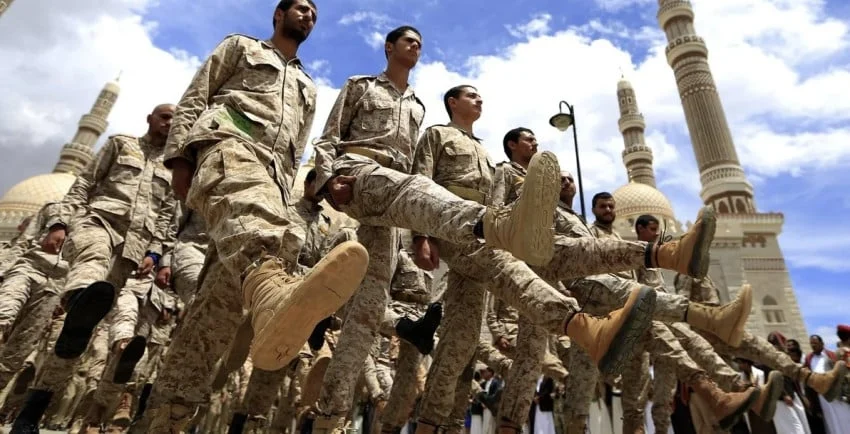
The geopolitical architecture of the Middle East is undergoing a subtle yet profound transformation, forcing international analysts to reevaluate long-held assumptions regarding regional non-state actors. For years, Western and Gulf intelligence agencies characterized the Houthi movement—officially known as Ansar Allah—as little more than a Tehran-directed proxy, operating as an extension of Iran’s Islamic Revolutionary Guard Corps (IRGC) to project power across the Arabian Peninsula. However, contemporary developments, field maneuvers, and shifting strategic objectives indicate that this narrative is increasingly outdated. According to prominent Middle East affairs analyst Lorenzo Kamel, who spoke extensively with Al Jazeera, the Houthi movement now operates with a distinct and growing level of local autonomy. This evolving operational independence demonstrates that the group is not merely executing orders from Tehran, but is instead aggressively pursuing its own domestic, regional, and ideological interests.
The realization that the Houthis possess independent strategic agency carries immense implications for ongoing peace negotiations in Yemen, maritime security in the Red Sea, and the broader diplomatic calculus involving Saudi Arabia, the United States, and Iran. As the group moves to consolidate internal governance, exploit regional instabilities, and expand its footprint near vital global shipping lanes, international stakeholders must adapt their diplomatic frameworks to address a formidable actor driven primarily by localized ambitions rather than foreign directives.
Historical Context and the Evolution of the Houthi Movement
To understand the current trajectory of the Houthi movement, it is necessary to examine its origins in the northern Yemeni governorate of Saada during the early 1990s. Initially established as the "Believing Youth" (Shabab al-Muminin) under the leadership of Hussein Badreddin al-Houthi, the organization began as a Zaidism revivalist movement aimed at protecting the cultural and religious identity of the Zaidi Shia minority against perceived marginalization by the central government in Sanaa, which was increasingly influenced by Sunni Salafi doctrines.
Over the ensuing decade, tensions between the movement and the government of then-President Ali Abdullah Saleh escalated sharply. The turning point occurred in 2004, when Yemeni security forces killed Hussein Badreddin al-Houthi. This event catalyzed a series of violent uprisings known as the Saada Wars (2004–2010), during which the group evolved from a decentralized educational and religious association into a battle-hardened insurgent force. Throughout these conflicts, the Houthis developed sophisticated guerrilla warfare tactics, deep local tribal alliances, and a resilient administrative infrastructure that allowed them to withstand multiple military campaigns by the Yemeni state, often backed by Saudi air power.
When the Arab Spring erupted in Yemen in 2011, precipitating the resignation of President Saleh, the Houthis participated in the Gulf Cooperation Council-brokered National Dialogue Conference. However, feeling sidelined by the transition process led by President Abdrabbuh Mansur Hadi, the group launched a sweeping military offensive in 2014. By September 2014, Houthi fighters had seized control of the capital city, Sanaa, effectively collapsing the internationally recognized government and plunging the impoverished nation into a devastating multi-layered civil war.
Exploiting Regional Chaos to Secure Domestic Sovereignty
The conventional Western security paradigm has historically categorized the Houthis as part of the "Axis of Resistance"—a network of regional militias supported, funded, and armed by Iran. While financial, logistical, and technical support from Tehran, particularly regarding ballistic missile and unmanned aerial vehicle (drone) technology, is well-documented by United Nations panels of experts, analysts like Lorenzo Kamel argue that overemphasizing the Iran connection obscures the movement’s primary drivers.
"They are not merely an extension of Tehran’s proxy network, as they are frequently portrayed, but are actively exploiting regional chaos to strengthen their own domestic sovereignty and compel Saudi Arabia to make concessions," Kamel noted.
By framing their struggle in nationalist terms—resisting foreign aggression and asserting Yemeni self-determination—the Houthi leadership has successfully mobilized domestic populations within the territories under their control, home to roughly 70 to 80 percent of Yemen’s total population. Despite facing severe economic hardships, hyperinflation, and a catastrophic humanitarian crisis, the de facto authorities in Sanaa have prioritized state-building mechanisms, including taxation, internal security enforcement, and curriculum reforms, designed to solidify their long-term grip on power.
This domestic focus explains why the Houthis have frequently engaged in tactical maneuvers that occasionally diverge from or complicate Tehran’s broader regional strategy. While Iran maintains a vested interest in keeping pressure on Western and Israeli shipping lanes in the wake of the Gaza conflict that erupted in October 2023, the Houthis have leveraged these operations to extract maximum leverage from Riyadh. Their ultimate objective is not merely to disrupt international trade on behalf of Iran, but to force Saudi Arabia into a unilateral, permanent peace settlement that recognizes the Houthis as the legitimate ruling authority of Yemen, secures international reconstruction funds, and lifts the remaining economic blockades on ports under their control.
The Saudi Military Intervention and the Burden of Outsourcing Security
The military intervention launched in March 2015 by a Saudi-led coalition, operating under the banner of Operation Decisive Storm, aimed to swiftly defeat the Houthi movement and restore the government of President Hadi. However, years of relentless airstrikes and a strict land, sea, and air blockade failed to dislodge the insurgents from the highlands of northern and western Yemen. Instead, the campaign resulted in what the United Nations has repeatedly described as one of the worst humanitarian catastrophes in modern history, characterized by widespread famine, preventable disease outbreaks, and the near-total collapse of critical public infrastructure.
According to Kamel, the failure of the Saudi-led campaign is largely a consequence of systemic strategic miscalculations and what he describes as "the criminal policies of Saudi Arabia on the ground." Furthermore, he places these contemporary military missteps within a broader historical context, arguing that the Kingdom has historically relied on external powers to shoulder its security burdens rather than investing in sustainable regional diplomacy.
Kamel referenced the Arab Revolt of 1916—during which the House of Saud forged alliances with the British Empire rather than cooperating organically with local, regional political factions—as evidence of a long-standing historical pattern. "Outsourcing security to external actors, as Saudi authorities have frequently done in recent decades, will never produce a lasting formal peace in the Gulf region or the wider area," Kamel asserted. He emphasized that such reliance yields, at best, a fragile "armed stability or militaristic stabilization, which is fundamentally different from true peace."
In recent years, Riyadh has recognized the unsustainability of this military approach, prompting a pivot toward direct diplomatic engagement with the Houthis. Facilitated heavily by Omani mediation, Saudi officials have held direct talks with Houthi delegations in both Muscat and Sanaa. These negotiations represent an implicit acknowledgment by Riyadh that a military victory is unattainable and that future security must be achieved through pragmatic accommodation with the de facto rulers in northern Yemen, bypassing the dysfunctional internationally recognized presidential leadership council.
Expanding Fronts and Strategic Maneuvers
The operational tempo of the Houthi movement has shifted significantly since the stabilization of internal frontlines in 2022, which had largely settled into a stalemate following a UN-brokered truce. While major ground offensives within Yemen paused, the group leveraged the lull to reinforce its military capabilities, expand its manufacturing capacity for advanced weaponry, and position forces near vital strategic choke points.
Chief among these strategic assets is the Bab al-Mandeb Strait, a critical maritime corridor linking the Red Sea to the Gulf of Aden through which approximately 12 percent of global trade and a significant portion of the world’s petroleum shipments pass daily. Since late 2023, the Houthis have demonstrated an unprecedented capability to project power far beyond Yemen’s borders, launching anti-ship ballistic missiles, cruise missiles, and loitering munitions against commercial vessels transiting the Red Sea, the Bab al-Mandeb, and the Gulf of Aden.
These actions prompted the formation of United States-led maritime coalitions, such as Operation Prosperity Guardian, as well as targeted airstrikes by the US and the United Kingdom against Houthi military installations inside Yemen. Rather than deterring the group, these retaliatory strikes have been co-opted into the Houthi domestic narrative of anti-imperialist resistance, galvanizing internal support and providing the movement with a testing ground for asymmetric naval warfare.
By opening new operational fronts and directly engaging Western naval assets, the Houthis have successfully elevated their status from a localized insurgent group to a major regional player capable of disrupting global supply chains and influencing international security architectures. This geographic and operational expansion underscores the autonomy emphasized by analysts like Kamel: the group acts when and where its own strategic calculus dictates, utilizing regional crises to validate its domestic legitimacy and compel international adversaries to negotiate on its terms.
Implications for Regional Diplomacy and Global Security
The evolving independence of the Houthi movement introduces a complex set of challenges for international policymakers, diplomats, and regional stakeholders. Traditional diplomatic frameworks that view the Yemen conflict primarily as a proxy war between Riyadh and Tehran are no longer sufficient for managing the crisis.
1. Complications for the Yemeni Peace Process
For the millions of Yemenis suffering under the protracted humanitarian crisis, the Houthi push for independent recognition complicates the path toward an inclusive, sustainable peace. A bilateral agreement between Saudi Arabia and the Houthis—while necessary for ending the direct cross-border attacks and the Saudi military campaign—risks sidelining other vital Yemeni factions, including southern separatist movements and remnants of the internationally recognized government. This could inadvertently institutionalize a fractured state, laying the groundwork for future domestic conflict.
2. Redefining Deterrence in Maritime Security
The ongoing confrontations in the Red Sea demonstrate the limitations of conventional military deterrence against non-state actors deeply embedded within civilian populations and rugged terrain. Despite sustained airstrikes by Western coalitions, Houthi military capabilities have proven remarkably resilient, sustained by domestic adaptation and localized supply chains. Naval security in the region can no longer rely solely on defensive patrols or punitive strikes; it requires comprehensive diplomatic strategies that address the root political and economic grievances driving the conflict.
3. Rethinking the Iran-Proxy Paradigm
For international intelligence agencies and foreign ministries, the Houthi trajectory serves as a case study in the evolution of modern non-state alliances. While material support from Iran remains a critical component of Houthi military power, viewing the movement as a simple puppet undermines effective diplomacy. Recognizing the Houthis as an autonomous actor with distinct domestic imperatives means that any long-term regional stability pact must engage Sanaa directly, offering concrete economic and political incentives that outweigh the utility of continued confrontation.
Conclusion
The characterization of the Houthi movement as an unyielding proxy of Tehran fails to capture the dynamic political, military, and historical realities unfolding in Yemen today. As analyst Lorenzo Kamel points out, the group’s leadership is navigating the turbulent waters of regional instability to consolidate domestic authority, challenge historical patterns of foreign security dependency in the Gulf, and secure long-term political dominance.
As the Houthis continue to project power across vital maritime routes and engage in high-stakes diplomatic maneuvering with regional heavyweights like Saudi Arabia, the international community must adopt a nuanced, realistic approach. Resolving the Yemen crisis and ensuring stability in the Red Sea corridor will require looking beyond the simple proxy narrative, addressing the complex internal drivers of the conflict, and engaging directly with an autonomous movement determined to carve out its own future on the global stage.