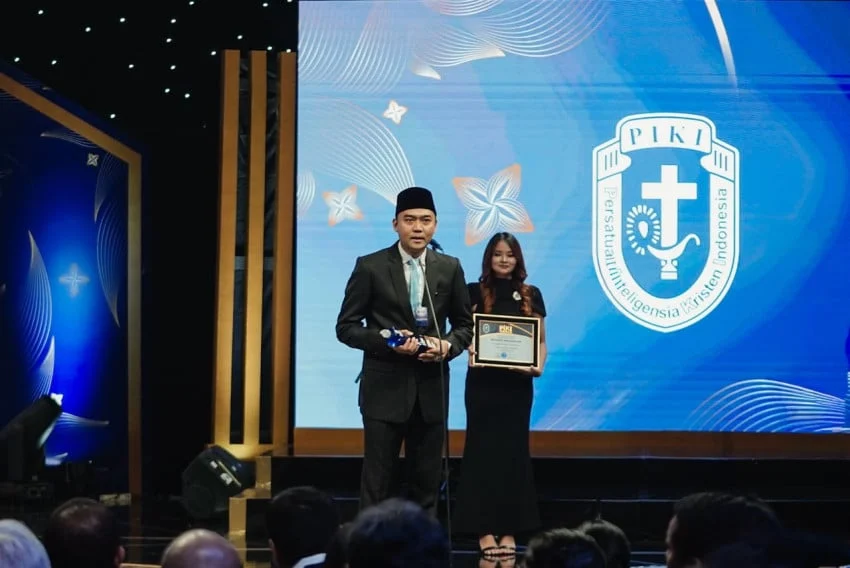
JAKARTA — In a ceremony held on Sunday, October 25, 2026, the Persatuan Inteligensia Kristen Indonesia (PIKI) officially conferred the PIKI Awards 2026 upon Gugun Gumilar, a Special Staff member to the Minister of Religious Affairs of the Republic of Indonesia. The accolade, specifically in the category of "Freedom of Worship Activist," serves as a high-level recognition of Gumilar’s sustained efforts in mitigating religious intolerance and ensuring that all citizens, regardless of their denominational background, can exercise their constitutional right to worship.
The event, which took place in Jakarta, brought together prominent religious leaders, scholars, and civil society representatives. PIKI, a venerable organization dedicated to intellectual engagement within the Christian community in Indonesia, established these awards to highlight individuals and institutions that have demonstrated exceptional commitment to the principles of Pancasila—the nation’s foundational philosophy—specifically regarding the mandate of religious harmony.
The Significance of the PIKI Awards 2026
The PIKI Awards are not merely celebratory; they act as a barometer for the state of religious freedom in Indonesia. In an era marked by rapid digitalization and the subsequent challenges posed by sectarian polarization, the recognition of government officials who bridge the gap between policy and grassroots implementation is increasingly significant.
For the 2026 edition, the selection committee emphasized the importance of "active mediation." This criterion prioritizes candidates who have moved beyond administrative rhetoric to engage in direct field operations, such as resolving permit disputes for houses of worship and mediating conflicts between local communities and religious groups. Gumilar’s track record, particularly his high-profile interventions in various regions, aligned perfectly with the committee’s benchmarks.
Chronology of Commitment: A Focus on Field Engagement
Gugun Gumilar’s tenure as Special Staff to the Minister of Religious Affairs has been characterized by a proactive, "on-the-ground" approach. Unlike traditional bureaucratic roles that often remain confined to office settings, Gumilar has established a pattern of visiting sites of religious friction.
A notable example of his operational strategy occurred earlier in the year when he conducted an official site visit to the GKJ (Gereja Kristen Jawa) Nusukan in Solo. The visit was prompted by concerns regarding local permit complexities and community resistance. During that visit, Gumilar emphasized the state’s duty to ensure that no citizen is barred from accessing their house of worship. By facilitating dialogue between the church leadership and the surrounding local government, he successfully de-escalated tensions, providing a template for how the Ministry of Religious Affairs intends to handle future disputes.
This, among other interventions, formed the core of the evidence presented by PIKI during the selection process for the 2026 awards. The chronology of his work reflects a shift in the Ministry’s policy: moving from reactive crisis management to proactive community engagement and preemptive conflict resolution.
Data and Context: Religious Freedom in Indonesia
To understand the weight of this award, one must look at the broader landscape of religious freedom in Indonesia. According to data provided by several domestic monitoring groups and academic centers focusing on religious studies, the number of reported incidents of intolerance has fluctuated over the last five years.
While constitutional protection is robust under Article 29 of the 1945 Constitution, which guarantees the right of every citizen to worship according to their own religion or belief, implementation challenges remain. Key issues often cited in the Ministry of Religious Affairs’ internal reports include:
- Permit Discrepancies: The Joint Regulation of the Minister of Religious Affairs and the Minister of Home Affairs (PBM) regarding the construction of houses of worship remains a frequent point of contention.
- Local Governance Variability: Religious freedom is often affected by the political climate at the district or municipal level (Kabupaten/Kota), where local regulations sometimes override national directives.
- The Role of Non-State Actors: Challenges often arise from local community groups that exert pressure on minority religious activities, creating a "chilling effect" on religious practices.
Gumilar’s recognition by PIKI signals a collaborative effort between the state and intellectual Christian organizations to address these systemic hurdles. By publicly supporting government figures who advocate for inclusivity, PIKI aims to bolster the political will necessary to reform bureaucratic obstacles.
Official Statements and the Spirit of Inclusivity
Upon receiving the award, Gugun Gumilar expressed a sense of shared responsibility rather than individual triumph. In his address to the audience, he explicitly stated that the award was a reflection of the collective effort of the government, civil society, and religious leaders.
"I am deeply honored by this recognition from PIKI, but I must emphasize that this is not a personal achievement," Gumilar said. "The work of maintaining harmony is a marathon, not a sprint. It requires the participation of every segment of our society—from local community heads to academics and interfaith organizations. This award belongs to every individual who has chosen dialogue over conflict and cooperation over exclusion."
Gumilar’s speech underscored the importance of the "Pancasila spirit," suggesting that Indonesia’s diversity is not a liability but a strategic strength that requires careful cultivation. His comments resonated with the audience, particularly as he acknowledged the vital role of organizations like PIKI in holding the state accountable while simultaneously partnering with it to foster a more tolerant national environment.
Implications for Future Policy
The conferment of the PIKI Award 2026 carries several implications for the future of religious affairs in Indonesia:
1. Institutionalizing Mediation: The success of the Ministry’s interventions, as highlighted by this award, may lead to the formalization of "mediation units" within the Ministry of Religious Affairs. This would institutionalize the ad-hoc efforts Gumilar has championed, ensuring that the Ministry can respond to reports of religious intolerance with standardized, legal, and community-based solutions.
2. Strengthening Interfaith Coalitions: The relationship between the government and religious intellectual bodies like PIKI is essential for gathering data on local grievances. The award ceremony serves as a platform for deeper collaboration, where religious leaders can present empirical data on intolerance directly to the Ministry, bypassing layers of bureaucratic gatekeeping.
3. Setting a Benchmark for Civil Servants: By rewarding a high-ranking official for his work in religious freedom, PIKI is setting a precedent. It creates a normative expectation for other government officials that the protection of minority rights and the promotion of interfaith harmony are key performance indicators that merit public and institutional recognition.
Broader Impact: The Role of Inteligensia in Nation Building
The Persatuan Inteligensia Kristen Indonesia, by hosting these awards, is asserting its role as a bridge between the academic/intellectual community and the state. The organization has long advocated for an Indonesia where intellectual rigor informs policy-making.
In the context of the 2026 political and social climate, the influence of such organizations is vital. They provide the necessary oversight to ensure that the government’s policies on religious freedom are not just aspirational but actionable. The selection of Gugun Gumilar for this award demonstrates that the organization is actively monitoring government performance and is willing to validate effective policies when they align with the goal of an inclusive Indonesia.
Conclusion: A Path Forward
As Indonesia continues to navigate the complexities of a multi-religious democracy, the importance of leadership that prioritizes harmony cannot be overstated. The recognition of Gugun Gumilar by PIKI is a moment of reflection on the progress made and the work that remains.
The challenges—ranging from legal bottlenecks in building houses of worship to the social pressures of intolerance—are persistent. However, the move toward active government involvement in conflict resolution, as acknowledged by this award, represents a significant step forward. The ceremony at the PIKI Awards 2026 serves as a reminder that while the state holds the mandate for enforcement, the success of religious freedom in Indonesia relies heavily on the bridge-builders—those who, like the award recipients, choose to engage, listen, and work across religious divides to ensure that every Indonesian remains free to express their faith.
As the nation looks toward the coming years, the collaboration between the Ministry of Religious Affairs and civil society organizations will be the primary mechanism for sustaining peace. The PIKI Awards 2026 has successfully highlighted the need for this synergy, proving that when intellectual advocacy meets political action, the results contribute significantly to the stability and maturity of the Indonesian nation.