
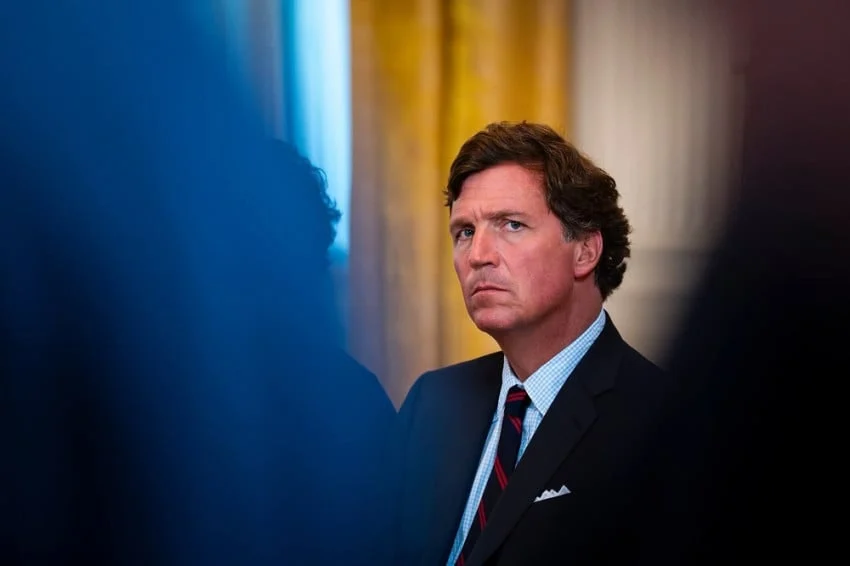
The 2026 United States midterm elections have concluded with a profound political realignment, sweeping the Democratic Party into a commanding majority in Washington and fundamentally altering the balance of power ahead of the 2028 presidential race. The results of the November midterms sent shockwaves through the American political landscape, as the Democratic Party secured decisive victories in several traditional Republican strongholds—commonly known as "red states"—thereby rewriting the electoral map. This sweeping legislative and gubernatorial success has not only reconfigured governance on Capitol Hill but has also created viable new pathways for Democrats to secure the critical 270 electoral votes required for the White House in 2028.
For the Republican Party, the midterms represent a period of profound introspection and crisis. Reeling from a widespread voter backlash against the policies and polarizing rhetoric of President Donald Trump, the GOP now faces an existential crossroads. Party leadership and strategists are locked in a high-stakes debate over whether to double down on the populist, Make America Great Again (MAGA) coalition that has dominated the party for a decade, or to forge a new, more moderate direction to recapture suburban and independent voters. Although neither party has officially launched a formal presidential campaign cycle for 2028, political insiders acknowledge that the unofficial shadow campaign has already begun much earlier than anticipated.
The shifting dynamics in Washington and across key state capitals have immediately elevated a fresh crop of potential contenders from both sides of the aisle. As political analysts and newsrooms begin evaluating the prospective field for the next presidential election, a diverse array of 17 prominent figures has emerged as top-tier contenders. Among them are rising stars of the Democratic Party’s pragmatic and progressive wings, battle-tested governors from crucial swing states, veteran Republican lawmakers, and unconventional political figures—including controversial commentators such as Tucker Carlson, known for his outspoken admiration of Russian President Vladimir Putin.
The Democratic Resurgence and the 2026 Midterm Turning Point
To understand the contours of the 2028 presidential race, one must examine the mechanics of the 2026 midterm elections. Historically, the party holding the White House faces headwinds and seat losses in midterm cycles. However, 2026 defied historical trends due to a combination of economic anxieties, voter mobilization around reproductive rights, and a palpable fatigue with hyper-partisan confrontation.
Democratic strategists capitalized on local grievances while presenting a unified front focused on economic security, infrastructure investments, and institutional stability. Conversely, Republican candidates frequently found themselves tethered to polarizing national debates and internal party friction. The consequence was a blue wave that penetrated deep into regions that had reliably voted Republican for generations.
In state legislatures and congressional districts, the midterms altered the arithmetic of the Electoral College. By capturing key legislative chambers and governorships in battleground states, Democrats secured vital institutional levers ahead of the next presidential contest. This environment has thrust several state executives into the national spotlight, transforming regional leaders into presumptive national frontrunners.
Top Contenders for the 2028 Democratic Nomination
The commanding performance of the Democratic Party in the midterms has created an embarrassment of riches regarding potential presidential candidates. Leading the discourse are governors who successfully navigated tough electoral terrain.
1. Josh Shapiro
No political figure reaped greater dividends from the 2026 midterms than Pennsylvania Governor Josh Shapiro. Securing a resounding victory for re-election with a margin exceeding 20 percentage points, Shapiro demonstrated a rare ability to build a broad, multi-coalition consensus in a quintessential swing state. Furthermore, his coattails helped Democrats flip four crucial seats in the U.S. House of Representatives within Pennsylvania. Having proven his electoral viability in the most critical battleground of the industrial Midwest, Shapiro possesses a potent resume for a national run. While he has historically deflected inquiries regarding his presidential ambitions, the sheer magnitude of his midterm success makes continued evasion nearly impossible.
2. Gavin Newsom
California Governor Gavin Newsom utilized the 2026 cycle to project his influence nationally, spearheading strategic redistricting initiatives within his home state. Responding directly to contentious Republican redistricting maneuvers in states like Texas during the previous cycle, Newsom championed a state-level ballot initiative that successfully remapped California’s congressional districts. This aggressive maneuver not only protected Democratic interests on the West Coast but also provided critical momentum toward solidifying the party’s new majority in the House of Representatives. Newsom’s willingness to engage in hardball partisan politics and his status as a prominent progressive standard-bearer position him as a formidable, if polarizing, contender for 2028.
3-5. Additional Democratic Heavyweights
Beyond Shapiro and Newsom, the Democratic field features other notable executives and legislators who expanded their national profiles during the midterms. Governors from the Midwest and Sun Belt who outperformed national expectations are actively building national fundraising networks. Figures who championed reproductive freedom and working-class economic policies have found themselves courted by major donors seeking a unifying standard-bearer to maintain the coalition forged in 2026.
The Republican Dilemma: Rebuilding the GOP Brand
While Democrats celebrate their newfound congressional majorities and expanded electoral maps, the Republican Party is grappling with a severe identity crisis. The rejection of candidates closely aligned with President Donald Trump in critical suburban districts has exposed deep fractures within the conservative movement.
For years, the MAGA movement has served as the undisputed engine of Republican voter turnout and fundraising. However, the 2026 results demonstrated the limitations of this strategy in general elections, particularly among independent voters and college-educated suburbanites. Party leaders now face a stark dichotomy: maintain fealty to populist nationalism and risk alienation of the broader electorate, or pivot toward a traditional conservative platform that risks alienating the party’s fiercely loyal populist base.
This internal ideological struggle has transformed the prospective 2028 Republican primary into an anticipated ideological battleground. Potential candidates are already maneuvering to position themselves as the true heirs to the conservative movement, or conversely, as pragmatic reformers capable of winning back pivotal swing demographics.
The Unconventional Contenders and the Far-Right Dynamic
As the field takes shape, speculation extends beyond traditional elected officials to include prominent media personalities, business leaders, and outsider figures who command significant devoted followings within the conservative ecosystem.
Among the more provocative names frequently discussed by political pundits is Tucker Carlson. Known for his populist commentary, media influence, and notable foreign policy views—including his vocal admiration for Russian President Vladimir Putin and skepticism toward traditional American foreign intervention—Carlson represents the populist-nationalist wing in its purest, most media-amplified form. While Carlson has not announced any official political candidacy, his presence in discussions about the future of the American right underscores the extent to which traditional political boundaries have dissolved.
Other figures from the business community and right-wing populist movements are also weighing their options. These candidates hope to harness the populist energy of the past decade while attempting to institutionalize a lasting political movement that transcends any single political cycle.
Chronology of the 2028 Campaign Cycle
Although the formal primary debates are still years away, the timeline for the 2028 election cycle is already accelerating due to the transformative nature of the 2026 midterms:
- Late 2026: Immediate post-midterm analysis, leadership elections in Congress, and early exploratory conversations among potential 2028 contenders.
- 2027 (The Invisible Primary): Prospective candidates begin establishing political action committees (PACs), visiting early-voting states like Iowa and New Hampshire, and building national fundraising networks.
- Early 2028: Formal campaign announcements begin rolling out, culminating in the primary debate schedules.
- Summer 2028: National party conventions formally nominate the presidential and vice-presidential candidates.
- November 2028: The general election determines the next administration.
Fact-Based Analysis of Implications
The 2026 midterms and the emerging 2028 presidential race carry profound implications for domestic governance and international relations.
Domestically, the shift in power in Washington means the final years of the current administration will be defined by legislative gridlock or intense bipartisan negotiation. The executive branch will likely face robust congressional oversight, while state legislatures will remain primary battlegrounds for contentious social and economic policies.
Externally, the foreign policy visions of the prospective 2028 candidates will be closely scrutinized by international allies and adversaries alike. The debate within the Republican Party over isolationism versus traditional internationalism—exemplified by figures who question foreign entanglements and praise foreign leaders—will directly impact America’s global standing. Meanwhile, Democratic candidates will likely advocate for maintaining traditional alliances while addressing global economic and security challenges through multilateral institutions.
As the political establishment digests the results of the 2026 midterms, the race for the White House in 2028 is officially underway. With 17 prominent and diverse candidates already drawing the attention of analysts, voters are poised for one of the most unpredictable and consequential electoral cycles in modern American history.
