
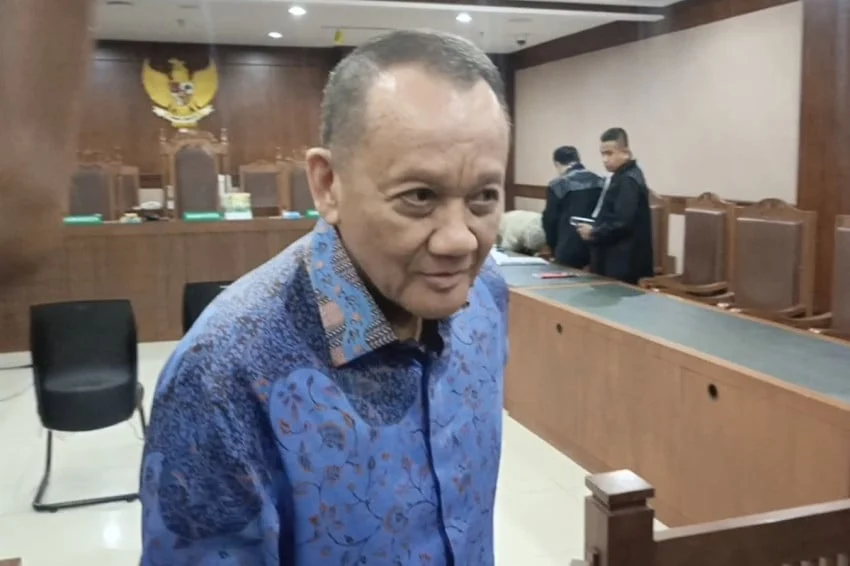
The Corruption Eradication Commission of the Republic of Indonesia has officially announced its preparations to execute the final judicial verdict against Nurhadi, the former Secretary of the Supreme Court. This development follows a definitive ruling by the Supreme Court to reject the cassation appeal filed by Nurhadi, bringing a critical juncture to a high-profile corruption, gratuity, and money laundering case that has gripped the nation’s judicial and political landscapes for years.
Speaking from the capital, Corruption Eradication Commission (KPK) Spokesperson Budi Prasetyo formally acknowledged and welcomed the Supreme Court’s decision. He emphasized that the final ruling validates the structural integrity and meticulousness of the investigative and prosecutorial processes undertaken by the anti-graft body, ensuring that both formal and material aspects of the law were thoroughly satisfied throughout the judicial proceedings.
With all legal avenues exhausted by the defendant, the enforcement arm of the commission is now coordinating the immediate implementation of the court’s sentencing orders. This landmark development not only closes another chapter in the ongoing efforts to cleanse Indonesia’s judicial apparatus of corrupt practices, but it also underscores the unwavering commitment of law enforcement agencies to recover state losses and uphold the rule of law.
Chronology and Case Background
The legal tribulations involving Nurhadi trace back several years, originating from deep-seated allegations of widespread corruption, bribery, and the illicit accumulation of wealth tied to his influential position within Indonesia’s highest judicial institution. As the Secretary of the Supreme Court, Nurhadi held immense administrative power, a position that investigators allege was systematically exploited to influence case outcomes, judicial appointments, and legal reviews within the court system.
The initial investigation gathered significant momentum when the KPK, operating on intelligence and public reports, uncovered a complex web of financial transactions linking Nurhadi and his associates to multi-billion-rupiah bribery schemes. The charges primarily
centered on accepting gratuities and kickbacks related to case brokerage services spanning multiple jurisdictions across the country. Furthermore, as financial forensic investigations deepened, prosecutors uncovered extensive attempts to obscure the origins of these illicit funds, leading to additional charges under the Indonesian Law on the Eradication of the Crime of Money Laundering (TPPU).
Following years of investigations, arrests, and intense courtroom battles, the case progressed through various levels of the judicial system. Lower courts initially handed down substantial prison sentences and financial penalties, which Nurhadi vehemently contested through appeals. However, the Jakarta High Court subsequently reinforced the earlier convictions, affirming the substantive weight of the evidence presented by the prosecution. The recent dismissal of the cassation appeal by the Supreme Court effectively exhausts the defendant’s legal remedies under Indonesian criminal procedure, cementing the validity of the previous appellate rulings and clearing the path for institutional enforcement.
Operational Next Steps and Asset Recovery
In light of the Supreme Court’s definitive ruling, the KPK has outlined its immediate operational roadmap. Budi Prasetyo confirmed that the commission’s Execution Prosecutors are currently finalizing the administrative and logistical protocols required to carry out the sentence.
The execution encompasses two primary components mandated by the court: the physical confinement of the convict via a formal prison sentence, and the mandatory payment of financial restitutions, including restitution fines and asset forfeiture. The latter element is considered a cornerstone of modern anti-corruption enforcement, designed to recover state assets and financially dismantle the infrastructure of corruption.
"Subsequently, the KPK through the Execution Prosecutor will follow up on the decision in accordance with applicable legal provisions, including the implementation of corporal punishment and the payment of replacement money as part of the effort to recover assets resulting from criminal acts of corruption," Budi stated.
Asset recovery has become an increasingly vital metric for the KPK’s operational success. By seizing assets procured through graft and money laundering, the state aims to mitigate the financial damage inflicted on public finances while simultaneously stripping perpetrators of the economic incentives associated with high-level white-collar crime. The enforcement of these financial penalties serves as a direct deterrent, signaling that illicit gains will not remain in the possession of convicted offenders once the judicial process reaches its final conclusion.
Broader Institutional Implications and Public Trust
The resolution of the Nurhadi case carries profound implications for the broader landscape of Indonesian governance and judicial reform. As a high-ranking bureaucrat who previously managed the administrative apparatus of the nation’s highest court, Nurhadi’s involvement in corruption sent shockwaves through the legal community, raising serious questions regarding institutional oversight and ethical standards within state organs.
Public confidence in the judiciary has historically faced rigorous scrutiny, with civil society organizations and watchdogs continuously demanding greater transparency and accountability. By successfully prosecuting and ultimately executing the sentence of a former high-ranking judicial official, anti-corruption advocates argue that regulatory bodies demonstrate a vital principle: no individual, regardless of their former rank or institutional affiliation, stands above the law.
The KPK has expressed optimism that this ruling will serve a dual purpose. Beyond bringing a specific offender to justice, the conclusion of the case is intended to act as a potent deterrent for current and future state apparatuses. Maintaining institutional integrity and upholding the public trust are framed as non-negotiable prerequisites for public service in Indonesia.
"The KPK hopes that this decision will further strengthen public trust in law enforcement and serve as a reminder for all state administrators to continuously maintain integrity and the mandate of their positions," Budi added.
Analytical Overview of Anti-Graft Enforcement
Legal analysts and governance experts monitoring the case note that the culmination of Nurhadi’s legal journey highlights both the strengths and the systemic challenges inherent in Indonesia’s anti-corruption framework. On one hand, the endurance of the prosecution through multiple layers of appeal—from the initial trial court to the High Court and finally the Supreme Court—demonstrates the resilience of the country’s specialized anti-corruption mechanisms.
On the other hand, the protracted timeline required to reach a final, non-appealable verdict underscores the procedural complexities that often delay justice in complex financial crimes. Cases involving sophisticated money laundering techniques and layered corporate or personal accounts routinely demand extensive forensic auditing, international legal cooperation, and prolonged courtroom arguments.
Despite these structural hurdles, the definitive closure of the Nurhadi case is expected to set a benchmark for ongoing and future prosecutions involving institutional corruption. As the KPK pivots from investigative and judicial phases to execution and asset recovery, attention will inevitably shift toward how effectively the recovered funds are reintegrated into state coffers and how preventative measures within the judiciary are reinforced to prevent similar breaches of trust in the future.
With the legal battles now formally concluded, the immediate focus remains on the logistical execution of the sentence, marking the end of a protracted legal saga that has fundamentally shaped the discourse surrounding judicial accountability in modern Indonesia.
