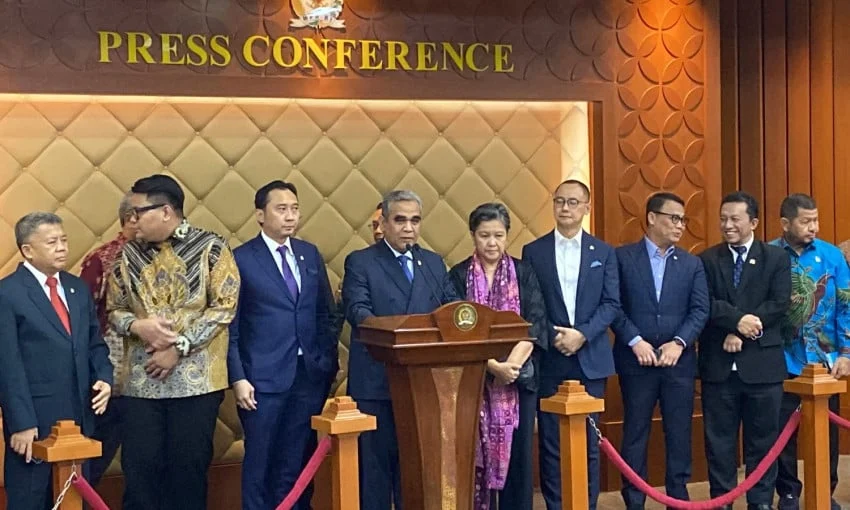
President Prabowo Subianto is currently navigating a critical constitutional juncture as the People’s Consultative Assembly of the Republic of Indonesia (MPR RI) has officially set the deadline for the submission of two vice-presidential candidates. Following a high-level joint meeting held at the Parliament Complex in Senayan, Jakarta, on Monday, November 16, 2026, MPR leadership confirmed that the administration must formalize its nominations no later than November 25, 2026. This process is the precursor to a decisive plenary session scheduled for December 9, 2026, where the new Vice President will be elected.
The urgency of this timeline underscores the gravity of the vacancy in the executive branch. The process is strictly governed by the 1945 Constitution, which dictates that in the event of a vacancy in the vice-presidential office, the President must propose two candidates for the MPR to consider. The assembly, in turn, is tasked with the democratic selection of the successor through a voting process among its members.
Chronology of the Selection Process
The path to the December 9 election has been marked by careful administrative and constitutional adherence. Following the formal receipt of the President’s letter regarding the vacancy, the MPR leadership convened to establish a procedural roadmap.
- November 16, 2026: The MPR held a Joint Meeting (Rapat Gabungan) to finalize the scheduling. It was during this meeting that leadership formally agreed to postpone the initial plenary session to December 9, 2026, ensuring that all procedural requirements—including the vetting of candidates—could be completed thoroughly.
- November 25, 2026: The absolute deadline for President Prabowo Subianto to submit the names of the two nominees to the MPR. This date is precisely 14 days before the scheduled plenary session, in accordance with legislative requirements.
- November 26 – December 8, 2026: The period reserved for the MPR to review the candidates, conduct public outreach, and prepare for the voting session.
- December 9, 2026: The scheduled date for the Plenary Session of the MPR RI, where members will cast their votes to elect the new Vice President from the two candidates provided by the President.
Constitutional Mandates and Legal Framework
MPR Speaker Ahmad Muzani emphasized that the process is not merely administrative but a fundamental requirement of the state’s legal architecture. Under the Indonesian constitution, the MPR serves as the institutional guardian of the succession process when the vice-presidency becomes vacant.
"The decision to set the deadline for November 25 was reached through a consensus during our joint meeting," Muzani stated. "This timeline is non-negotiable as it aligns with the 14-day mandatory period prior to the plenary session as dictated by our constitutional framework."
The requirement to provide two candidates is specifically designed to ensure a competitive and transparent selection process. The President’s role is to identify two individuals deemed capable of supporting the executive agenda, while the MPR members—representing the broader political spectrum of the nation—exercise their legislative authority to finalize the appointment. This dual-layer process is intended to foster political stability and ensure that the incoming Vice President enjoys a degree of legitimacy across the political aisle.
The Significance of the December 9 Plenary Session
The December 9 election is a pivotal moment for the Prabowo administration. In the Indonesian system, the Vice President plays a crucial role not only in the day-to-day operations of the executive branch but also in maintaining the coalition of parties that support the government.
Political analysts suggest that the two names submitted by the President will likely reflect a balance between technocratic capability and political representation. Given the diverse nature of the Indonesian parliament, the candidates must be figures capable of navigating complex domestic challenges, including economic recovery efforts, infrastructure development, and the ongoing digital transformation of the public sector.
The voting process itself will be closely monitored by civil society organizations and international observers. The MPR, which consists of members of the House of Representatives (DPR) and the Regional Representative Council (DPD), will need to reach a majority decision. The implications of this vote extend beyond the executive office, as it will signal the strength of the current administration’s coalition and its ability to influence the legislative body.
Economic and Political Implications
The upcoming selection of a Vice President comes at a time when Indonesia is navigating global economic headwinds. Market stability remains a primary concern for investors, and the certainty provided by a timely appointment is expected to bolster investor confidence.
Economically, the new Vice President will likely be tasked with overseeing key pillars of the administration’s long-term plan, including the continuation of major infrastructure projects and the expansion of social welfare programs. The candidates submitted by President Prabowo are expected to possess a proven track record in either public administration, economic policy, or regional governance, as the administration seeks to hit the ground running in the first quarter of 2027.
From a political standpoint, the selection process tests the cohesion of the government’s coalition. While the President holds the prerogative to choose the two nominees, the election by the MPR is a political act. If the President’s candidates are seen as overly partisan or lacking broad appeal, the voting process in the MPR could become a point of contention. Conversely, a smooth selection process will likely strengthen the President’s mandate for the remainder of his term.
Public Expectation and Transparency
As the November 25 deadline approaches, public interest in the identity of the two candidates is reaching a peak. Indonesian media outlets and political observers are currently evaluating potential figures who have been mentioned in public discourse. While the President has remained tight-lipped regarding the specific identities of the candidates, there is a general consensus that the selections will be made with an eye toward national unity.
The MPR has committed to maintaining transparency throughout the selection process. Ahmad Muzani has indicated that once the names are submitted, the MPR will undertake a series of consultations to ensure that the assembly members are well-informed before the vote. This approach is intended to mitigate any potential friction during the December 9 plenary session and to ensure that the process reflects the democratic values of the nation.
Broader Context of Indonesian Executive Succession
Historically, the process of filling a vacant vice-presidential position is rare but not unprecedented in the history of the Republic. The current procedure is defined by the amendments made to the 1945 Constitution, which clarify the roles of both the President and the MPR in such matters. This clarity has significantly reduced the risk of a political crisis, allowing the government to focus on national development goals despite the executive vacancy.
The 2026 transition serves as a test for Indonesia’s democratic maturity. By following a clear, constitutional path, the country demonstrates its commitment to stability. As the nation moves toward December 9, the eyes of the public, the markets, and the international community will be fixed on the Parliament Complex in Senayan.
The successful appointment of a new Vice President will not only finalize the executive team but will also set the tone for the political landscape in the years leading up to the next general election cycle. For President Prabowo, the choice of his partner in the executive office is a definitive moment—a choice that will echo through the halls of government and shape the trajectory of his administration.
With the deadline now firmly fixed, the focus of the political class shifts from speculation to the formalization of these high-stakes nominations. The next ten days are expected to be characterized by intense political deliberation, back-channel negotiations, and finally, the unveiling of the two figures who will be tasked with the responsibility of serving the nation in one of its highest offices.