
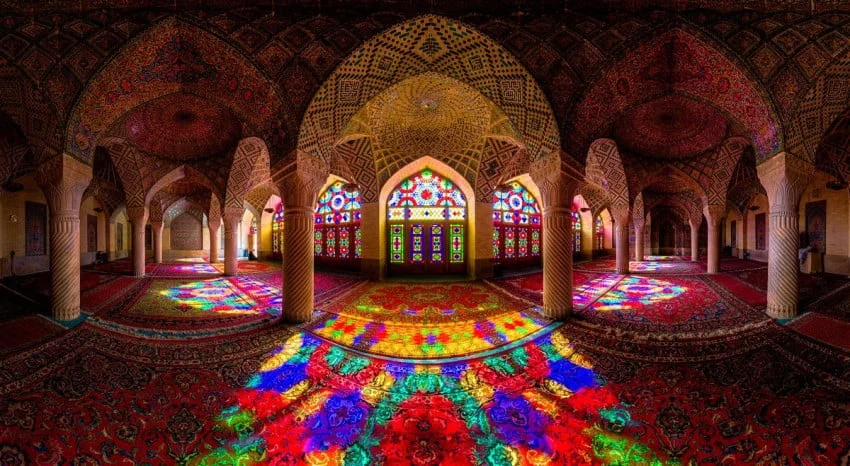
TEHRAN — In a high-level strategic address emphasizing the intersection of national security, historical identity, and public engagement, Major General Ahmad Vahidi, a senior commander of Iran’s Islamic Revolutionary Guard Corps (IRGC), has underscored the vital importance of identifying, preserving, and leveraging Iran’s vast historical and cultural assets. Speaking during a key leadership gathering in Tehran on Tuesday, General Vahidi outlined a comprehensive vision for integrating ancient Persian heritage and Islamic traditions into the contemporary socioeconomic and daily fabric of Iranian society.
The senior military official dedicated a significant portion of his remarks to the ideological directives established by the late Leader of the Islamic Revolution, Ayatollah Seyyed Ali Khamenei. According to Vahidi, the foundational teachings of the Islamic Republic have consistently pointed toward the immense, largely untapped reservoir of cultural wealth embedded within the nation’s millennia-old civilization. By developing sophisticated technological mechanisms and modern institutional frameworks to extract and apply these historical lessons, Iran can fortify its national identity against external pressures and cultural homogenization, the commander argued.
The address brings to the forefront a growing discourse among Iranian political, military, and cultural elites regarding soft power, national resilience, and the strategic deployment of historical narratives. As geopolitical tensions in the Middle East persist, Tehran increasingly views its cultural and religious heritage not merely as a relic of the past, but as an active, dynamic instrument of statecraft and societal cohesion.
The Strategic Imperative of Cultural Heritage in Modern Iran
During his address, General Vahidi did not merely frame cultural heritage as an aesthetic or academic pursuit; instead, he elevated it to the status of a strategic national resource. He highlighted that despite decades of academic study and archaeological discoveries, Iran’s historical landscape still harbors immense, underexplored potential.
"Salah satu aset berharga yang diungkap—sebagaimana disampaikan oleh mendiang Pemimpin Revolusi [Islam]—adalah pengembangan teknologi dan mekanisme untuk mengekstraksi serta memanfaatkan kekayaan yang terkandung dalam khazanah besar warisan budaya dan sejarah [negara ini]," Vahidi stated, emphasizing that the primary challenge facing contemporary institutions is the absence of systematic methodologies required to translate historical wealth into practical, modern applications.
Analysts note that this focus on cultural extraction involves creating modern pedagogical tools, digital archives, media productions, and community-based programs that resonate with younger generations. In an era defined by digital connectivity and globalized media streams, state actors face unprecedented challenges in maintaining historical continuity. For Iran, bridging the generational divide by embedding historical narratives into everyday life is viewed as an essential defense mechanism for social stability.
Furthermore, the integration of cultural assets into daily routines serves a dual purpose. Domestically, it reinforces national unity across diverse ethnic and linguistic demographics by anchoring them to shared historical and religious touchstones. Externally, it projects a distinct civilizational identity that reinforces Iran’s regional positioning as a historic center of gravity in Western Asia.
Historical Context and Background: The Evolution of IRGC’s Cultural Doctrine
To fully understand the weight of General Vahidi’s remarks, it is necessary to examine the broader ideological framework of the IRGC. Established in the wake of the 1979 Islamic Revolution, the IRGC was initially mandated to protect the newly formed Islamic system against internal and external threats. Over the decades, its portfolio has expanded far beyond traditional military defense into economic development, cyber warfare, intelligence operations, and ideological stewardship.
In recent years, the concept of "soft war" (jang-e narm)—a term frequently utilized by Iranian leadership to describe Western cultural, political, and psychological influence—has taken center stage in strategic planning. The IRGC and associated cultural foundations view the preservation of indigenous traditions as a frontline defense in this ideological contest. By framing historical heritage as a bulwark against foreign infiltration, military leaders like Vahidi position cultural preservation not as a passive academic endeavor, but as an active component of national security.
The emphasis on the directives of the late Supreme Leader also reflects a continuous ideological lineage. Ayatollah Khamenei’s long-standing emphasis on tahqiq (research/investigation) and the systematic exploration of the nation’s historical archives has guided numerous cultural policies over the past thirty years. Vahidi’s speech signals that these directives remain paramount, even as the methods for implementing them evolve to meet the demands of the twenty-first century.
Pillar One: The Enduring Legacy of Ashura
Transitioning from theoretical frameworks to concrete examples of national resilience, General Vahidi highlighted two major pillars of Iranian and Shia heritage. The first and most prominent is the commemoration of Ashura.
Ashura, observed on the 10th day of the month of Muharram in the Islamic lunar calendar, marks the martyrdom of Imam Hussain (AS), the third Shia Imam and the grandson of the Prophet Muhammad. The tragic events of the Battle of Karbala in 680 AD occupy a central place in the religious and cultural identity of millions of Iranians.
Chronology and Significance of Ashura
- 680 AD (61 AH): The Battle of Karbala takes place, resulting in the martyrdom of Imam Hussain and his loyal companions by the forces of the Umayyad Caliph Yazid.
- Historical Evolution: Over subsequent centuries, mourning rituals—including Ta’ziyeh (passion plays), Rozeh (recitation gatherings), and massive street processions—evolved into sophisticated cultural institutions across Persia.
- Contemporary Era: Following the 1979 Revolution, Ashura rituals were deeply interwoven with the political rhetoric of the state, framing modern political struggles through the eternal dichotomy between justice and tyranny epitomized at Karbala.
Vahidi pointed to Ashura as a quintessential example of a cultural and religious heritage that transcends mere historical remembrance. The annual mourning rituals mobilize millions of citizens, fostering deep community bonds, charitable giving, and a shared sense of sacrificial resilience. In the view of Iranian authorities, the narrative of Ashura provides the psychological fortitude necessary to withstand external economic sanctions, political isolation, and military threats.
Sociological Analysis: Implications for National Resilience
The elevation of cultural pillars like Ashura and broader Persian historical consciousness carries profound implications for the domestic stability and geopolitical posture of the Islamic Republic.
From a sociological perspective, shared rituals create strong collective effervescence—a concept coined by sociologist Émile Durkheim—wherein individuals feel connected to a larger, transcendent community. In Iran, national mourning and celebration cycles act as social glue, bridging socioeconomic divides and reinforcing a collective identity that prioritizes endurance and self-reliance.
However, observers also note the complex dual nature of these cultural policies. While state-sponsored promotion of heritage successfully fosters domestic cohesion and ideological loyalty among core constituencies, it can simultaneously sharpen sectarian and ideological divisions within a polarized society. Furthermore, the systematic curation of history by state security and religious institutions often leaves little room for alternative or critical historiographies.
Despite these internal debates, the prevailing consensus among Iran’s ruling elite is that robust cultural defense is indispensable. As regional rivalries shift and international pressures fluctuate, the ability to mobilize a population through deeply rooted historical narratives remains one of Tehran’s most potent strategic assets.
Broader Impact and Future Outlook
Major General Vahidi’s address serves as a clear indicator of Iran’s long-term strategic trajectory. By institutionalizing the study and practical application of historical and religious assets, the Iranian establishment is laying the groundwork for future generations to view national security and cultural identity as inextricably linked.
As technological advancements reshape how historical data is accessed and interpreted, institutions under the purview of the IRGC and the state apparatus are expected to increase funding and logistical support for digital archiving, cultural tourism, educational curriculum reform, and public commemoration events. Whether these efforts will successfully insulate the Iranian populace from external cultural pressures while fostering sustainable domestic unity remains a central question for regional analysts. Nevertheless, the message from Tehran is unequivocal: the historical wealth of Persia and the spiritual legacy of Islamic traditions will continue to serve as the bedrock upon which the nation’s future is constructed.
