The National Awakening Party (PKB) has firmly distanced itself from the intensifying political race to succeed former Vice President Gibran Rakabuming Raka, stating that the party is neither lobbying for its chairman, Abdul Muhaimin Iskandar—widely known as Cak Imin—nor actively deliberating on potential vice-presidential candidates. Amid mounting requests from the executive branch for coalition parties to submit prospective names, PKB maintains that its primary legislative focus centers on institutional stability, constitutional adherence, and the permanent resolution of lingering national controversies, most notably the high-profile debate surrounding academic credentials.
The declaration comes in the wake of a significant political shift in Jakarta, marked by the sudden resignation of Gibran Rakabuming Raka from the vice presidency on Thursday, March 12, 2026. The vacancy at the second-highest office of the state has triggered a flurry of backroom negotiations, parliamentary maneuvers, and coalition meetings. Yet, PKB’s leadership insists that the party remains deliberately detached from the succession sweepstakes, choosing instead to prioritize governance and procedural integrity within the House of Representatives (DPR).
Background and Political Context of the Vacancy
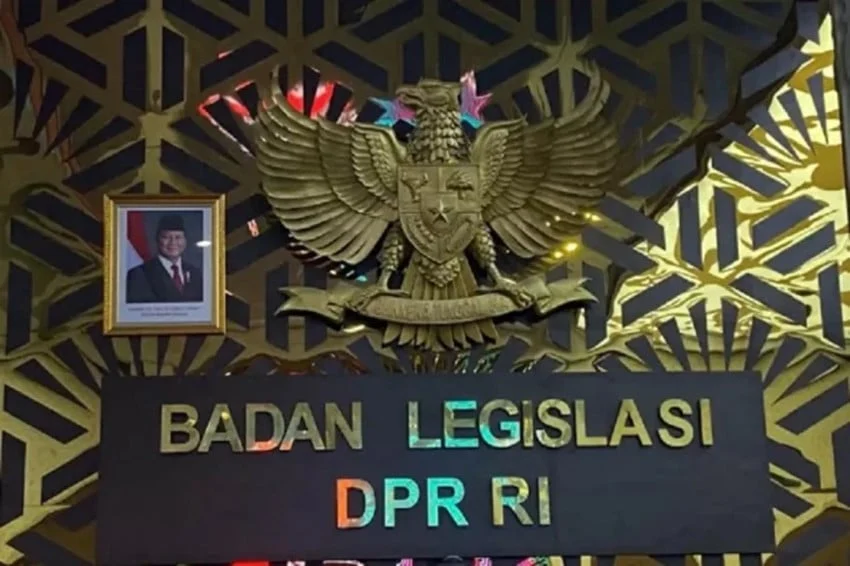
The political landscape in Indonesia experienced a profound tremor following the events that culminated in Gibran Rakabuming Raka stepping down from the vice presidency. The decision initiated a series of cascading administrative and symbolic adjustments across government buildings, notably including the removal of official portraits of the former vice president from various meeting rooms belonging to the internal parliamentary organs, known locally as Alat Kelengkapan Dewan (AKD).
Under the Indonesian Constitution, a vacancy in the office of the vice president requires specific legal mechanisms to be set into motion, heavily relying on the initiative of the president and confirmation by the People’s Consultative Assembly (MPR) upon nomination. Recognizing the delicate balance of power within the ruling and supporting coalitions, President Prabowo Subianto formally requested that the leaders of all political parties within the governing coalition prepare and submit prospective names for the vice-presidential succession within a strict timeframe of one week.
This directive placed immense pressure on coalition members, including Gerindra, Golkar, PAN, and PKB, to quickly pivot from legislative duties to candidate curation. However, PKB’s official stance diverges sharply from the swift horse-trading typically observed during such executive transitions.
PKB’s Position: Legislative Priority Over Executive Ambition
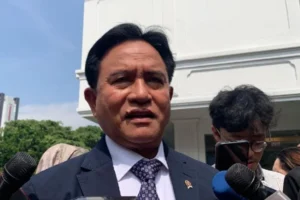
Addressing the media regarding the party’s internal stance, Muhammad Khozin, the Head of the PKB faction grouping (Kapoksi) in Commission II of the DPR, articulated a position of deliberate restraint. He categorically denied rumors that PKB had floated Cak Imin’s name as a viable alternative for the vice-presidency or that the party was engaged in active lobbying for the position.
"We have been intense from the very beginning of this issue, starting from the inquiries regarding the right of inquiry (hak angket), the right to express opinions (hak menyatakan pendapat), and finally the resignation event of Brother Gibran," Khozin stated. "The matter of a replacement vice president for Gibran has not crossed our minds at all. Thinking about it has not happened, let alone proposing anyone."
Khozin emphasized that under Indonesia’s presidential system, the prerogative to propose a candidate for the vice presidency rests fundamentally and exclusively with the president. By respecting this constitutional boundary, PKB aims to project an image of a disciplined coalition partner that refuses to destabilize the executive branch during a period of transition. Instead, the party has chosen to direct its political capital toward concluding longstanding parliamentary debates that have polarized public opinion.
The Focus on Constitutional Grounding and the Academic Credentials Controversy
Rather than engaging in succession politics, PKB leadership has asserted that the party’s legislative compass is guided strictly by adherence to formal legal frameworks, specifically pointing to official rulings from the Constitutional Court (MK) and the Supreme Court (MA). By anchoring their parliamentary actions to these judicial pillars, PKB seeks to establish a predictable standard for handling political and administrative disputes.
A central element of this strategy involves bringing a definitive closure to the protracted polemic surrounding official academic credentials—commonly referred to in Indonesian political discourse as the ijazah controversy. This issue has periodically resurfaced to disrupt public trust and fuel political polarization. By pushing for a transparent, legally grounded resolution through parliamentary channels, PKB hopes to neutralize a persistent source of friction that has distracted the legislature from addressing pressing economic and social reforms.
"We place the decisions of the Constitutional Court and the Supreme Court as the foundational basis for our political steps in Parliament since day one," Khozin explained. "This is deliberately aimed at simultaneously putting an end to the ongoing credential polemic once and for all, ensuring that the nation can move forward without unnecessary distractions."
Implications for the Governing Coalition and Parliament
PKB’s public dissociation from the vice-presidential succession race carries several noteworthy implications for the broader political ecosystem in Jakarta. First, it alleviates potential friction within the governing coalition. With major parties rushing to position their leaders for the vice-presidential slot, PKB’s declared neutrality prevents a multi-way factional deadlock that could otherwise strain relations with President Prabowo Subianto.
Second, by publicly deferring the selection process entirely to the executive branch, PKB reinforces the constitutional principle that the vice presidency requires a high degree of executive trust and operational alignment with the sitting president, rather than being treated merely as a spoils system for coalition parties. This posture allows PKB to maintain high moral ground, presenting itself as a stabilizing force focused on institutional performance rather than raw political ambition.
Third, PKB’s emphasis on resolving the academic credential controversy highlights a strategic shift toward substantive governance. While other factions are consumed by structural changes in the executive, PKB is utilizing its legislative leverage in Commission II and other parliamentary organs to address foundational legal questions that impact public administration.
Looking Ahead: The One-Week Deadline and Parliamentary Dynamics
As the one-week deadline set by President Prabowo for the submission of vice-presidential candidates approaches, political maneuvering within the capital is expected to reach a fever pitch. Other coalition members are continuing closed-door consultations to vet potential technocratic and political figures who can secure both legislative approval and public confidence.
Meanwhile, PKB’s insistence on remaining outside the nomination fray will likely alter the calculus of other political parties. Whether PKB will maintain this detached posture if requested by the president to endorse a consensus candidate remains to be seen. However, for the immediate future, the party’s leadership appears firmly committed to its narrative: prioritizing parliamentary diligence, respecting executive prerogatives, and laying to rest the controversies of the past to ensure stability in the remainder of the legislative term.