
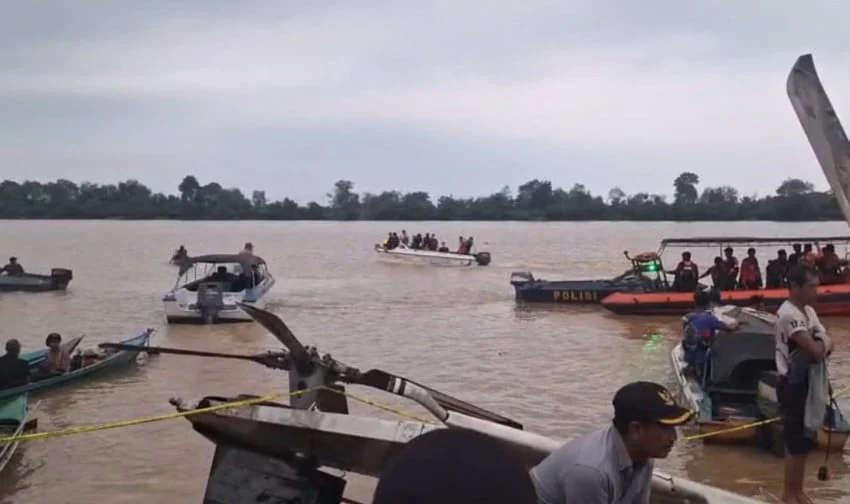
A somber atmosphere descended upon the emergency response community in South Kalimantan following the confirmation of a fatal helicopter crash on Sunday, November 8, 2026. The aircraft, a Super Puma H-255 bearing registration VH-HGM, went down in the remote area of Desa Tabatan, located within the Kuripan District of Barito Kuala Regency. While search and rescue efforts were immediately launched to locate the crew, authorities have confirmed that Yayan Supyansuri, who served as the Helicopter Landing Officer (HLO), was recovered from the site deceased. The incident, which occurred during a critical wildfire suppression operation, has triggered an investigation into the operational integrity of aerial firefighting missions in the region.
The Chronology of the Incident
The Super Puma H-255 was deployed as part of a joint task force aimed at mitigating the spread of forest and land fires (karhutla), which have historically plagued the peatland areas of Kalimantan during the dry season. According to reports from the National Disaster Management Agency (BNPB), the aircraft was navigating the treacherous terrain near the Barito River when contact was lost.
The timeline of the disaster began on the morning of Sunday, November 8, when the helicopter took off for a scheduled reconnaissance and water-bombing mission. Shortly after midday, local authorities received distress signals indicating an emergency descent. The crash site, located in the swampy and difficult-to-reach wetlands of Desa Tabatan, necessitated a complex extraction operation.
By the late afternoon, a joint search and rescue team, consisting of personnel from the local disaster mitigation agency, the military, and police, reached the wreckage. The recovery of Yayan Supyansuri was completed under challenging environmental conditions, characterized by thick vegetation and the soft, unstable soil typical of the Barito Kuala region. Following the recovery, the body was transported to the Jenamas Public Health Center (Puskesmas) in Barito Selatan, Central Kalimantan, for initial post-mortem procedures, with subsequent arrangements made to transport the remains to Banjarbaru, South Kalimantan, for final rites and family handover.
Understanding the Operational Context
The use of the Super Puma H-255 in wildfire suppression is standard practice for the Indonesian government, given the aircraft’s heavy-lift capabilities and durability in tropical climates. These helicopters are essential in regions like Kalimantan, where ground-based fire fighting equipment often cannot access the deep, dense forest fires occurring in peatlands.
Wildfire suppression from the air is a high-stakes endeavor that involves significant risk. Pilots and ground crews, such as the HLO, must contend with visibility issues caused by smoke, unpredictable thermal updrafts, and the inherent difficulty of navigating low altitudes over rugged landscapes. The Helicopter Landing Officer (HLO) plays a pivotal role in these operations, serving as the primary liaison between the ground crew and the pilot. Their responsibilities include ensuring the safety of the landing zones, managing the loading of water buckets, and monitoring atmospheric conditions that could jeopardize flight safety. The loss of a qualified HLO represents not only a tragic human cost but also a significant operational loss for the ongoing firefighting task force.
Official Responses and Administrative Procedures
Berton SP Panjaitan, the Acting Head of the Center for Data, Information, and Disaster Communication at the BNPB, issued a formal statement on Monday, November 9, confirming the identity of the victim and providing details regarding the recovery process. The agency expressed its deepest condolences to the family of Yayan Supyansuri, acknowledging his dedication to his duties in the service of disaster mitigation.
"The victim, Yayan Supyansuri, was a dedicated professional who was performing his duties as an HLO at the time of the accident," Berton stated. He further noted that the BNPB is working in close coordination with the National Transportation Safety Committee (KNKT) to determine the exact cause of the crash.
While the official investigation is currently in its preliminary stages, the focus remains on three potential contributing factors: mechanical failure, pilot error, or sudden, adverse weather conditions. The Super Puma H-255 is known for its robustness, yet even advanced aeronautical systems are susceptible to the extreme demands of firefighting missions. The KNKT will analyze the flight data recorder (FDR) and the wreckage to ascertain whether the crash was a result of technical malfunction or external variables.
Impact on Regional Disaster Management
The crash of VH-HGM has sent shockwaves through the disaster management community in Indonesia, raising questions about the safety protocols governing aerial support during wildfire seasons. Historically, the period from August to November poses the highest risk for forest fires in Kalimantan, prompting the deployment of numerous aircraft to the region.
This incident is likely to result in a comprehensive audit of all aircraft currently deployed in the regional firefighting fleet. Experts in the field suggest that the incident may lead to stricter adherence to weather-monitoring protocols and potentially a revision of the safety thresholds for water-bombing operations. Furthermore, the incident underscores the vulnerability of the personnel involved. Unlike pilots who are protected by the airframe, ground personnel like the HLO are often operating in high-risk zones, highlighting the need for enhanced safety training and protective equipment for all members of the firefighting task force.
Broader Implications for Aviation Safety
Beyond the immediate loss, the crash invites a broader discussion on the sustainability of current aerial firefighting strategies. The dependence on aging or high-usage aircraft for continuous wildfire suppression requires rigorous maintenance schedules. If an investigation reveals that the accident was due to mechanical failure, it could trigger a fleet-wide grounding of similar models for emergency inspections.
Moreover, the geographical challenges of the Barito Kuala region serve as a reminder of the logistical difficulties in emergency response. When an incident occurs in such a remote area, the time elapsed between the crash and the arrival of rescue teams is critical. The successful recovery of the crew and the wreckage, despite the difficult terrain, is a testament to the coordination between the various agencies involved in the search and rescue efforts. However, the tragedy serves as a grim reminder that even with advanced technology and highly skilled personnel, the environment in which these missions take place remains unforgiving.
Conclusion and Future Outlook
As the investigation into the VH-HGM crash progresses, the priority for the Indonesian authorities remains the welfare of the deceased’s family and the completion of a transparent, thorough report by the KNKT. The incident has left a void in the firefighting team, and the aviation community remains in mourning.
Looking forward, the lessons learned from this tragedy must be integrated into future disaster response policies. Whether through improved safety management systems, enhanced training for ground support staff, or the procurement of more modern navigation and detection systems, the goal is to minimize the risks inherent in protecting the nation’s forests. The sacrifice of Yayan Supyansuri will undoubtedly serve as a catalyst for a re-evaluation of safety protocols, ensuring that those who put themselves on the front lines of disaster management are provided with the highest standards of protection possible.
The government’s commitment to continued wildfire suppression remains steadfast, but the events of November 8 have served as a somber reminder of the dangers involved. As the cleanup of the crash site concludes, the aviation authorities and the BNPB are expected to hold a briefing to discuss the initial findings, which will be essential for restoring public confidence in the aerial firefighting programs that are vital to the environmental health of the Kalimantan region. For now, the focus rests on the memory of the fallen crew member and the ongoing support for those who continue to work in the face of such adversity.
