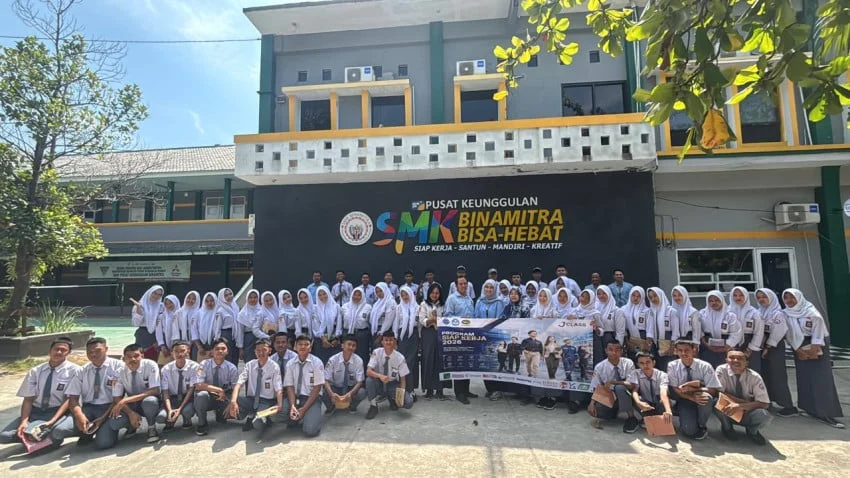
PT Jababeka Infrastruktur, the subsidiary of PT Jababeka Tbk and the primary developer of the expansive Jababeka Industrial Estate, has officially expanded its flagship social responsibility initiative, the Jababeka Community Acceleration Class (JClass). This strategic move aims to fortify the human capital pipeline by preparing high school and vocational school graduates to seamlessly transition into the professional workforce or embark on entrepreneurial ventures. The latest iteration of this program took place at SMK Garuda Nusantara in Bekasi Regency on August 31, 2026, marking a significant milestone as the initiative now encompasses a network of eight vocational institutions across the region.
Addressing the Industrial Skills Gap
The labor market in Indonesia, particularly within the highly competitive manufacturing hubs of West Java, faces a persistent challenge: the "skills gap." While vocational education institutions (SMK) are designed to produce work-ready graduates, the rapid evolution of industrial technology—driven by Industry 4.0—often outpaces traditional curricula. Jababeka’s intervention through the JClass program is a deliberate effort to align academic output with the precise requirements of the multinational corporations operating within the Jababeka Industrial Estate.
Vega Violetta Puspa, Director of Jababeka Infrastruktur, emphasized the urgency of this alignment during a press briefing on September 15, 2026. "JClass was conceived as a direct response to the widening competency gap between the skills imparted in vocational classrooms and the dynamic, fast-paced demands of the industrial sector in Bekasi, which stands as one of the largest and most critical industrial centers in Indonesia," Puspa stated. By integrating industry practitioners directly into the educational process, the program seeks to eliminate the transition friction that many graduates face upon entering the workforce.
The Three Pillars of JClass Curriculum
To ensure a comprehensive approach to professional development, the Jababeka Community Acceleration Class is structured around three distinct pillars, each addressing a specific dimension of career and business readiness:
- Career Acceleration Class: This track focuses on the "soft" but essential elements of professional success. It emphasizes mental resilience, professional attitude, ethical conduct in the workplace, and effective communication skills. By fostering a professional mindset, the program prepares students to navigate the rigorous environment of modern manufacturing facilities.
- Digital Acceleration Class: Recognizing the necessity of digital literacy in the current economic landscape, this track enhances technical proficiency in digital tools and office administration. As factories move toward digitized supply chains and smart manufacturing, students trained in these competencies are significantly more attractive to prospective employers.
- Entrepreneur Acceleration Class: Moving beyond traditional employment, this track is tailored for students and local community members interested in business development. It provides foundational knowledge for fostering micro, small, and medium enterprises (MSMEs), which are the backbone of the local economy surrounding the Jababeka Industrial Estate.
A Growing Network of Educational Partners
The expansion of JClass represents a maturing ecosystem of collaboration between the private sector and local education providers. Since its inception, the program has successfully scaled its operations to include a diverse array of institutions. The current partners in this initiative include:
- SMK Garuda Nusantara
- SMK Bina Mitra
- SMK Kitri Bakti
- SMKN 2 Cikarang Pusat
- SMK Islam Al-Amin
- SMKN 2 Cikarang Barat
- SMK Kesehatan Sentra Medika Cikarang
- SMK Dewantara 2 Cikarang Pusat
The inclusion of specialized schools, such as those focusing on health and medical services alongside technical vocational schools, highlights the program’s adaptability to the diverse industrial needs within the Jababeka region.
The Role of Tenant Engagement
A distinctive feature that separates the JClass program from conventional Corporate Social Responsibility (CSR) initiatives is the active participation of the companies—or "tenants"—located within the Jababeka Industrial Estate. Unlike standard programs where educational institutions operate in isolation, JClass invites corporate partners to serve as co-creators of the curriculum.
Vega Violetta Puspa noted that the involvement of tenants is fundamental to the program’s success. "The companies are not merely sponsors or guest speakers; they are integral to the instructional design. By collaborating with human resource managers and technical experts from these firms, we ensure that the material taught is synchronized with current industry standards and the specific needs of the companies that will eventually hire these students," she explained.
This model provides a feedback loop that benefits all stakeholders: students receive training that guarantees marketability, schools stay updated on industrial trends, and companies gain access to a pre-screened, well-prepared talent pool.
Contextualizing the Impact: Indonesia’s Vocational Education Challenges
The JClass program arrives at a critical juncture for Indonesia’s labor force. According to data from the Central Statistics Agency (BPS), vocational school graduates consistently represent a significant portion of the country’s unemployed population. The mismatch between school curricula and industry needs is frequently cited by policymakers as a primary cause.
By decentralizing the training process and bringing it into the heart of the industrial estate, Jababeka is demonstrating a viable model for private-sector intervention. The program’s focus on mental readiness and digital skills addresses the two most common complaints from employers: a lack of "work readiness" (soft skills) and insufficient technical literacy.
Furthermore, the emphasis on the Entrepreneur Acceleration Class serves a broader macroeconomic goal. Indonesia has identified the promotion of MSMEs as a vital component of post-pandemic economic recovery. By equipping students with the capacity to launch their own businesses, JClass contributes to the long-term economic diversification of the Bekasi region, reducing the area’s total reliance on large-scale manufacturing employment.
Future Projections and Sustainability
The successful expansion of the program to eight schools by late 2026 indicates a scalable model. Analysts suggest that if Jababeka continues to refine the curriculum in collaboration with its tenants, the program could potentially serve as a template for other industrial estates across the archipelago.
The sustainability of JClass is underpinned by the symbiotic relationship it creates. For the companies, participating in JClass is a form of "talent grooming." Rather than spending extensive resources on retraining new hires, firms can invest in the local community, effectively lowering their recruitment and onboarding costs in the long run. For the schools, the partnership provides access to industry-standard equipment and insights that would otherwise be difficult to procure.
Conclusion
The expansion of the Jababeka Community Acceleration Class reflects a forward-thinking approach to corporate social responsibility. By shifting the focus from passive donation to active capacity building, PT Jababeka Infrastruktur is addressing the structural challenges of the Indonesian labor market. As the program continues to evolve, its success will likely be measured not only by the number of participating schools but by the long-term career trajectories of its graduates and the continued resilience of the local economy.
In an era where technological disruption threatens to render traditional skill sets obsolete, the JClass program provides a vital bridge. Through its integrated focus on career readiness, digital literacy, and entrepreneurship, Jababeka is not just preparing students for their first jobs; it is equipping them with the adaptability required to navigate the complexities of the 21st-century global economy. As the project enters its next phase, the continued collaboration between academia and the private sector remains the most promising path toward sustainable industrial growth and human capital development in the Bekasi Regency and beyond.