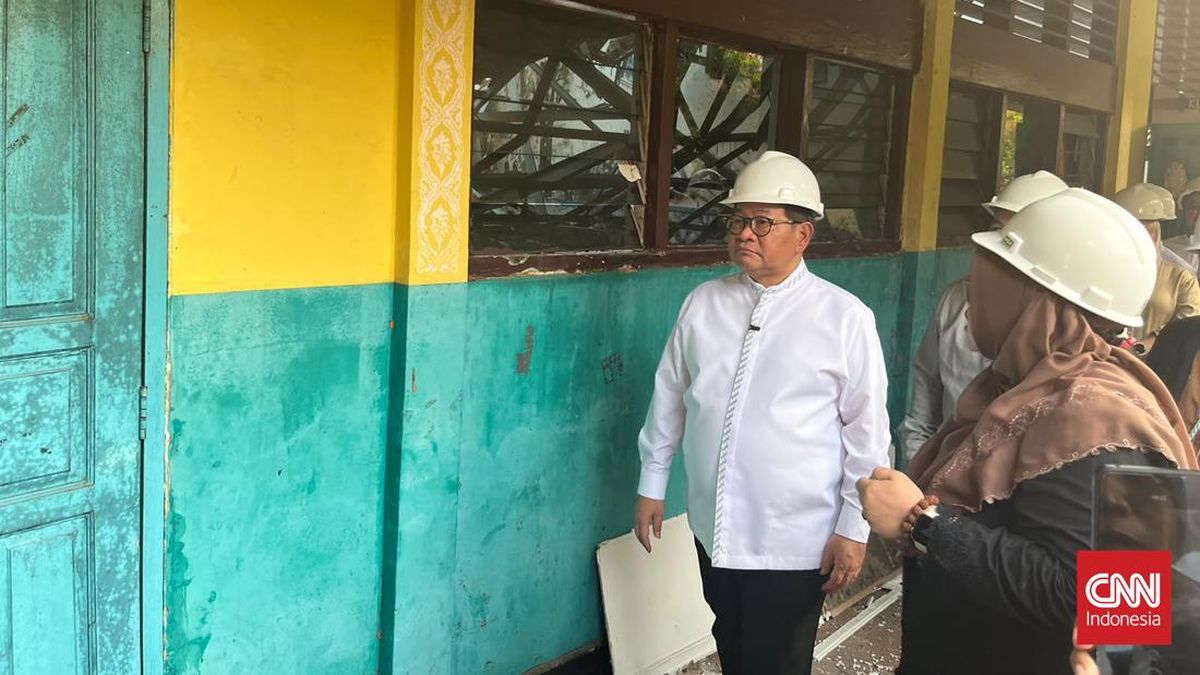
Jakarta Governor Pramono Anung has officially confirmed that the long-awaited reconstruction of State Elementary School (SDN) Kebayoran Lama Selatan 09, which tragically collapsed two years prior, is slated to commence this year. The DKI Jakarta Provincial Government has earmarked a substantial budget of Rp48.1 billion (approximately USD 3.2 million, based on current exchange rates) for the comprehensive rebuilding of the vital educational facility. This decisive announcement, made by Governor Anung following a direct inspection of the dilapidated school premises in South Jakarta on Friday, July 24, marks a significant step forward in addressing critical infrastructure needs within the capital’s education sector.
The Governor’s confirmation comes after a period of considerable uncertainty and public concern regarding the fate of the school and the educational disruption faced by its students. The collapse of SDN Kebayoran Lama Selatan 09, an event that highlighted the pressing challenges of aging public infrastructure in densely populated urban areas, had left hundreds of students without their primary learning environment, necessitating temporary solutions that often proved suboptimal. Governor Anung underscored the urgency of the project, stating, "We decided that there are four [schools] that I requested to be built immediately. Among them is this place. Why must it be built now? Because its condition is indeed very alarming."
The Lingering Aftermath: Two Years of Disruption and Community Advocacy
The collapse of SDN Kebayoran Lama Selatan 09 in mid-2021 sent shockwaves through the local community, raising serious questions about the structural integrity of public buildings and the pace of government response. While no fatalities or severe injuries were reported during the initial incident, the school building, a multi-story structure that had served generations of students, was rendered unusable. Investigations at the time pointed towards a combination of factors, including the age of the building, inadequate maintenance over several decades, and possibly the cumulative impact of heavy rainfall or minor seismic activity that is not uncommon in the region. The immediate aftermath saw students dispersed to nearby schools, often leading to overcrowded classrooms and longer commutes, or relegated to makeshift temporary facilities that lacked proper amenities, further exacerbating learning difficulties.
For two years, the ruins of SDN Kebayoran Lama Selatan 09 stood as a stark reminder of the educational gap and the bureaucratic hurdles that often delay crucial public works. Parents, teachers, and local community leaders tirelessly advocated for the school’s reconstruction. They formed action committees, engaged with local media, and repeatedly petitioned municipal and provincial authorities, emphasizing the fundamental right of children to a safe and conducive learning environment. The prolonged closure not only disrupted academic progress but also impacted the social fabric of the Kebayoran Lama Selatan neighborhood, where the school served as a community hub. The delay was often attributed to complex bureaucratic processes, challenges in securing dedicated funding amidst competing priorities, and the comprehensive assessment required for such a large-scale rebuilding project. The Governor’s recent visit and subsequent announcement are seen as a direct response to this sustained community pressure and a clear acknowledgment of the critical situation on the ground.
Navigating Fiscal Realities: Budgetary Constraints and Prioritization Challenges
The journey to secure funding for the reconstruction of SDN Kebayoran Lama Selatan 09 was fraught with budgetary complexities. Governor Anung revealed that the initial plan for 2026 had envisioned the construction or major rehabilitation of 22 schools across DKI Jakarta. However, this ambitious agenda faced significant setbacks due to a confluence of factors, primarily a reduction in the Dana Bagi Hasil (DBH) or Revenue Sharing Fund from the central government, coupled with broader provincial budget efficiencies and other unforeseen fiscal pressures.
The DBH mechanism is a critical component of regional government financing in Indonesia, where a portion of national revenues from natural resources and taxes is shared with provinces and regencies/cities. Fluctuations or reductions in DBH directly impact the fiscal capacity of regional governments, forcing them to re-evaluate spending priorities. In Jakarta’s case, these cuts necessitated a significant scaling back of the original infrastructure plans. Consequently, the number of schools initially approved for funding was reduced to just seven.
Recognizing the dire state of certain facilities, Governor Anung personally intervened to re-prioritize and allocate funds for an additional four schools deemed to be in critical condition, including SDN Kebayoran Lama Selatan 09. This decision reflects a strategic pivot in provincial budgeting, underscoring the executive’s commitment to addressing urgent infrastructure deficits despite broader fiscal constraints. The funding for these projects, including SDN Kebayoran Lama Selatan 09, will be drawn from a combination of Kompensasi Luas Bangunan (KLB) — a form of compensation paid by developers for exceeding building density limits, often earmarked for public facilities — and the Anggaran Pendapatan dan Belanja Daerah Perubahan (APBD-P) or Revised Regional Budget. The APBD-P allows for adjustments to the annual budget to accommodate new priorities or unforeseen expenditures, providing the necessary flexibility to fast-track these crucial projects. This blended funding approach highlights the innovative financial strategies employed by the provincial government to ensure essential public services are not entirely stalled by external budgetary pressures.
A City-Wide Commitment: Other Priority Educational Projects
Beyond SDN Kebayoran Lama Selatan 09, Governor Anung’s recent directive has also prioritized the immediate reconstruction and rehabilitation of three other critical educational institutions in Jakarta. These projects represent a significant investment in improving the quality and safety of public school infrastructure across the capital, totaling approximately Rp249 billion for the four prioritized schools.
The other schools earmarked for immediate attention include:
-
SMA Negeri 102 Jakarta: This senior high school will receive a substantial allocation of Rp67.5 billion (approximately USD 4.5 million). The investment aims to provide modern facilities and a safer learning environment for its students, addressing potential structural issues or the need for capacity expansion. SMA Negeri 102, like many older high schools in Jakarta, likely faces challenges related to aging infrastructure, requiring comprehensive rehabilitation to meet contemporary educational standards and safety regulations.
-
SDN Cempaka Putih Barat 03: Another elementary school, SDN Cempaka Putih Barat 03, is allocated Rp48.4 billion (approximately USD 3.2 million). Similar to SDN Kebayoran Lama Selatan 09, this school’s urgent need for reconstruction points to critical structural deficiencies or a complete overhaul required to provide a functional and safe learning space for young children.
-
SDN Papanggo 01 and TK Negeri Papanggo 01: These two co-located institutions, an elementary school and a state kindergarten in Papanggo, North Jakarta, will collectively receive Rp74.1 billion (approximately USD 4.9 million). This combined project reflects a holistic approach to early childhood and primary education infrastructure, ensuring that facilities for the youngest learners are also safe, modern, and conducive to their developmental needs. The significant budget indicates a comprehensive rebuilding or extensive renovation to cater to both institutions simultaneously.
The inclusion of these additional schools underscores the extensive nature of infrastructure deficits within Jakarta’s education system. The Governor’s decision to accelerate these projects, despite the initial budget constraints, signals a heightened focus on ensuring basic safety and quality standards for students across different educational levels and geographical areas within the province. This concerted effort is expected to alleviate immediate pressures on school facilities and provide a more equitable distribution of educational resources.
Ensuring Quality and Accountability: Oversight and Timelines
Governor Anung emphasized that the allocation of significant public funds for these projects comes with an unyielding demand for stringent oversight and uncompromising quality in execution. "Tomorrow, a meeting will be held again, a technical team will be appointed, who will supervise, and so on. Because I do not want this effort, which was not easy to achieve, to then, for example, not be carried out seriously," he stated, highlighting the government’s commitment to transparency and accountability.
The Governor’s directive mandates the immediate establishment of a dedicated technical team. This team will be responsible for overseeing every phase of the construction, from contractor selection and material procurement to adherence to architectural plans and safety standards. Their role will be crucial in preventing delays, cost overruns, and ensuring the structural integrity and longevity of the new buildings. This focus on meticulous supervision is a direct response to past instances of public infrastructure projects in Indonesia that have been plagued by issues of substandard quality or corruption.
For SDN Kebayoran Lama Selatan 09, the Governor has set an ambitious target of 10 months for its completion. Construction is expected to commence no later than September of this year. Given the July 24 announcement, this timeline implies an expedited process for administrative approvals and contractor mobilization. This rapid turnaround is crucial for minimizing further educational disruption for the affected students and demonstrates a concerted effort to restore normalcy as quickly as possible. The aggressive timeline, coupled with the emphasis on robust oversight, places significant responsibility on the appointed technical team and the chosen contractors to deliver high-quality results efficiently. The involvement of various governmental bodies, including the Public Works Department (Dinas Bina Marga) and the Education Department (Dinas Pendidikan), will be critical in coordinating efforts and ensuring compliance with all relevant regulations.
Broader Implications: Addressing Jakarta’s Aging School Infrastructure
The reconstruction of SDN Kebayoran Lama Selatan 09 and the other prioritized schools offers a crucial opportunity to reflect on the broader challenges facing Jakarta’s educational infrastructure. As a rapidly developing megacity, Jakarta faces immense pressure to maintain and upgrade its public facilities to keep pace with population growth and urban development. Many public schools in the capital were built decades ago, often with designs and materials that do not meet contemporary safety, accessibility, or educational standards.
A significant portion of Jakarta’s public school buildings are over 30-40 years old, making them vulnerable to structural deterioration if not regularly maintained. This incident, along with others reported in various parts of Indonesia, underscores the urgent need for a systematic and proactive approach to school building maintenance and rehabilitation. Experts often advocate for regular structural audits, comprehensive maintenance schedules, and the establishment of dedicated emergency funds for immediate repairs or reconstruction. The reliance on reactive measures, such as waiting for a collapse or severe damage, is not only dangerous but also economically inefficient in the long run.
The implications of this initiative extend beyond mere physical reconstruction. Improved school infrastructure directly correlates with enhanced educational outcomes. Modern, safe, and well-equipped schools provide a conducive learning environment, reducing distractions and fostering better engagement from both students and teachers. Features such as proper ventilation, adequate lighting, access to technology, and facilities for extracurricular activities can significantly impact student performance and overall well-being. Furthermore, investing in resilient school buildings that can withstand potential natural disasters, such as earthquakes or floods, is paramount for a city like Jakarta, which is prone to various environmental risks. This initiative could serve as a model for a more comprehensive, city-wide program for school infrastructure renewal.
Community Voice: Hopes and Expectations
The announcement has been met with a mixture of relief and cautious optimism from the affected communities. Parents of students from SDN Kebayoran Lama Selatan 09, who have long endured the inconvenience and anxiety of temporary learning arrangements, expressed profound relief. "It’s been two long years. Our children deserve a proper school, a safe place to learn and play," remarked Ibu Siti, a mother of a third-grader, reflecting the sentiments of many. "We are grateful to the Governor for finally prioritizing this. We just hope the construction is fast and truly high quality."
Teachers and school administrators, who have faced the challenges of adapting to suboptimal teaching environments, are equally hopeful. "It’s difficult to maintain focus and deliver quality education when you’re constantly moving or working in cramped spaces," explained Bapak Budi, a veteran teacher at the school. "A new building will not only boost morale but also allow us to implement more effective teaching methodologies and utilize modern learning aids." Community leaders, who played a pivotal role in advocating for the reconstruction, underscored the importance of sustained government commitment. "This is a victory for the community’s perseverance," said Mr. Rahman, a local neighborhood head. "But our role doesn’t end here. We will continue to monitor the progress and ensure that the promises made are delivered." The community’s active engagement serves as a vital check-and-balance mechanism, ensuring that public projects remain responsive to the needs of the people they serve.
Path Forward: A Step Towards Educational Equity and Urban Resilience
The reconstruction of SDN Kebayoran Lama Selatan 09 and the simultaneous development of other critical school projects signify more than just new buildings; they represent a renewed commitment by the DKI Jakarta Provincial Government to educational equity and urban resilience. By addressing the fundamental need for safe and modern learning environments, the city is taking a crucial step towards safeguarding the future of its youth. The experience gained from navigating budgetary constraints and accelerating project timelines will undoubtedly inform future infrastructure planning.
Looking ahead, the successful completion of these projects will not only provide state-of-the-art facilities for thousands of students but also set a precedent for future infrastructure development. It underscores the importance of transparent governance, efficient budget allocation, and responsive leadership in addressing the critical needs of a growing metropolis. The challenge now lies in ensuring that the ambitious timelines are met, the quality standards are upheld, and that these newly built schools become vibrant centers of learning, poised to shape the next generation of Jakarta’s citizens. The focus must remain on proactive maintenance, regular safety audits, and sustainable funding mechanisms to prevent similar incidents and ensure that every child in Jakarta has access to a safe and inspiring place to learn.