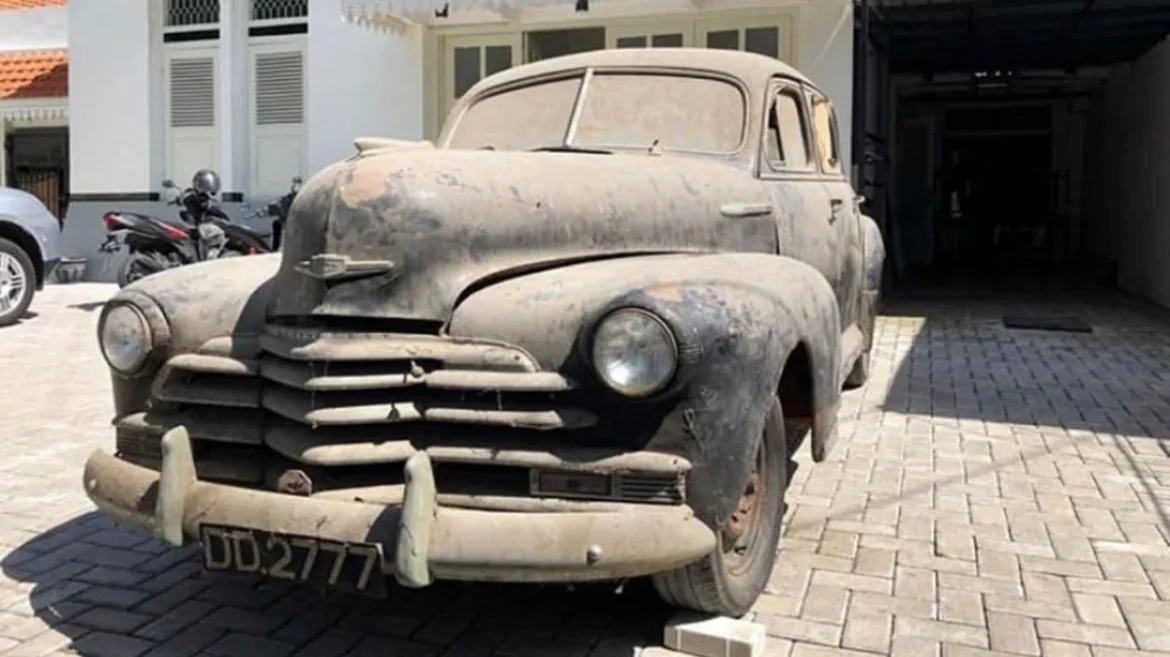
A massive collection of approximately 300 classic vehicles, spanning three generations of the Born family, is set to go under the hammer in Eaton, Colorado, on September 19, 2026. The auction, managed by the renowned VanDerBrink Auctions, represents one of the most significant private hoard liquidations in recent automotive history. While the spectacle of hundreds of vintage cars hitting the block is notable in its own right, the event has generated global interest due to its aggressive pricing strategy, with some lots starting at an opening bid of just 50 cents, or roughly IDR 8,000.
A Legacy of Automotive Preservation
The Born Family Estate Collection is not merely a stockpile of aging iron; it is a chronological archive of American automotive history. For three generations, the Born family—led by the patriarch, his son, and eventually Doug Born—traversed the United States, scouting auctions and private sales to preserve vehicles that others might have consigned to the scrapyard.
The collection serves as a tangible timeline of the 20th-century American automotive industry. It includes everything from pre-war brass-era machines and rugged early-century trucks to post-war muscle cars and chrome-laden cruisers of the late 1950s and 1960s. For automotive historians and restoration enthusiasts, this collection offers a rare glimpse into the evolution of design, engineering, and the shifting consumer preferences of the American public throughout the 1900s.
The Scope of the Inventory
The diversity of the inventory is staggering. Among the highlights is a 1912 Ford Model T Touring, a vehicle that fundamentally changed global transportation by ushering in the era of mass production. The collection also features an array of Ford Model A variants and an iconic 1932 Ford Roadster, a model that remains a cornerstone of the hot-rodding culture.
Chevrolet’s history is equally well-represented. Prospective bidders will find a 1931 Chevrolet sedan, a 1933 Chevrolet truck, and a 1934 Chevrolet coupe project—the latter being a highly sought-after body style for custom car builders. For those interested in utility and post-war industrial design, the 1955 Chevrolet NAPCO Pickup stands out as a prime example of mid-century ruggedness. Moving into the era of American "land yachts" and muscle, the inventory includes a 1964 Chevrolet Bel Air, a 1957 Pontiac Super Chief Wagon, and a 1974 Pontiac Firebird Esprit.
Beyond the "Big Two" of Ford and Chevrolet, the collection features a broad spectrum of manufacturers that defined the American landscape: Oldsmobile, Dodge, Plymouth, Buick, DeSoto, Willys, Packard, International, and the niche Henry J brand. This comprehensive variety ensures that the auction will attract not just high-end collectors, but also hobbyists seeking specific, hard-to-find parts or restoration foundations.
Understanding the Auction Dynamics
The announcement that some lots will open at 50 cents has captured public imagination, but experts caution that this is a strategic pricing mechanism rather than an indicator of final value. In the auction world, low starting bids are often employed to generate momentum and encourage active participation, particularly for "project" vehicles that require significant financial and labor investment to restore.
The auction terms stipulate a buyer’s premium, which is a standard industry practice. On-site bidders will face an 8% premium, while those participating via remote online platforms will be charged 10%. These fees are calculated on top of the hammer price, covering the logistics, marketing, and cataloging efforts provided by VanDerBrink Auctions. While the entry price is negligible, the competitive nature of the bidding process, combined with the rarity of specific components, suggests that final sale prices for desirable, near-complete units will likely climb significantly higher.
The Decision to Liquidate
The decision to bring the Born collection to the public market follows the passing of Doug Born. Faced with the daunting task of managing such a vast and sprawling estate, the family reached a collective decision to disperse the collection. By choosing to auction the vehicles, the family ensures that these cars—many of which have sat in storage for decades—will be redistributed to new owners who possess the time, resources, and passion to either preserve their original state or restore them to operational condition.
This transition from private storage to the public market is a common lifecycle event for major collections. It serves as a "re-homing" process that injects historical inventory back into the hobbyist ecosystem, providing parts for restoration projects and complete vehicles for museum display or personal enjoyment.
Implications for the Classic Car Market
The Eaton auction is a bellwether for the current health of the classic car market. The demand for "barn finds"—vehicles discovered in long-term storage—has remained robust despite broader economic fluctuations. These cars are viewed by many as alternative assets; they offer an emotional and historical value that traditional stocks or bonds cannot replicate.
However, the auction also highlights the generational shift in the classic car hobby. As the individuals who grew up driving these vehicles age, the market for pre-1950s automobiles is facing a transition. Younger collectors are increasingly drawn to vehicles that offer a blend of vintage aesthetics and more modern, reliable mechanical systems. The Born collection caters to both demographics: the purists seeking original 1930s components and the customizers looking for "blank slate" projects to integrate modern engines and drivetrains.
Furthermore, the scale of this event underscores the logistical complexity of managing massive private estates. VanDerBrink Auctions, which specializes in this type of large-scale dispersal, utilizes a combination of traditional live-auction theater and modern digital bidding platforms to reach a global audience. This hybrid approach is essential in today’s market, where a collector in Europe or Asia can compete for a piece of American automotive history alongside a local bidder in Colorado.
Preserving Automotive Heritage
As the date of the auction approaches, the local community in Eaton, Colorado, is preparing for an influx of enthusiasts, appraisers, and collectors. The event is more than a commercial transaction; it is a celebration of the Born family’s contribution to the preservation of industrial history. By spending decades curating these vehicles, the family effectively prevented the permanent loss of hundreds of artifacts that might otherwise have been crushed for scrap metal.
For the participants, the auction represents an opportunity to acquire a piece of history that is becoming increasingly scarce. The vehicles in the Born collection represent a time when automotive manufacturing was characterized by distinct brand identities, heavy use of steel, and mechanical simplicity that allowed for home-garage repairs. As the industry moves toward electric propulsion and autonomous technology, the cultural value of these internal combustion relics continues to appreciate.
In conclusion, the Born Family Estate Collection auction is a significant milestone in the 2026 automotive calendar. Whether the final hammer prices remain modest or escalate due to bidding wars, the primary success of the event lies in the continued stewardship of these vehicles. Through the efforts of VanDerBrink Auctions and the decision of the Born family, approximately 300 classic cars are poised to enter their next chapter, ensuring that the legacy of American motoring continues to roll forward for years to come. Prospective bidders are encouraged to review the full catalog and auction terms online before the event commences on September 19, ensuring they are prepared for the competitive, fast-paced environment of one of Colorado’s largest automotive auctions.