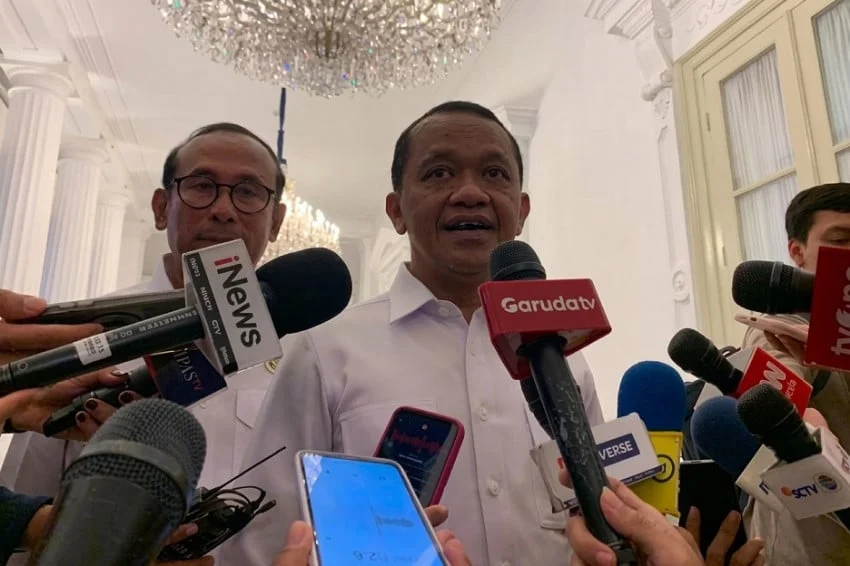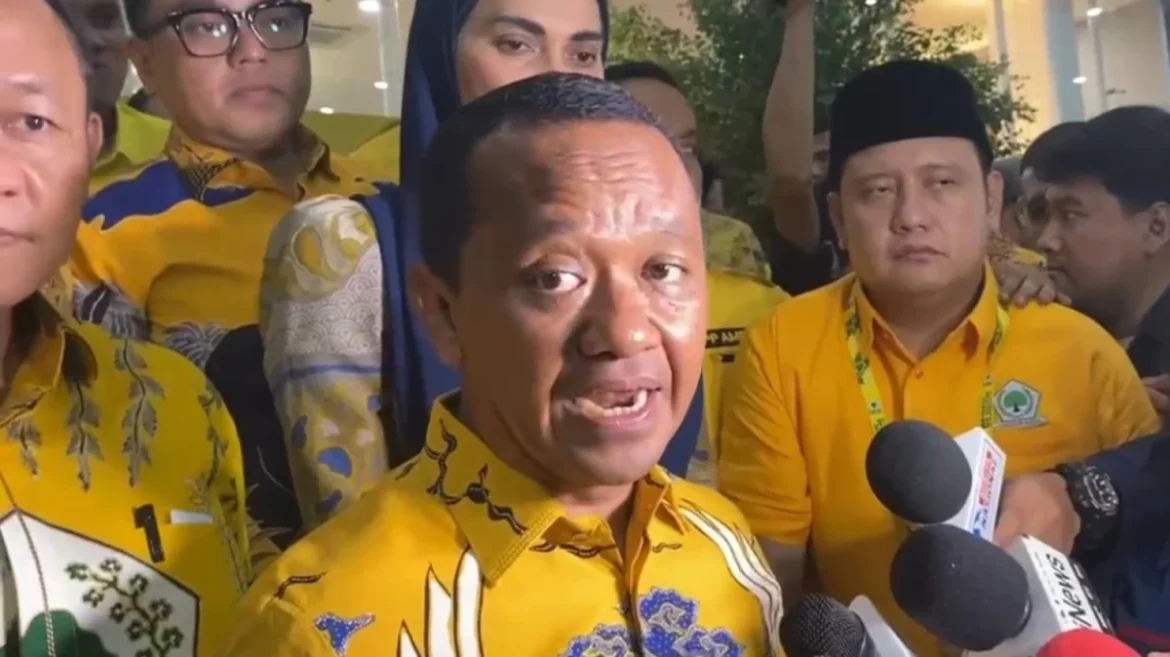
JAKARTA — Amid ongoing debates surrounding political accountability and institutional governance in Indonesia, Mohammad Hatta, Chairman of the Ethics Council of the Golkar Party, has formally proposed the establishment of a centralized National Ethics Tribunal. Speaking before an academic audience, Hatta argued that unifying the currently fragmented state ethics bodies across various sectors is a vital prerequisite for strengthening public trust, enforcing institutional accountability, and raising the standard of ethical conduct within public service and political organizations.
The proposal was articulated during a high-profile academic event held at the State Islamic University (UIN) Syarif Hidayatullah Jakarta. The gathering served as a platform for prominent legal scholars, political figures, and students to discuss the intersection of statecraft, religious law, and modern democratic ethics. As political parties continue to serve as the primary gateways for leadership recruitment and public office allocation, advocates for structural reform argue that an overarching ethical framework is urgently needed to curb conflicts of interest and systemic malpractice.
Academic Setting and High-Profile Attendance
The proposal was officially unveiled during a "Road to Campus" initiative coupled with a national public lecture hosted at the Faculty of Sharia and Law at UIN Syarif Hidayatullah Jakarta. The academic seminar drew significant attention from legal practitioners, political scientists, and university students keen on understanding the future trajectory of Indonesian democracy and anti-corruption frameworks.
The event featured several distinguished speakers and academic leaders. Among them was Muhammad Maksum, Dean of the Faculty of Sharia and Law at UIN Syarif Hidayatullah, who welcomed the discourse on political ethics as a vital component of legal education. Also in attendance was Wahidudin Adam, a former Justice of the Constitutional Court of Indonesia who served from 2014 to 2025, bringing profound judicial expertise to the discussions. Furthermore, Ilyas Indra, Chairman of the Central Executive Board of the Association of Sharia and Law Lawyers of Indonesia (PPSHI), participated to provide perspectives from the legal practitioner community regarding the enforcement of professional and ethical codes.
The convergence of political party leadership and senior judicial figures highlighted a growing consensus among institutional stakeholders: that Indonesia’s legal and political systems require deeper integration between statutory law and foundational ethical principles.
Deconstructing Political Ethics and Party Responsibility
During his keynote address, Mohammad Hatta utilized the platform to dissect the themes of his recently published book, Sumbangsih untuk Bangsa Kode Etik Partai, Jalan Panjang Menuju Politik Beretika (Contribution to the Nation: The Party Code of Conduct, The Long Road Toward Ethical Politics). The book offers a critical examination of how political organizations operate and how internal moral compasses dictate the quality of governance delivered to the public.
Hatta delivered an inspiring message to the student body and young intellectuals of UIN Syarif Hidayatullah, urging them to comprehend the nuances of ethical political participation. He emphasized that political parties must not be viewed merely as electoral vehicles for winning power, but rather as institutional sanctuaries for dedicated public service and nation-building.
"Political parties serve as spaces for cadre development, political recruitment, selection, and assignment, filling public offices, shaping state policies, and ultimately performing sacred service to the people," Hatta stated.
He elaborated on the central role that political parties play in filtering and preparing individuals for high-ranking government positions. According to Hatta, because political parties control the pipelines to the legislature, executive branches, and various state commissions, the internal ethical standards maintained by these parties directly influence the overall competency and integrity of the nation’s leadership.
"Political parties play a central role in the recruitment of cadres who will sit in various public offices in the state, so studies on the ethics of politics within parties—such as those within the Golkar Party—are decisive for the quality of cadres who will occupy various state institutions," Hatta added.
The Rationale Behind a National Ethics Tribunal
The core of Hatta’s proposal centers on the unification of Indonesia’s disparate ethical oversight bodies. Currently, various institutions—ranging from the General Elections Commission (KPU) Election Supervisory Agency (Bawaslu), the Honorary Council of the Election Organizers (DKPP), the Judicial Commission (KY), to internal parliamentary ethics councils—operate independently within their respective silos. While these bodies possess mandates to police professional conduct, the lack of a centralized, overarching authority often leads to overlapping jurisdictions, inconsistent rulings, and enforcement gaps.
By advocating for a National Ethics Tribunal, Hatta envisions an umbrella institution that can harmonize ethical standards across the judiciary, the legislative branch, executive agencies, and political parties. Proponents of this idea suggest that such a tribunal could serve as a supreme appellate or supervisory body for ethical violations that transcend ordinary criminal or administrative law, establishing a uniform national standard for integrity.
Broader Context of Political and Institutional Reform in Indonesia
Hatta’s proposal arrives at a crucial juncture in Indonesia’s democratic evolution. Over the past two decades, the nation has undergone significant decentralization and democratization following the Reformasi era of 1998. While democratic processes such as direct elections and institutional decentralization have taken root, public institutions have frequently grappled with issues of ethical degradation, conflicts of interest, and transactional politics.
Recent years have witnessed intense public scrutiny over the ethical conduct of state officials, particularly following high-profile controversies involving the judiciary, regulatory agencies, and legislative bodies. The establishment of ad-hoc ethics panels within specific institutions—such as the ethics council formed within the Constitutional Court—has highlighted both the necessity and the fragility of internal self-policing mechanisms. Observers note that internal bodies often face accusations of bias or lack of independence, further fueling the argument for an independent, overarching national ethics framework.
Furthermore, discussions surrounding institutional integrity coincide with broader debates on electoral and legislative reforms. For instance, recent deliberations within major political parties regarding parliamentary thresholds—such as the Golkar Party’s proposal for a moderate 5 percent parliamentary threshold—demonstrate a continuous effort to calibrate the political landscape for greater stability and governance effectiveness.
Implications and Future Outlook
The introduction of the National Ethics Tribunal concept by a senior figure within one of Indonesia’s oldest and most influential political parties is expected to stimulate robust debate among legal experts, civil society organizations, and lawmakers. While the proposal currently stands as an intellectual and policy initiative championed by Hatta, it opens the door to serious legislative considerations for future governance frameworks.
Implementing a National Ethics Tribunal, however, would not be without logistical and constitutional challenges. Legal scholars point out that any such body would require careful structural design to avoid encroaching upon the constitutionally mandated independence of existing judicial and legislative institutions. Questions regarding its jurisdiction, enforcement powers, and the selection process for its members would need to be meticulously addressed through comprehensive legislative drafting and public consultation.
Despite these hurdles, the discourse generated at UIN Syarif Hidayatullah underscores a vital realization among Indonesia’s political and academic elites: structural legal reform alone is insufficient without a parallel elevation of political morality. As Indonesia looks toward future electoral cycles and governance reforms, initiatives aimed at institutionalizing ethics—such as Mohammad Hatta’s proposed National Ethics Tribunal—may well shape the ideological and operational blueprint of the nation’s political future.