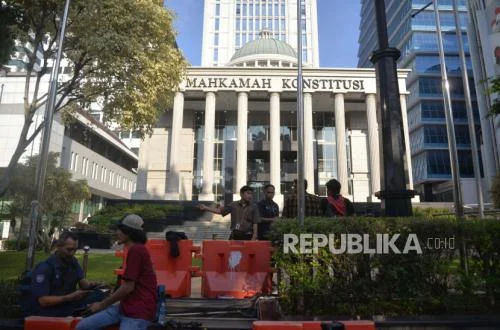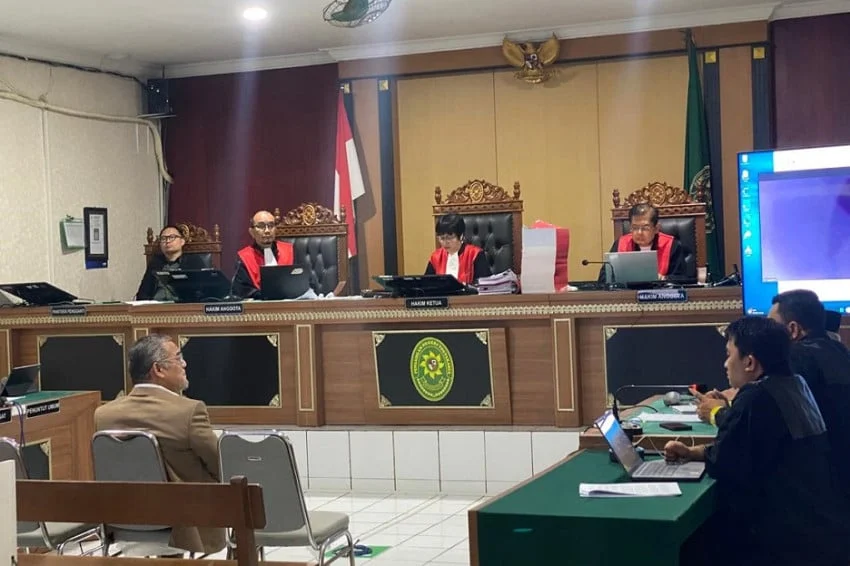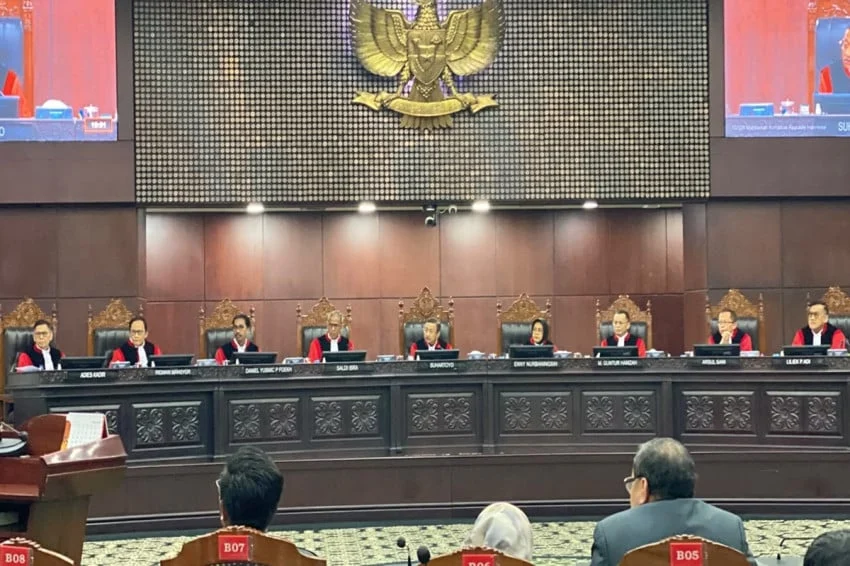
The integrity of Indonesia’s electoral process has once again taken center stage as the Constitutional Court (Mahkamah Konstitusi or MK) prepares to deliberate on a contentious lawsuit regarding the educational credentials of Vice President-elect Gibran Rakabuming Raka. The case, which challenges the legitimacy of Gibran’s academic qualifications, has drawn significant attention from political analysts and observers, with academic and commentator Rocky Gerung warning that a ruling in favor of the petitioners could trigger a profound political crisis within the nation’s highest echelons of power.
Speaking during the iNews program "Rakyat Bersuara" on September 22, 2026, Gerung emphasized that the proceedings regarding the alleged falsification of credentials represent more than a mere administrative dispute. Instead, he argued that the case has the potential to reshape the landscape of the current administration. "The Constitutional Court is set to commence the formal processing of the allegations regarding the authenticity of Gibran’s diploma. This is poised to become a significant scandal that will inevitably require the attention of the House of Representatives (DPR). Should the legislative body intervene or express support for the judicial scrutiny, we could see a domino effect where questions of legitimacy extend beyond the Vice President to the President himself," Gerung stated during the broadcast.
The Genesis of the Diploma Controversy
The dispute surrounding Gibran Rakabuming Raka’s educational background is not a recent development. The controversy dates back to the early stages of the 2024 presidential campaign, when various civil society groups and political critics began raising questions regarding the documents Gibran submitted to the General Elections Commission (KPU). The primary point of contention revolves around whether the credentials obtained from overseas educational institutions meet the rigorous standards required by Indonesian electoral law for candidates seeking high office.
Throughout the campaign period, representatives for Gibran consistently denied these allegations, asserting that all necessary documentation had been verified and authenticated by the relevant educational authorities and the KPU. Despite these assurances, the skepticism persisted, eventually transitioning from public discourse into the formal judicial arena through a series of petitions filed under the framework of the Dispute over General Election Results (PHPU).
Chronology of Legal Challenges
The legal journey of this dispute has been marked by several key milestones:
- Late 2023 – Early 2024: Initial public allegations emerge, casting doubt on the graduation certificates from the Management Development Institute of Singapore (MDIS).
- March 2024: Following the official announcement of the election results, petitioners filed formal challenges with the Constitutional Court, citing the alleged discrepancy in educational qualifications as a violation of the requirements for candidacy.
- Mid-2024: The Constitutional Court conducted preliminary hearings to determine the admissibility of the petitions. The court’s willingness to move forward with the substantive phase of the case suggests that the petitioners provided sufficient prima facie evidence to warrant an in-depth investigation.
- September 2026: The current phase, as highlighted by Gerung, involves the formal processing of evidence. This stage is critical, as it requires the Court to weigh the veracity of the academic documents against the legal definitions of electoral eligibility.
Constitutional Court’s Role and Authority
The Constitutional Court of Indonesia serves as the final arbiter of electoral disputes. Under Article 24C of the 1945 Constitution, the Court has the authority to decide on disputes concerning the results of general elections. However, the intersection between academic qualifications and constitutional eligibility presents a complex legal challenge.
If the Court finds that the credentials are indeed invalid, it could lead to the disqualification of the candidate. The legal implications of such a move are uncharted territory. Constitutional law experts note that if a Vice President is retroactively disqualified, the mechanisms for succession and the continuity of the executive branch would be subject to intense constitutional interpretation. The vacuum created by such a decision would likely necessitate an extraordinary session of the People’s Consultative Assembly (MPR) to ensure that the stability of the government remains intact.
Reaction from Stakeholders and Political Observers
The political sphere in Jakarta has been divided in its reaction to the proceedings. Supporters of the government, including various "militant" volunteer groups such as Gibran 08 Nusantara, have publicly denounced the legal challenges as politically motivated maneuvers designed to undermine the democratic mandate of the 2024 election. They argue that the focus on the Vice President’s credentials is an attempt by opposition figures to delegitimize the entire administration.
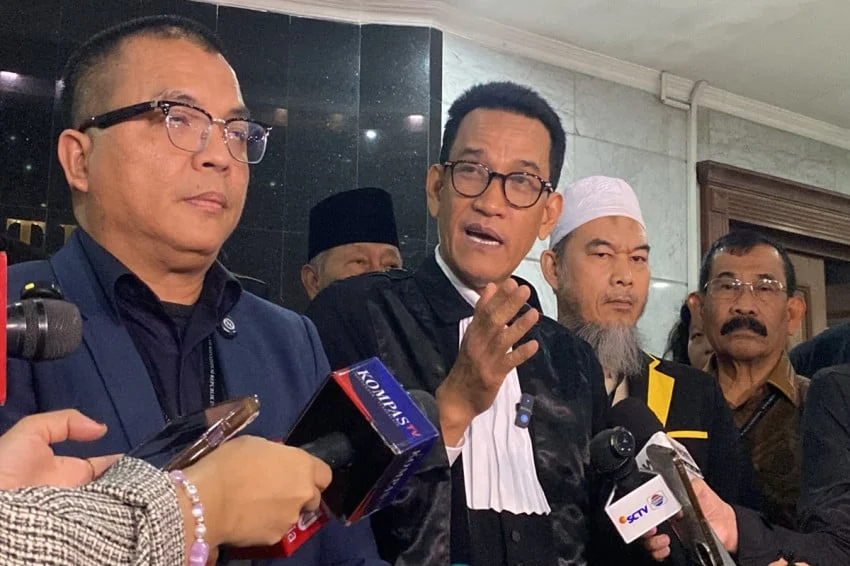
Conversely, legal activists and organizations like the team led by Denny Indrayana have maintained that the case is fundamentally about the rule of law and ensuring that all officials, regardless of their political standing, adhere to the strict requirements of the electoral code. From this perspective, the judiciary is simply performing its constitutional duty to protect the integrity of the state’s executive institutions.
Broader Political Implications
Rocky Gerung’s assessment that the situation could escalate into a broader crisis reflects the fragile nature of the current political coalition. While the dispute currently targets Gibran, the structural link between the President and the Vice President means that any ruling impacting the latter inherently affects the legitimacy of the former.
If the DPR—the legislative body—becomes involved, the crisis would shift from a purely judicial matter to a legislative and political one. The involvement of the DPR could lead to an inquiry into the entire verification process managed by the KPU during the 2024 election. Such an inquiry would likely expose the vetting procedures of the KPU to public scrutiny, potentially leading to further questions regarding the administrative standards applied to all candidates.
Furthermore, international observers are monitoring the situation closely. Indonesia’s standing as a stable democracy in Southeast Asia is often linked to the predictability of its electoral outcomes. A prolonged legal battle over the credentials of a sitting Vice President would likely introduce a period of market uncertainty and political volatility, as stakeholders wait for a definitive resolution from the bench.
Fact-Based Analysis of the Legal Path Forward
For the Constitutional Court, the case is as much about precedent as it is about the specific individual. The court must balance the need for accountability with the necessity of maintaining political stability. The evidence required to prove "falsified credentials" in a legal setting is remarkably high. It necessitates expert testimony from the educational institutions involved, forensic examination of documents, and a clear demonstration that the candidate knowingly used fraudulent information to bypass legal requirements.
As the Court proceeds, the transparency of these hearings will be paramount. Any perception that the judiciary is being influenced by political pressure—either from the government or from the opposition—would severely damage public trust in the institution. The upcoming weeks are expected to involve witness testimonies and the submission of certified documentation from the institutions where Gibran studied, marking the most intensive phase of the litigation thus far.
Conclusion
The dispute over Gibran Rakabuming Raka’s academic credentials has moved beyond a campaign-season talking point to become a defining moment for the Indonesian judiciary. Whether the case will result in a significant constitutional shift or be dismissed as a meritless claim remains to be seen. However, as Rocky Gerung and other observers have noted, the ripple effects of the Constitutional Court’s ruling will extend far beyond the courtroom, touching on the fundamental principles of accountability, the rule of law, and the stability of Indonesia’s executive branch. As the nation watches, the judiciary faces the difficult task of navigating a case that holds the potential to alter the course of the current political administration.