The Indonesian government has officially confirmed the allocation of state funds to meet a monumental financial obligation, as the first wave of debt associated with the nationwide development of village and sub-district cooperatives reaches its initial maturity date. The liability, tied directly to the ambitious infrastructure rollout of the Koperasi Desa/Kelurahan (Kopdes) Merah Putih initiative, represents a critical test of fiscal management, inter-agency coordination, and banking stability in Southeast Asia’s largest economy.
At the center of this financial milestone is PT Agrinas Pangan Nusantara, a state-linked enterprise that secured massive commercial financing from a consortium of state-owned banks, commonly known as Himbara (Himpunan Bank Milik Negara), to spearhead the physical construction of cooperative units across thousands of rural communities. With the initial payment deadline falling on Friday, September 25, the total due on that single day hit a staggering Rp37 trillion. This figure constitutes a fraction of the broader estimated aggregate liability of Rp240 trillion required to fully realize the sprawling grassroots economic infrastructure project.
Despite the immense scale of the financial commitment, top economic officials have moved quickly to reassure both domestic and international markets regarding the state’s capacity to absorb the expenditure without destabilizing fiscal targets.
Fiscal Preparedness and APBN 2026 Integration
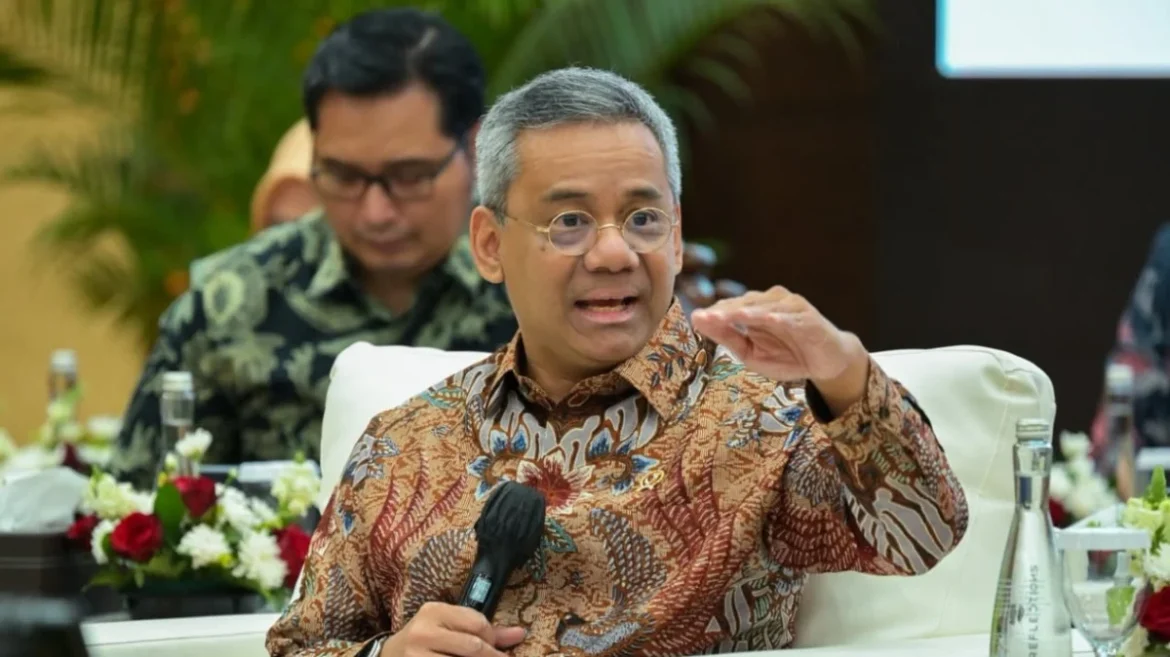
Addressing the media during a high-profile press briefing at the Bank Indonesia complex in Central Jakarta, Deputy Minister of Finance Suahasil Nazara delivered a definitive message regarding the government’s preparedness. Suahasil assured stakeholders that the capital required to service and liquidate the debt incurred for the Kopdes Merah Putih construction has been systematically integrated into the state budget framework.
According to the Ministry of Finance, the expenditure was not a late addition or an emergency allocation, but rather a pre-planned fiscal commitment locked in since the early stages of drafting the 2026 State Budget (APBN).
"The debt repayment used to build the Merah Putih Village and Sub-district Cooperatives has been budgeted for within the APBN. Therefore, the funds are secured and available," Suahasil stated firmly during the briefing.
The Ministry of Finance emphasized the inherent flexibility of the national budget structure. In standard operational scenarios, unexpected developmental expenditures require extensive fiscal reallocation or legislative adjustments. However, given the strategic priority assigned to rural economic empowerment through the Kopdes Merah Putih framework, the necessary liquidity was ring-fenced months in advance to prevent any potential liquidity squeezes within the state-owned banking sector.
Rigorous Verification and Validation Protocol
While the state budget houses the necessary funds, the Ministry of Finance and related stakeholders have instituted a strict administrative and technical verification protocol before any capital is officially disbursed to clear the bank liabilities.
Suahasil highlighted that the release of funds is directly contingent upon comprehensive physical audits and validation processes. Officials from the Ministry of Cooperatives, in close collaboration with the workforce at PT Agrinas Pangan Nusantara, have been deployed across the archipelago to inspect, verify, and document the physical completion of cooperative facilities in diverse geographic locations.
This rigorous oversight aims to ensure a precise match between disbursed loan values and tangible infrastructure assets on the ground. Government representatives acknowledged the intense workload undertaken by field teams, noting that transparency and accountability remain non-negotiable prerequisites in executing large-scale public-private infrastructure developments financed through state-backed debt instruments.
Multi-Agency Oversight and the Role of KSSK and Danantara
Given the systemic importance of a Rp37 trillion debt settlement to state-owned lenders, the entire disbursement and restructuring process is subject to multi-layered surveillance. The Financial System Stability Committee (KSSK) has assumed a direct oversight role to monitor the transactions and evaluate any potential spillovers into the broader financial sector.
The KSSK framework brings together the Ministry of Finance, Bank Indonesia (BI), the Financial Services Authority (OJK), and the Indonesia Deposit Insurance Corporation (LPS). Uniquely, the monitoring architecture for this specific transaction incorporates Danantara Indonesia, the newly established state investment management entity acting as the primary shareholder for the state-owned banks involved in funding the project.
"Therefore, with the presence of Danantara in the KSSK framework, the narrative becomes complete. There is a direct representation of state-owned enterprises within that oversight body as well," Suahasil explained, underscoring the synchronized governance model connecting fiscal policy, monetary authority, banking regulation, and state asset management.
Background and Strategic Context of Kopdes Merah Putih
The Kopdes Merah Putih initiative was conceptualized as a cornerstone policy aimed at revitalizing rural economies, stabilizing food supply chains, and enhancing the bargaining power of farmers, fishers, and local micro-entrepreneurs. By establishing standardized cooperative units in every village and sub-district, the government sought to create a localized hub for agricultural distribution, affordable credit access, and retail staples.
To accelerate execution without heavily straining immediate fiscal expenditures in prior fiscal years, the administration leveraged the balance sheets of state-owned commercial banks. PT Agrinas Pangan Nusantara was appointed as the primary corporate vehicle to execute large-scale procurement, architectural deployment, and construction management, utilizing credit facilities extended by the state banking syndicate.
However, the rapid accumulation of debt—projected to peak near Rp240 trillion upon completion of all planned phases—has inevitably drawn scrutiny from financial analysts, economists, and legislators. The sheer magnitude of the obligations places a heavy burden on the national fiscal space, making timely execution and subsequent commercial viability of the cooperatives vital to ensure the debt does not morph into a long-term structural liability for the state.
Economic Implications and Market Repercussions
The successful handling of the September 25 debt maturity carries profound implications for Indonesia’s macroeconomic stability and sovereign credibility.
First, the seamless execution of the Rp37 trillion payment demonstrates to international rating agencies and bondholders that the Indonesian government maintains robust fiscal buffers and honors its contingent liabilities without compromising macroeconomic stability. By proactively addressing state-backed corporate debt, the administration effectively mitigates default risks that could otherwise undermine confidence in state-owned enterprises (SOEs).
Second, the involvement of Himbara banks means that the prompt settlement of these liabilities injects crucial liquidity back into the state banking system. This infusion allows major state lenders—such as Bank Mandiri, BRI, BNI, and BTN—to maintain healthy capital adequacy ratios (CAR) and continue extending credit to other vital sectors of the domestic economy, thereby preventing any contraction in national lending capacity.
Third, the spotlight now shifts to the operational performance of the newly constructed cooperatives. For the Kopdes Merah Putih project to be deemed a sustainable economic success, the physical infrastructure must translate into active, revenue-generating commercial entities capable of servicing their operational costs and contributing to regional economic growth. If the cooperatives underperform commercially, the burden of subsequent debt tranches could necessitate ongoing state subsidies or financial restructuring.
Outlook and Future Tranches
As the government clears the first major financial hurdle associated with the Kopdes Merah Putih initiative, financial planners are already turning their attention to upcoming debt maturities. With total liabilities estimated at Rp240 trillion, subsequent payment schedules will require sustained fiscal discipline, meticulous auditing, and steady economic growth to ensure revenue collections remain robust enough to support ongoing public commitments.
The Ministry of Finance, alongside Danantara and the KSSK, is expected to release comprehensive progress reports detailing the exact disbursement figures and the results of the physical asset verification campaigns in the coming weeks. Meanwhile, rural communities across Indonesia await the full operational rollout of the cooperatives, anticipating that the massive financial undertaking will ultimately deliver tangible improvements in local commerce, employment, and welfare standards.