
In a dramatic escalation of hostilities in the Middle East, United States President Donald Trump has officially declared the end of a fragile ceasefire with the Islamic Republic of Iran, initiating a series of targeted missile strikes across Iranian territory. The announcement, delivered with the characteristic intensity of the administration’s "maximum pressure" doctrine, marks a definitive pivot from diplomatic stalling to direct kinetic engagement. As American cruise missiles impacted strategic sites within Iran, the President condemned the leadership in Tehran, asserting that the period of restraint has concluded and that the United States will no longer tolerate what it perceives as persistent provocations against its regional interests and personnel.
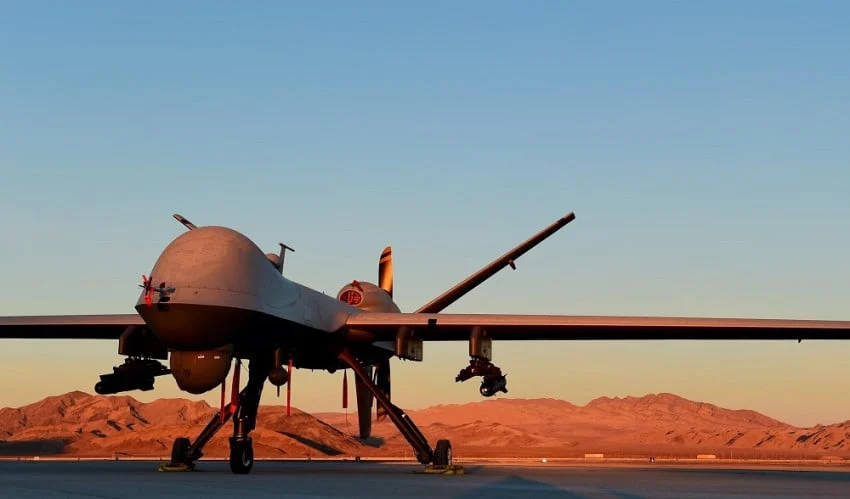
Central to this escalating conflict is the staggering revelation regarding the attrition rate of American unmanned aerial vehicles (UAVs). According to senior U.S. defense officials, Iran has successfully downed approximately 30 MQ-9 Reaper drones since the onset of the current hostilities. This figure represents a significant blow to the United States Air Force’s (USAF) intelligence, surveillance, and reconnaissance (ISR) capabilities in the region. The MQ-9 Reaper, a cornerstone of American aerial strategy for nearly two decades, now finds itself at the center of a debate regarding the viability of non-stealthy drones in contested airspaces.
The Strategic Importance and Vulnerability of the MQ-9 Reaper
The MQ-9 Reaper, manufactured by General Atomics Aeronautical Systems, entered service in 2007 as a more powerful and capable successor to the MQ-1 Predator. For years, it served as the "workhorse" of U.S. counter-terrorism operations across the Middle East, North Africa, and Central Asia. Designed primarily for "hunter-killer" missions, the Reaper can stay airborne for over 24 hours, carrying a sophisticated suite of sensors and precision-guided munitions, including AGM-114 Hellfire missiles.
However, the Reaper was engineered to operate in "permissive environments"—regions where the United States and its allies maintain total air superiority and where the enemy lacks sophisticated anti-aircraft technology. The current conflict with Iran has exposed the limitations of this platform. Unlike the insurgent groups the U.S. fought in Iraq and Afghanistan, Iran possesses a robust, multi-layered integrated air defense system (IADS) consisting of both domestically produced and foreign-acquired surface-to-air missile (SAM) batteries.
The loss of 30 units is a substantial setback, both operationally and financially. While the USAF announced its final five-year procurement contract for the Reaper in 2020, General Atomics officially shuttered the production line last year after completing 575 units. According to C. Mark Brinkley, a spokesperson for General Atomics, the final production units were priced at approximately $16 million per aircraft when purchased in standardized four-unit configurations. At this valuation, the loss of 30 drones represents a direct hardware cost exceeding $480 million, not including the value of specialized sensor payloads and the costs associated with training the flight crews who operate them remotely.
Chronology of Escalation: From Ceasefire to Missile Strikes
The breakdown of the ceasefire did not occur in a vacuum. Tensions have been simmering for months, characterized by a series of maritime "shadow war" incidents and proxy skirmishes.
- The Fragile Truce: Earlier this year, a temporary cessation of direct hostilities was brokered through back-channel negotiations, aimed at preventing a full-scale regional war.
- Increased Drone Attrition: Throughout the spring, reports began to surface of MQ-9 Reapers disappearing over the Persian Gulf and southern Iran. While the Pentagon initially downplayed these losses as technical failures, Tehran began displaying wreckage of the drones as trophies of their defensive capabilities.
- The May Testimony: In a significant budget hearing in May, General Kenneth Wilsbach, the Air Force’s top officer, testified before lawmakers that the Reaper had become the "most valuable player" in the theater. He emphasized that no other platform could match its persistence and strike capability, despite acknowledging the increasing risks.
- The Tuesday Incident: The catalyst for the current strikes occurred on Tuesday, when Iran claimed to have intercepted and destroyed another Reaper drone over its southern provinces. Iranian state media broadcast footage of what it claimed was an "enemy" drone being struck by a localized defense system.
- The Declaration: Following the Tuesday incident, President Trump moved to terminate the ceasefire, citing Iran’s continued "aggression" and the targeting of American assets as a breach of the standing agreement.
Iranian Defense Capabilities and Tactics
The success of the Iranian military in downing 30 high-altitude drones has surprised some Western analysts. Iran’s Islamic Revolutionary Guard Corps (IRGC) has invested heavily in indigenous missile technology. Systems such as the "3rd Khordad"—the same system used to down a high-altitude US Global Hawk drone in 2019—along with the Bavar-373 and the Raad system, have proven capable of tracking and engaging slow-moving, non-stealthy targets like the Reaper.
Tehran’s strategy appears to be one of "asymmetric denial." By making the cost of drone surveillance prohibitively high, they aim to blind U.S. intelligence and force American planners to either risk manned aircraft or withdraw their "eye in the sky" assets further from Iranian borders. The Iranian Ministry of Defense issued a statement following the latest shoot-down, asserting that "the skies of the Islamic Republic are a graveyard for violators of our sovereignty."
Official Responses and Political Reaction
The reaction in Washington has been sharply divided. Supporters of the President’s decision argue that a forceful response was the only way to restore deterrence. Senatorial hawks have called for even more expansive strikes against IRGC infrastructure, arguing that "half-measures" have only emboldened Tehran.
Conversely, some members of the House Armed Services Committee have expressed concern over the loss of the drones and the potential for a wider conflict. "Losing 30 Reapers is not just a tactical loss; it’s a strategic failure to adapt to a changing battlefield," one anonymous staffer noted. "We are using 20th-century assumptions against 21st-century air defenses."
General Kenneth Wilsbach’s previous comments have come under renewed scrutiny. While he praised the Reaper as the "MVP" of the conflict, the sheer volume of losses suggests that the "MVP" is being systematically targeted and removed from the board. "We have conducted a massive number of sorties," Wilsbach had told lawmakers. "There is no other platform that even comes close." Critics now ask if the Air Force relied too heavily on a platform that was never meant to survive a high-intensity conflict with a nation-state.
Economic and Industrial Implications
The closure of the MQ-9 production line last year adds a layer of complexity to the current crisis. With 30 units lost and no new units currently being manufactured, the USAF faces a diminishing inventory. While there are hundreds of Reapers still in the global fleet, many are committed to other theaters or are undergoing maintenance.
This scarcity may force the Pentagon to accelerate the development of the "Next-Generation ISR" platforms, which are expected to feature stealth characteristics and higher survivability. However, these programs are years away from full-scale deployment. In the interim, the U.S. may be forced to rely more heavily on satellite reconnaissance—which lacks the persistent "stare" of a drone—or risk manned platforms like the F-35 Lightning II for surveillance missions, significantly increasing the risk of American casualties.
Analysis of Regional Impact
The end of the ceasefire and the commencement of missile strikes have sent shockwaves through global markets. Oil prices saw an immediate 4% spike following the President’s announcement, as traders feared disruptions to shipping in the Strait of Hormuz, a vital artery for global energy supplies.
Regional allies, including Israel and Saudi Arabia, have reportedly been placed on high alert. While these nations have long viewed Iran’s drone and missile programs as a primary threat, the prospect of a direct, sustained conflict between Washington and Tehran carries the risk of "spillover" violence involving proxy groups such as Hezbollah in Lebanon or the Houthis in Yemen.
Conclusion: A New Phase of Contested Warfare
The current situation marks a transition in the nature of modern warfare. The era of "uncontested skies," where American drones could circle overhead with impunity, appears to be coming to an end in the face of sophisticated regional adversaries. The loss of 30 MQ-9 Reapers is a clear signal that the technological gap in unmanned systems is closing, or at least that the defensive measures to counter them are becoming more effective and accessible.
As President Trump’s missile strikes continue and Iran maintains its defiant posture, the international community remains on edge. The focus now shifts to whether this escalation will lead to a broader regional conflagration or if a new, more stable deterrent can be established. For the United States military, the immediate challenge is to adapt its aerial strategy to an environment where its most "valuable" assets are also its most vulnerable. The lessons learned from the wreckage of 30 Reapers in the Iranian desert will likely dictate the future of drone warfare for decades to come.
