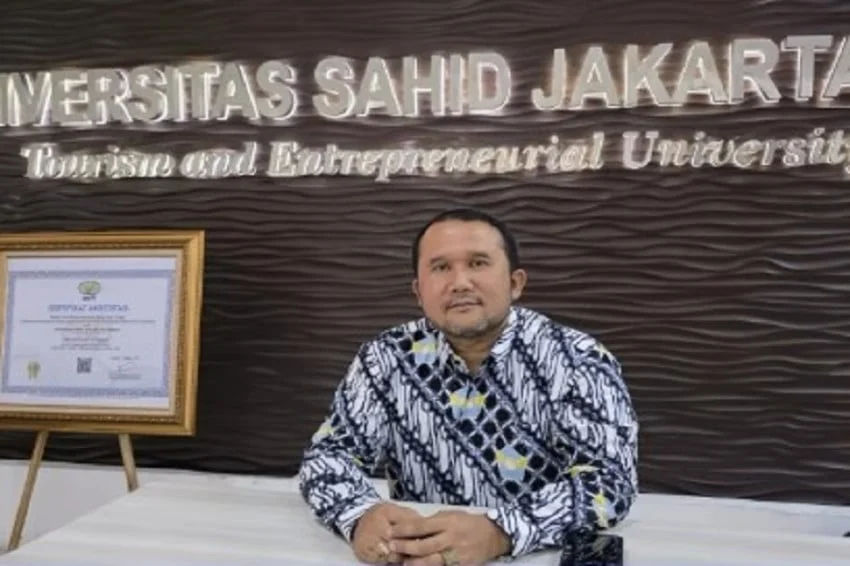
The ongoing battle against forest and land fires in Indonesia has reached a critical juncture, prompting high-level government intervention and widespread support from environmental scholars. Marningot Tua Natalis Situmorang, a prominent environmental expert and Head of the Master’s Program in Environmental Management at the Postgraduate School of Universitas Sahid, has voiced strong endorsement for President Prabowo Subianto’s recent initiative to significantly strengthen legal sanctions against perpetrators of forest and land fires, locally known as kebakaran hutan dan lahan or karhutla. This policy push follows a high-stakes cabinet meeting where the executive branch signaled a zero-tolerance approach toward both corporate entities and individuals responsible for environmental destruction.
Forest and land fires have historically plagued parts of Southeast Asia, particularly Indonesia, with recurring seasonal crises that generate transboundary haze, disrupt economic activity, and pose severe public health hazards. In response to the persistent threat these blazes pose to national sovereignty, public welfare, and global climate commitments, the administration under President Prabowo is exploring unprecedented legislative measures. Among these is the controversial yet widely discussed proposition to categorize severe forest fires as acts of ecological terrorism, a designation that would unlock harsher penalties, expanded investigative powers for law enforcement, and heightened deterrence against habitual offenders.
The urgency of this policy shift cannot be overstated. For decades, traditional law enforcement mechanisms—ranging from administrative fines to moderate criminal sentences—have frequently been criticized by civil society organizations and academic institutions as insufficient to deter well-funded corporations and organized syndicates that utilize slash-and-burn clearing methods for agricultural expansion, particularly palm oil and pulpwood plantations. As the Indonesian government seeks to align national development with sustainable environmental stewardship, the convergence of academic backing and executive resolve marks a potential turning point in the nation’s environmental jurisprudence.
Chronology of the Executive Directive and Policy Formulation
The momentum behind the proposed tightening of legal frameworks culminated during a hybrid limited cabinet meeting held at the Merdeka Palace in Jakarta. Presiding over the session, President Prabowo Subianto addressed the recurring menace of seasonal fires with palpable urgency. Directing his remarks toward key cabinet ministers and law enforcement officials, the President emphasized that existing punitive measures no longer suffice to address the profound scale of damage inflicted by deliberate or grossly negligent burning.
During the meeting, President Prabowo explicitly instructed the Minister of State Secretariat and the Minister of Law to collaborate on a comprehensive review of existing statutory frameworks. The objective of this review is to formulate stricter legal provisions that can be submitted to the House of Representatives (DPR) for legislative amendment. Crucially, the President introduced the conceptual framework of classifying catastrophic environmental destruction as ecological terrorism, underscoring the gravity with which the administration views the crisis. Furthermore, the President issued a stern warning regarding corporate accountability, ordering that any business entity found to be repeat offenders—having previously faced administrative or legal sanctions yet continuing illicit clearing practices—must have their operational licenses permanently revoked.
This high-level directive builds upon a growing administrative timeline aimed at tightening oversight over concession holders. In the weeks leading up to the Merdeka Palace meeting, environmental monitoring agencies, including the Ministry of Environment and Forestry, reported an uptick in hotspots across several provinces prone to seasonal combustion. The proactive stance taken by the executive branch represents a strategic pivot from reactive firefighting to aggressive preemptive deterrence, aiming to dismantle the financial and operational incentives that drive unlawful land clearance.
Contextualizing the Threat: Environmental, Economic, and Health Implications
To understand the rationale behind the proposed classification of forest fires as ecological terrorism, one must examine the multifaceted impacts of karhutla on Indonesian society. Environmental scientists and public health professionals consistently categorize these fires not merely as localized infractions, but as systemic catastrophes that threaten national stability.
First and foremost is the immediate human toll. Smoke and particulate matter generated by widespread burning release hazardous pollutants, including carbon monoxide, sulfur dioxide, and fine particulate matter known as PM2.5. These toxins deeply penetrate human respiratory systems, causing acute and chronic health conditions such as acute respiratory infections (ISPA), asthma attacks, cardiovascular complications, and reduced life expectancy. During severe fire seasons, millions of citizens across Sumatra, Kalimantan, and neighboring countries are enveloped in toxic haze, forcing the closure of schools, the suspension of public transport, and the overwhelming of local healthcare facilities.
Economically, the fallout is staggering. The disruption of daily commerce, temporary closures of corporate and government offices, cancellation of domestic and international flights due to poor visibility, and loss of productivity cost the Indonesian economy billions of rupiah annually. Furthermore, the agricultural and forestry sectors suffer long-term declines in soil fertility and biodiversity loss. From a global perspective, massive peatland and forest fires release gigatons of greenhouse gases into the atmosphere, undermining international efforts to mitigate climate change and tarnishing the nation’s reputation regarding carbon emissions reduction commitments.
Academic and Expert Perspectives on Stricter Enforcement
Marningot Tua Natalis Situmorang’s endorsement of the presidential initiative brings academic rigor to the political debate. Speaking on the matter, Natalis elaborated on why treating karhutla perpetrators with the utmost severity is legally and morally justified.
"For me, it is completely acceptable. Looking at the facts, perpetrators of forest and land fires commit serious crimes because they endanger human lives and cause substantial economic losses. People suffer from ISPA, some may even die, offices are forced to close, and community activities are severely disrupted," Natalis stated. By framing the actions of illegal burners as a direct assault on human welfare and public infrastructure, the academic community aligns with the administration’s view that conventional penal codes do not adequately reflect the profound culpability involved.
The proposal to introduce the concept of ecological terrorism into Indonesian positive law introduces important legal discussions. Legal scholars note that while terrorism traditionally implies politically or ideologically motivated violence intended to instill fear in a population, expanding the definition to encompass large-scale environmental destruction reflects the modern reality that ecological collapse can be just as lethal and destabilizing as conventional warfare. If adopted by the legislature, such a categorization would potentially allow for asset forfeiture, extended detention periods, and significantly elevated prison sentences for masterminds and corporate executives found complicit in systematic arson.
Corporate Accountability and the Threat of License Revocation
A cornerstone of President Prabowo’s directive targets the corporate structures that frequently finance or benefit from illegal land clearing. While smallholder farmers are occasionally implicated in localized burning, large-scale deforestation and peatland draining are predominantly driven by commercial agro-industrial operations seeking low-cost methods to prepare land for cultivation.
Historically, enforcement agencies have struggled to pierce the corporate veil, often penalizing subsidiary companies with modest fines while parent corporations evade ultimate accountability. The President’s order to permanently revoke the operating licenses of recidivist corporations represents a direct threat to their commercial viability. In the business of agribusiness and resource extraction, the loss of land concessions and operational permits is the ultimate deterrent.
Experts suggest that pairing license revocation with criminal investigations into corporate leadership will fundamentally alter the risk-reward calculus for plantation owners. When executives face personal criminal liability alongside the corporate entity’s loss of license, the institutional tolerance for illegal burning is expected to plummet. This regulatory tightening sends an unequivocal signal to domestic and international investors that Indonesia is transitioning definitively toward sustainable, legally compliant resource management.
Legislative Pathways and Future Outlook
Translating the executive vision into enforceable law requires close coordination between the executive branch and the legislature. The Ministry of Law and the State Secretariat face the intricate task of drafting amendments to existing statutes, such as the Law on Environmental Protection and Management and potentially the Anti-Terrorism Law or specific criminal code provisions, to accommodate the nuances of ecological terrorism.
Members of the House of Representatives (DPR) are expected to review these proposals in upcoming legislative cycles. Given the widespread bipartisan recognition of the damage caused by seasonal fires, legislative support is anticipated, though debates will likely center around precise definitions, evidentiary standards, and mechanisms to prevent overreach or the unfair targeting of small-scale farmers who lack alternatives for sustainable land management.
Ultimately, the success of this strengthened legal framework will depend on consistent implementation, transparent judicial proceedings, and inter-agency cooperation among the police, the Attorney General’s Office, the Ministry of Environment and Forestry, and local governments. As Indonesia navigates the complexities of climate vulnerability and economic development, the firm stance articulated by President Prabowo and supported by academic experts like Marningot Tua Natalis Situmorang establishes a formidable baseline for safeguarding the nation’s environmental future.