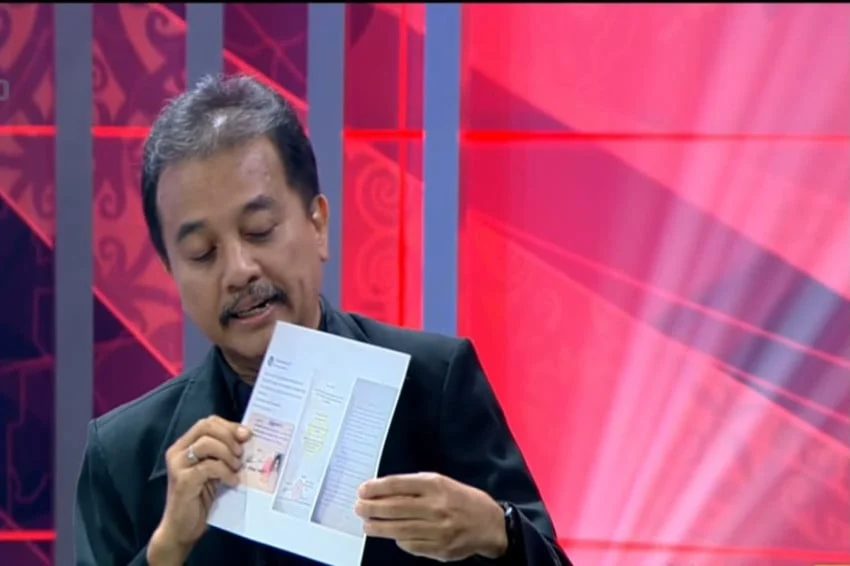
The ongoing legal challenge regarding the educational qualifications of Indonesian Vice President Gibran Rakabuming Raka has entered a critical phase, with prominent legal counsel Refly Harun surfacing new allegations concerning discrepancies in official academic documentation. During a recent broadcast of the iNews program Rakyat Bersuara, titled "Babak Baru MK, Pembuktian Ijazah Gibran" (A New Chapter at the Constitutional Court, Proving Gibran’s Diploma), Harun presented a detailed comparative analysis of documents released by the Ministry of Education and Culture (Kemendikbud), the General Elections Commission (KPU), and the State Secretariat (Setneg). These claims center on the timeline of Gibran’s graduation from UTS Insearch in Sydney, Australia, potentially casting doubt on the consistency of the credentials provided during the 2024 presidential election cycle.
The Core of the Discrepancy
Refly Harun’s argument rests on the identification of what he describes as "systemic inconsistencies" across various public records. Specifically, Harun highlighted a Certificate of Equivalency (SK Penyetaraan) issued by the Ministry of Education and Culture, which explicitly states that Gibran completed his "Grade 12" education at UTS Insearch in Sydney in 2006.
However, when cross-referencing this with the curriculum vitae and educational history submitted to the KPU during the candidacy registration process, a different timeline emerges. The documentation provided to the election commission suggests a completion date in 2007. Harun emphasized that even if one were to account for minor administrative variances, the lack of uniformity in the primary educational record raises questions regarding the verification process for high-ranking public officials.
"The inconsistency is not merely a matter of a single digit; it points to a broader issue of document integrity," Harun stated during the broadcast. "If the Ministry of Education asserts a 2006 completion, but the KPU records reflect a 2007 finish, the fundamental premise of the candidate’s educational record becomes a subject of legitimate public inquiry. When the end dates are not aligned, it undermines the credibility of the entire portfolio."
A Chronology of the Educational Dispute
The controversy surrounding Gibran Rakabuming Raka’s academic background is not new, but it has gained significant legal traction following the 2024 Presidential Election results. The timeline of events can be summarized as follows:
- 2004–2007: The period Gibran Rakabuming Raka reportedly attended UTS Insearch in Sydney, Australia.
- Late 2023: Initial scrutiny begins regarding the authenticity of academic documents submitted during the registration for the presidential and vice-presidential ticket.
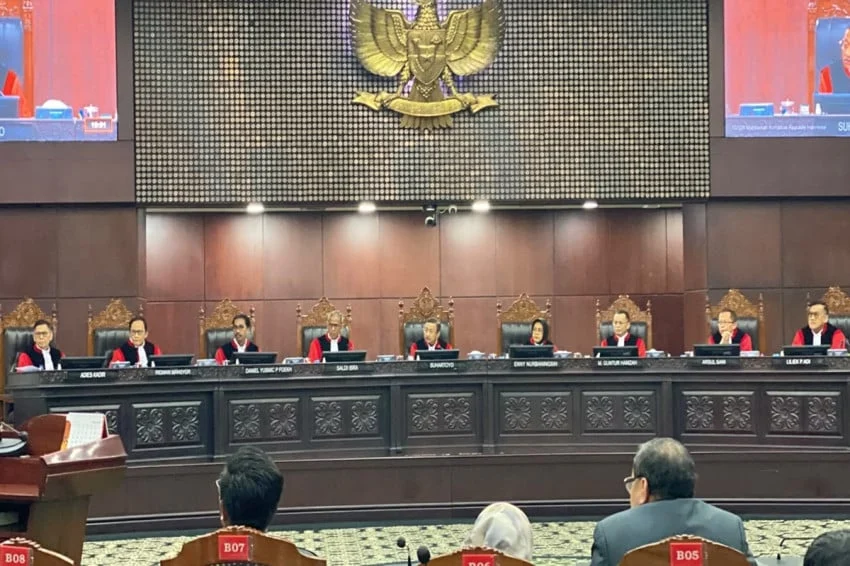
- Early 2024: Following the official announcement of the 2024 election results, various parties filed petitions for the Dispute over General Election Results (PHPU) with the Constitutional Court (MK).
- September 29, 2026: Refly Harun, acting as legal counsel for the petitioners, presents a comparative analysis of government-issued documents on national television, highlighting the 2006 vs. 2007 discrepancy.
- Ongoing: The Constitutional Court continues to evaluate the admissibility of evidence related to the educational requirements set forth by the Election Law.
The Regulatory Framework and Educational Equivalency
To understand the weight of these allegations, it is essential to examine the legal requirements for vice-presidential candidates in Indonesia. According to Law No. 7 of 2017 concerning General Elections, candidates must hold a high school diploma or its equivalent. For those who study abroad, the Ministry of Education and Culture is tasked with issuing a Certificate of Equivalency to ensure the international curriculum aligns with the national standards of Indonesia.
The Ministry’s role is to verify that the foreign institution is accredited and that the duration and quality of the education meet the standards of a senior high school degree (SMA). The controversy arises because the state-issued Certificate of Equivalency serves as the primary legal evidence for the KPU. If the data within this certificate conflicts with the data provided by the candidate to the KPU, it places the KPU in a position of having accepted potentially conflicting information, which petitioners argue constitutes a procedural failure.
Broader Perspectives and Supporting Arguments
Legal experts supporting the petition, including Denny Indrayana, have been tight-lipped about the specific expert witnesses they intend to bring to the Constitutional Court. Indrayana, a former Deputy Minister of Law and Human Rights, has maintained that the legal team is carefully curating their evidence to ensure that the proceedings address the substantive issues of academic integrity rather than being dismissed as mere political maneuvering.
"We are preparing our witnesses and experts with extreme care," Indrayana noted in recent statements. "The goal is to demonstrate that the verification process for the vice-presidential candidate was either circumvented or performed with gross negligence."
Conversely, representatives from the KPU and the government have consistently maintained that all documents submitted during the registration process underwent rigorous verification. They argue that the 2006 and 2007 variance is likely an administrative artifact resulting from the transition between the UTS Insearch program and subsequent academic pursuits, and does not equate to a fraudulent credential.
Analysis of Implications
The implications of this case extend far beyond the personal records of the Vice President. At its core, the dispute touches upon the institutional trust in the bodies responsible for vetting candidates for the highest offices in the land.
- Institutional Integrity: If the Constitutional Court finds that the KPU failed to reconcile the discrepancies in the educational documents, it may necessitate a comprehensive review of the vetting protocols for future elections.
- Legal Precedent: A ruling on this matter will set a significant precedent regarding the standard of proof required to challenge the credentials of an elected official. It will define how much weight the court places on state-issued certificates versus the candidate’s self-reported history.
- Political Stability: The ongoing nature of this PHPU case keeps the question of legitimacy at the forefront of public discourse. Regardless of the final outcome, the case highlights a demand for greater transparency in the administrative processes governing the transition of power.
Conclusion
As the Constitutional Court deliberates, the focus remains on whether the "inconsistencies" pointed out by Refly Harun constitute a fatal flaw in the vice-presidential candidacy or if they are, as the authorities suggest, minor clerical errors. The case has become a focal point for those calling for higher standards of accountability in the Indonesian political system.
The task for the court is to weigh the administrative evidence against the claims of the petitioners. While the 2006 versus 2007 discrepancy may appear to be a technicality to some, for the legal team challenging the result, it represents a breach of the fundamental requirements established by the election law. As the proceedings continue, both the public and legal observers are waiting to see if the evidence presented by Harun and his colleagues will be sufficient to prompt a deeper investigation into the veracity of the credentials that brought Gibran Rakabuming Raka to the second-highest office in the nation.
Ultimately, the resolution of this issue will serve as a litmus test for the independence of the judicial system and the robustness of the democratic institutions that verify the qualifications of those who hold power in Indonesia. The next phase of the court hearings is expected to bring forward expert testimony that may provide definitive clarity on the validity of the disputed documents, finally addressing the questions that have lingered since the start of the 2024 election cycle.