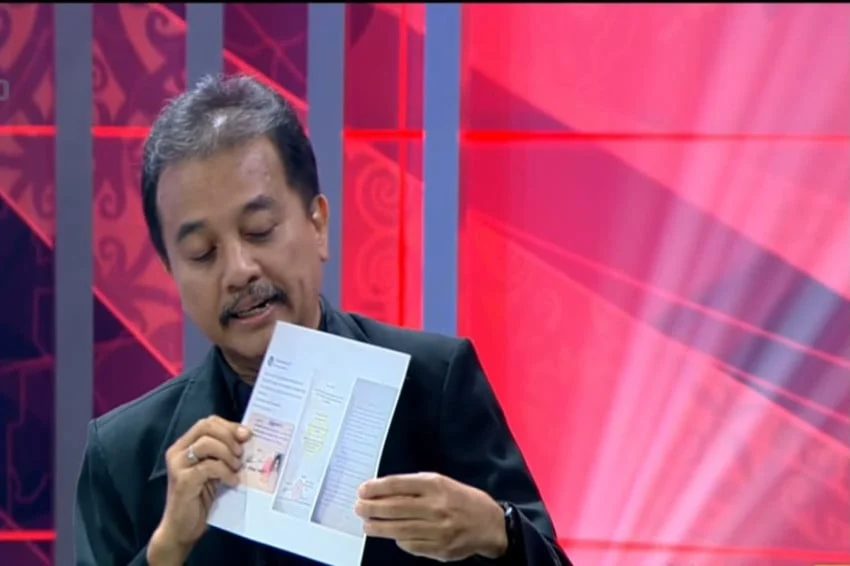
The ongoing public discourse surrounding the educational background of Indonesia’s seventh president, Joko Widodo, took a new turn as telematics expert Roy Suryo announced plans to present witnesses connected to Jakarta’s Pramuka Market. This development surfaced during a televised appearance on the Interupsi program broadcast by iNews TV, where Suryo elaborated on his perspective regarding the unverified claims concerning the former president’s university diploma. The venue, traditionally known as a prominent hub for medical supplies, books, and printing services in the Indonesian capital, has controversially been dragged into the narrative by various commentators questioning the authenticity of official documents.
During the broadcast, Suryo expressed his critique of law enforcement’s approach to investigating the matter comprehensively. He argued that a thorough examination of the aforementioned commercial center could yield critical insights if authorities chose to pursue the investigation with complete objectivity. His remarks have reignited a polarized debate that has persisted in various public spheres and legal arenas across the nation for several years, drawing responses from legal representatives and political analysts alike.
Chronology of the Controversy and Background Context
The discourse concerning the validity of Joko Widodo’s university credentials is not a recent phenomenon; it represents a protracted controversy that has traversed both digital spaces and judicial forums. The origins of the dispute trace back several years, characterized by circulating claims on social media platforms questioning the legitimacy of the former president’s graduation documents from Universitas Gadjah Mada (UGM).
Despite official confirmations from the university administration—which repeatedly affirmed that Joko Widodo graduated from the Faculty of Forestry in 1985—skeptics and independent commentators have continued to raise questions. Over successive years, these allegations moved from fringe internet forums into formal legal complaints filed by various individuals and groups. However, law enforcement agencies have largely dismissed or closed initial inquiries due to a lack of substantive evidence pointing to forgery, maintaining that the institutional records held by the university serve as definitive proof.
In recent months, the conversation shifted toward specific physical locations in Jakarta, including the widely known Pramuka Market. Commentators like Suryo have attempted to link these commercial districts to the broader narrative of document replication, prompting renewed attention from both supporters and critics of the former administration.
Detailed Statements from Key Figures
Elaborating on his stance during the television program, Suryo pointed directly to past law enforcement actions involving the location in question. He argued that investigators should re-examine historical cases tied to the market, specifically mentioning past criminal activities involving document falsification.
"Soal Pasar Pramuka ini penting. Kalau saja aparat kepolisian tuh mau objektif, periksa Pasar Pramuka. Hadirkan kembali delapan tersangka yang dulu ketika terlibat misalnya ketika kasus kebakaran," stated Roy Suryo during the interview, emphasizing the need to question individuals previously implicated in legal infractions related to document manipulation within the area.
Furthermore, Suryo introduced a new element into his claims by referencing an individual with the initial "P," who holds an academic title of professor. He urged law enforcement to summon this individual alongside subordinate staff members to shed light on potential connections to the controversy.
These assertions, however, have faced immediate and rigorous pushback from legal defenders of the former president. Prominent legal figures, including Yakup Hasibuan, have publicly discredited Suryo’s qualifications and methodologies regarding the investigation of presidential documents. Hasibuan previously asserted that Suryo never conducted a direct, scientific examination of the actual physical diploma belonging to Joko Widodo, rendering his public commentary speculative rather than empirical.
Supporting Data and Legal Perspectives
To understand the weight of these allegations, it is essential to examine the legal frameworks governing document forgery and defamation under Indonesian law. The Electronic Information and Transactions (ITE) Law, alongside provisions in the Criminal Code (KUHP), strictly regulates the dissemination of unverified claims, particularly those targeting public figures and state symbols.
Legal experts point out that accusations against high-ranking officials require verifiable forensic evidence rather than circumstantial associations with commercial printing districts. Forensic document examination typically involves analyzing paper composition, ink chemistry, typography, and official institutional seals—methods that are standard practice within official criminal investigations.
Universitas Gadjah Mada has consistently maintained its institutional integrity throughout the controversy. University officials have presented archival photographs, ledger entries, and testimonies from contemporaries of Joko Widodo who attended the faculty during the same academic period. According to educational data from the institution, the class of 1985 included numerous graduates whose academic records are safely archived within the university’s permanent registry.
Institutional and Official Responses
The response from official institutions has remained consistent: the documentation is authentic, and ongoing public speculation lacks legal foundation. Representatives from the current administration and legal defenders of the former president have repeatedly urged the public to rely on institutional verifications rather than unverified digital commentary.
Law enforcement agencies have previously evaluated complaints lodged against the former president’s credentials and concluded that the elements required to elevate the cases to a full criminal investigation were not met. Authorities have emphasized that official statements from the issuing university carry formal legal weight, superseding external claims made by independent commentators.
Despite these formal conclusions, figures like Suryo continue to challenge the thoroughness of the initial probes, vowing to introduce witnesses to substantiate their claims in public forums. This ongoing tug-of-war highlights the persistent challenge of managing misinformation in the digital age, where debunked narratives frequently resurface under new guises.
Broader Impact and Societal Implications
The persistence of the diploma controversy underscores broader societal trends concerning trust in public institutions, the role of expert commentary, and the influence of digital media on public perception. In contemporary Indonesia, high-profile controversies are frequently amplified by social media algorithms, creating echo chambers that sustain debates long after official investigations have concluded.
From a political standpoint, the continuous debate serves as a tool for political polarization, keeping historical grievances alive even as leadership transitions occur. Analysts suggest that while such controversies rarely alter legal realities—given the definitive stance of academic institutions—they significantly impact public discourse and the reputation of public figures.
Furthermore, the involvement of prominent commentators like Roy Suryo brings considerable media attention, transforming technical legal and archival matters into widespread public spectacles. As Suryo prepares to present his purported witnesses, legal observers anticipate whether these developments will result in formal legal submissions or remain confined to televised discussions. Ultimately, the episode highlights the ongoing tension between institutional authority and independent digital investigation in shaping public truth within modern democracies.