
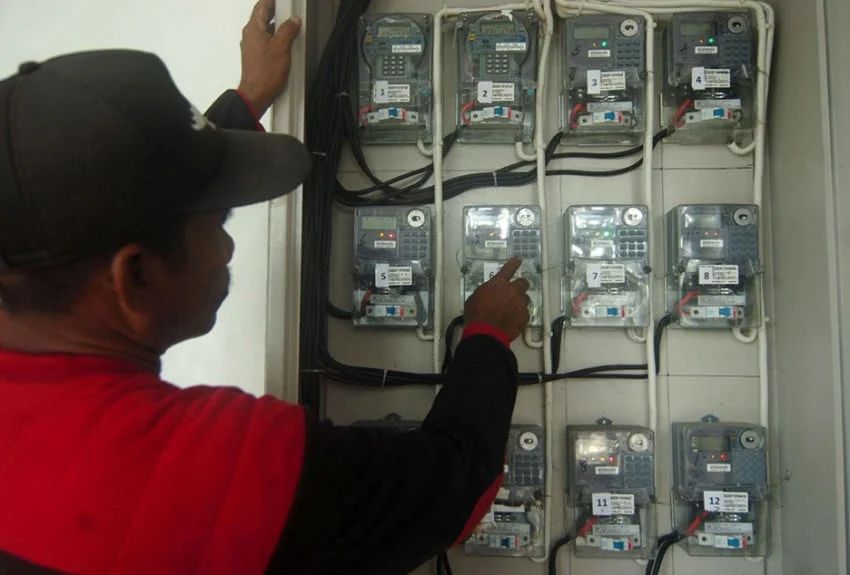
The phenomenon of sudden, unexpected increases in household electricity bills remains a recurring concern for consumers across Indonesia. Often, the immediate public reaction is to attribute these spikes to government-mandated tariff adjustments. However, industry experts and regulatory observers emphasize that bill fluctuations are frequently the result of internal consumption patterns rather than changes in base rates. Understanding the nuanced relationship between appliance efficiency, household habits, and billing cycles is essential for consumers seeking to maintain stable utility costs.
Tohom Purba, Chairman of the National Association of Electricity Consumer Protection Institutions (Alperklinas), suggests that the disconnect between consumer perception and actual utility usage stems from a lack of granular monitoring. When a monthly invoice arrives with a higher-than-average balance, consumers often default to the assumption that utility prices have risen. Purba clarifies that unless the government formally announces a tariff adjustment—a process characterized by extensive legislative review and public notification—rates remain stable. Therefore, the primary driver for bill volatility is typically an increase in the total kilowatt-hour (kWh) consumption recorded at the meter.
The Anatomy of Electricity Consumption Patterns
To grasp why a bill might surge, one must analyze the "hidden" variables of daily life. Electricity consumption is rarely static; it is a dynamic reflection of a household’s lifestyle. Seasonal shifts represent the most common external variable. In periods of extreme heat, for instance, residential air conditioning units—which are often the most energy-intensive appliances in a standard home—operate for longer durations and at lower temperature settings to compensate for higher ambient heat. This leads to a compound effect: the compressor runs more frequently, and the cooling cycle duration extends, both of which drive up total kWh usage.
Beyond environmental factors, internal household dynamics play a critical role. The presence of additional guests, the school holiday season, or shifts toward remote work arrangements can significantly alter the load profile of a residence. Household electronics that were previously dormant during business hours are now in constant use, from laptop chargers and desktop computers to kitchen appliances and additional lighting. These small, incremental additions to the daily load accumulate significantly over a 30-day billing cycle.
Establishing a Consumer-Led Monitoring Framework
The absence of proactive oversight is a significant vulnerability for many households. Relying solely on the final invoice provided by the state electricity company, PLN (Perusahaan Listrik Negara), leaves consumers in a reactive position. Alperklinas advocates for a more rigorous approach to utility management: individual, manual record-keeping.
By documenting the "stand meter" reading on a fixed day each month—such as the 25th—consumers can establish a verifiable baseline. This simple practice creates a chronological ledger of energy consumption that mirrors the utility’s own tracking systems. If a household identifies a discrepancy between their self-recorded kWh usage and the billed amount, they possess the empirical evidence required to request an audit from PLN. This transition from passive bill payment to active consumption management is the most effective defense against billing anomalies and potential meter malfunctions.
The Role of High-Wattage Appliances
A comprehensive audit of home energy usage must inevitably focus on high-wattage appliances. In many modern households, the culprit for a "surprise" bill is often a high-drain device that has been overlooked.
- HVAC Systems: Air conditioners are the leading contributors to high bills. A unit that is not regularly serviced, such as one with a clogged air filter or low refrigerant levels, will draw significantly more power while providing less cooling efficiency.
- Water Heating Systems: Electric water heaters are silent energy guzzlers. If a thermostat is set too high, the unit will cycle on and off throughout the day to maintain a high temperature, regardless of actual usage.
- Pumping and Filtration: Submersible water pumps and pool filtration systems are often forgotten in energy calculations. If a float switch is faulty, a pump may run continuously, potentially inflating the electricity bill by a substantial margin.
- Kitchen Appliances: Older refrigerators or chest freezers with worn door seals require the motor to run almost constantly to maintain internal temperatures, leading to a steady, silent climb in energy consumption.
Broader Context: Regulation and Tariff Stability
It is important for consumers to recognize the regulatory landscape governing electricity pricing in Indonesia. The Ministry of Energy and Mineral Resources (ESDM) maintains a policy framework that balances the economic burden on households with the operational viability of PLN. Tariff changes are generally categorized into two types: adjustments for non-subsidized customers, which follow international fuel price trends and inflation, and the maintenance of subsidized rates for low-income households, which are strictly regulated and rarely subject to change without significant public deliberation.
Historically, when public outcry regarding electricity bills has reached a peak, PLN has often deployed field teams to conduct meter testing. In many of these documented cases, the "high bill" was found to be the result of a "leaking" circuit or an appliance failure—such as a short-circuit in a water heater—rather than an error in the billing system itself. This underscores the necessity of internal electrical maintenance alongside consumption monitoring.
The Impact of Aging Infrastructure
Another factor that is frequently overlooked is the age and integrity of the home’s electrical wiring. In older residential structures, wiring degradation can lead to energy loss. While modern smart meters are highly accurate, they measure the energy passing through them into the home. If there is an inefficient appliance or a grounding issue within the internal electrical network, the meter will continue to record that energy draw, regardless of whether it is being used productively.
Technological advancements, such as the transition to smart prepayment meters, have provided consumers with more transparency. Prepayment (token) systems allow users to see their remaining balance in real-time, effectively forcing a day-to-day awareness of energy expenditure. Unlike postpaid billing, where the shock of a high bill arrives only after the fact, prepayment systems allow for immediate course correction when consumption rates appear unusually high.
Recommendations for Energy Efficiency
To mitigate the risk of inflated bills, energy experts propose a multi-faceted approach:
- Routine Maintenance: Schedule professional cleaning and servicing for AC units every three to four months. A clean unit operates at higher efficiency, drawing less power.
- Load Balancing: Identify appliances that do not need to run simultaneously. For instance, avoiding the use of the iron, washing machine, and water pump at the same time can prevent sudden spikes in demand that might influence some older meter types or demand-based pricing structures.
- The "Standby" Habit: Many modern electronics consume "vampire energy" even when turned off. Utilizing power strips with individual switches allows users to completely disconnect devices like television sets, game consoles, and chargers when they are not in use.
- Audit Historical Data: PLN’s mobile applications now provide users with the ability to view their consumption history for the past several months. Comparing this data against previous years can reveal seasonal trends that might otherwise seem like random increases.
Conclusion: Empowering the Consumer
The key to managing household electricity costs lies in the shift from a passive payer to an informed consumer. While systemic issues within the power grid or meter errors can occur, they are statistically less frequent than variations in human behavior and appliance efficiency. By adopting a systematic approach to monitoring—recording monthly meter readings, maintaining high-wattage equipment, and being mindful of daily consumption habits—households can exert greater control over their financial obligations.
Ultimately, electricity is a service that follows the laws of physics; usage directly dictates cost. When a bill appears unusually high, the most productive response is to conduct a forensic look at the household’s energy footprint. By doing so, consumers not only protect their budgets but also contribute to a broader culture of energy conservation, which is essential for the long-term sustainability of the national power grid. As energy demands continue to rise in a digitally connected society, the ability to interpret and manage one’s own electricity consumption is no longer just a financial advantage—it is a necessary life skill.
