
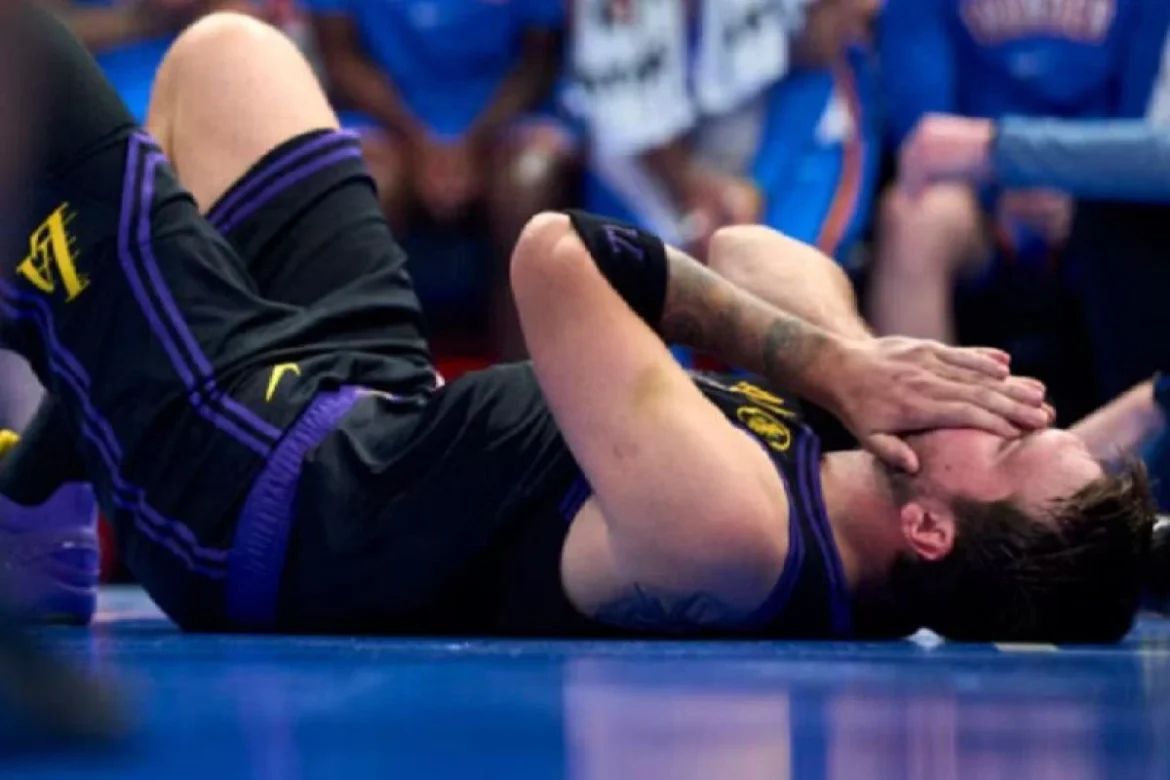
The dawn of the 2026/2027 NBA season marks a historic pivot point for the Los Angeles Lakers, as the storied franchise prepares to take the floor for the first time in nine years without the iconic presence of LeBron James. Following his departure to the Philadelphia 76ers, the Lakers are no longer defined by the legacy of the league’s most enduring superstar. Instead, the organization has pivoted toward a future centered on the playmaking brilliance of Luka Doncic and the rising prominence of Austin Reaves. This transition is not merely a tactical adjustment but a fundamental shift in the team’s organizational philosophy, one that prioritizes a younger, more dynamic core under the guidance of head coach JJ Redick.
The 2026/2027 NBA regular season officially tips off on Tuesday, October 20, 2026. For the Lakers, the real-world implications of their roster overhaul will be put to an immediate test when they face the Golden State Warriors at Crypto.com Arena on Wednesday, October 21. For international fans, the game is scheduled for Thursday, October 22, at 09:00 WIB. This high-profile matchup serves as the litmus test for a squad that finished the 2025/2026 campaign with a respectable 53-29 record, only to suffer a sobering 0-4 sweep at the hands of the Oklahoma City Thunder in the Western Conference Semifinals.
The Structural Shift: A Team Beyond the "King"
The departure of LeBron James, now 41, concludes an eight-season chapter that saw the Lakers secure an NBA championship and consistently compete at the highest level. However, the front office had already begun laying the groundwork for a post-James era. By securing Luka Doncic, the Lakers acquired a perennial MVP candidate who serves as the engine of their offensive scheme.
During the 2025/2026 season, Doncic did more than just lead the team to the fourth seed in the West; he solidified his status as the league’s premier offensive force by capturing his second scoring title. His ability to manipulate defensive sets—whether through high-screen actions or transition play—provides the Lakers with a reliable baseline for success. However, the statistical reality of the team remains complex. While the Lakers averaged 116.3 points per game, their defensive rating suffered, conceding 114.6 points per game. Addressing this discrepancy is the primary objective for coach Redick as the new season commences.
Austin Reaves and the Expansion of Roles
If Doncic is the fulcrum of the offense, Austin Reaves is the secondary star tasked with filling the void left by James’s departure. Reaves, who posted a career-high 23.3 points per game last season, is no longer just a reliable perimeter shooter or a secondary playmaker. He has evolved into a legitimate offensive hub.
The chemistry between Doncic and Reaves is the team’s most significant asset. Statistics from the previous season indicate that the pair combined for an average of 56.8 points per game, with the Lakers maintaining a winning percentage of .731 (30-11) when both were active. As Reaves takes on a larger share of the ball-handling duties, the team’s success will hinge on his ability to maintain efficiency while operating under the increased scrutiny of opponent defensive schemes that will no longer be preoccupied with double-teaming James.
Roster Reinvention: Depth and Defensive Identity
The Lakers’ front office utilized the offseason to aggressively reshape the roster, prioritizing athleticism and interior defense. The acquisition of Walker Kessler is perhaps the most critical move, as the team sought a reliable rim protector to anchor the paint—an area that had become a liability in recent playoff runs.
The roster overhaul also includes:
- Sandro Mamukelashvili: Added to provide versatility and depth in the frontcourt.
- Collin Sexton: Brought in to offer an immediate, high-energy scoring punch off the bench.
- Quentin Grimes: Expected to serve as a "3-and-D" specialist, balancing the floor with perimeter shooting and wing defense.
- Matisse Thybulle: Acquired to bolster the perimeter defense, filling the defensive intensity gap left by the departure of Marcus Smart.
This injection of youth and specialized talent reflects a clear desire to move away from the veteran-heavy approach of previous years. However, the challenge for Redick lies in integrating these disparate pieces into a cohesive unit within a limited training camp window. With only eight players remaining from the previous year’s roster, the learning curve for the team’s defensive rotations and offensive spacing will be steep.
The Tactical Challenge: Coaching in the Modern Era
JJ Redick’s tenure as head coach enters a defining phase. Without the luxury of relying on James’s basketball IQ to navigate crunch-time situations, Redick must implement a more democratic offensive structure. The goal is to maximize Doncic’s playmaking without over-relying on his individual scoring.
Data analysis suggests that the Lakers’ previous inability to sustain success in the postseason stemmed from a lack of reliable production when the primary stars were sidelined or fatigued. Redick’s focus during the preseason has reportedly centered on "distributed production," ensuring that role players like Grimes and Sexton are fully integrated into the flow of the offense, thereby preventing the team from stalling when Doncic is off the court.
Western Conference Landscape and Playoff Aspirations
The road to the NBA Finals remains as treacherous as ever in the Western Conference. The Oklahoma City Thunder, fresh off a 64-win season, remain the team to beat. Meanwhile, the San Antonio Spurs have emerged as a legitimate title contender following their appearance in the 2026 NBA Finals, driven by the continued maturation of Victor Wembanyama.
The Denver Nuggets continue to be a perennial threat, and the Minnesota Timberwolves, buoyed by the backcourt partnership of Anthony Edwards and the newly acquired LaMelo Ball, have signaled their intent to dominate the conference. For the Lakers, securing a top-six seed to avoid the unpredictable play-in tournament is the immediate goal. A failure to secure direct playoff qualification would subject this new-look team to the high-variance nature of a single-elimination scenario, a gamble the franchise is keen to avoid.
Emotional Milestones: The Return of a Legend
While the season is defined by the future, one date on the calendar serves as a stark reminder of the recent past. On December 25, 2026, the Philadelphia 76ers will visit the Crypto.com Arena for a marquee Christmas Day matchup. This game will mark the return of LeBron James to Los Angeles as an opponent.
While the game is sure to be emotionally charged for the fan base, it also provides a professional benchmark. Facing a 76ers team led by James will allow the Lakers to measure their defensive progress and team identity against one of the league’s most experienced players. It is an opportunity for the new iteration of the Lakers to prove that they are capable of holding their own against the player who defined their previous decade.
Strategic Outlook: Building for Sustained Success
The Lakers are in the midst of a critical transition that will determine their competitiveness for the remainder of the decade. The organization has clearly opted for a path that favors long-term versatility over the pursuit of immediate, veteran-dependent wins.
Success this season will not necessarily be defined by an NBA title, but by the team’s ability to establish a consistent defensive identity and the successful integration of their new supporting cast around the Doncic-Reaves core. If the Lakers can improve their defensive rating—a clear priority given their 19th-place finish in points allowed per 100 possessions last season—and maintain a high level of offensive efficiency, they remain a formidable candidate to advance past the semifinal round of the playoffs.
The 2026/2027 season is an invitation for the Los Angeles Lakers to forge a new legacy. By moving beyond the reliance on a single superstar, the team is attempting to build a more resilient, modern, and balanced roster. Whether this gamble pays off remains to be seen, but the intent is clear: the Lakers are no longer looking backward at the era of LeBron James, but forward toward a future that they hope will be defined by their collective evolution under the leadership of Luka Doncic.
