
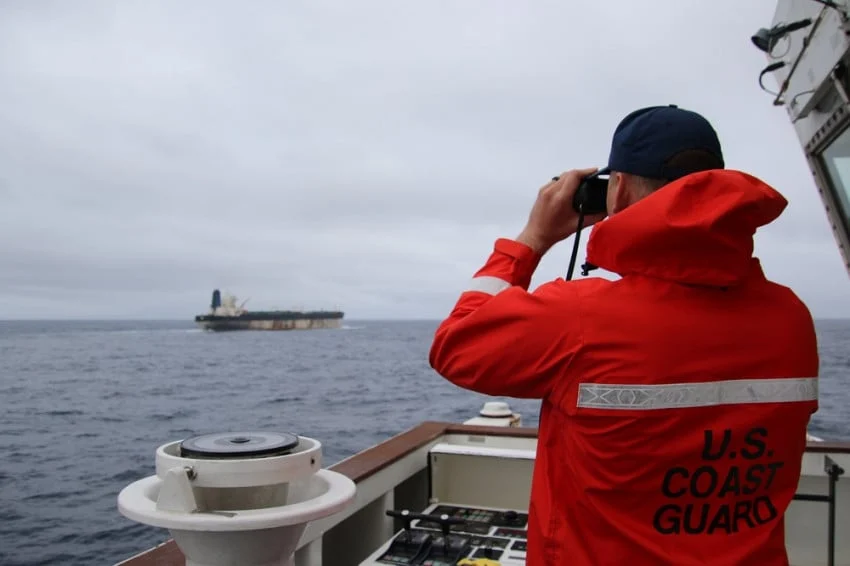
Washington faces a complex energy dilemma as multiple maritime vessels carrying Russian diesel alter their courses away from American shores, casting immediate doubt on a high-profile diplomatic arrangement brokered between former US President Donald Trump and Russian President Vladimir Putin. Despite a concerted push from the White House to inject hundreds of thousands of metric tons of petroleum products into the domestic market to stabilize soaring fuel costs, American commercial refiners, distributors, and terminal operators are proving remarkably resistant. This reluctance highlights the deep chasm between high-level political agreements and the pragmatic, risk-averse realities governing international commodity trading, maritime insurance, and stringent compliance frameworks.
The standoff began nearly a month after a controversial policy shift initiated by Donald Trump, who announced an exemption allowing Russian diesel to bypass existing economic embargoes and flow into the United States and global markets. This intervention was ostensibly designed to alleviate a crippling domestic fuel crunch. Across the United States, retail and wholesale diesel prices have skyrocketed, nearly doubling in the wake of escalating military hostilities in the Middle East—specifically driven by the broader conflict involving the United States, Israel, and Iran, which severely disrupted key maritime chokepoints and regional refining hubs.
Yet, despite the palpable economic pressure facing American logistics and transportation sectors, not a single barrel of the authorized Russian diesel has successfully reached a US port. Market analysts, shipping data providers, and energy compliance experts point to a convergence of legal perils, reputational risks, structural uncertainties regarding pricing, and intense regulatory scrutiny as the primary drivers behind the quiet boycott by US commercial entities.
Shifting Routes and Maritime Maneuvers: The Logistical Breakdown
The physical reality of the stalled trade agreement is mapped across maritime tracking systems in real time. Since Donald Trump and Vladimir Putin finalized their October understanding, Moscow has dispatched at least four distinct tanker loads carrying refined diesel products intended to test the newly opened trade corridors. However, rather than discharging their cargo at lucrative American terminals, these vessels have executed abrupt navigational U-turns or entered indefinite holding patterns.
Maritime analytics firm Kpler and vessel-tracking platform MarineTraffic documented the initial movements of the Russian tanker Talisman and the Sierra Leone-flagged vessel Leruo. Both ships departed the Baltic export hub of Primorsk last month, officially filing manifests declaring the US East Coast as their final destination. By mid-week, however, satellite telemetry revealed a dramatic redirection: the Talisman altered course toward South America, seeking alternative buyers in Brazil, while the Leruo veered southeast into the Mediterranean Sea.
A third vessel, currently navigating the turbulent waters of the North Atlantic, abandoned its original schedule to dock in New York. Instead, ship logs indicate its status has been updated to "waiting for instructions," leaving its ultimate discharge location entirely undetermined as charterers scramble to find willing buyers.
Compounding these erratic movements, the Financial Times reported on the fate of the Beast, a Seychelles-flagged tanker previously flagged for operating under specific international sanctions. The vessel loaded cargo at Primorsk in late October and initially set a westward course toward the Americas, only for its tracking status to become nebulous, listed vaguely as "Atlantic." This maritime paralysis underscores the profound hesitation gripping the commercial shipping industry, where vessel owners and captains are increasingly unwilling to risk port authorities seizing cargoes or enforcing secondary sanctions.
The Genesis of the Deal: October Dialogue and Policy Justification
To understand the current commercial deadlock, one must examine the origins of the political pact. The arrangement materialized following a direct telephone dialogue between Donald Trump and Vladimir Putin on October 9. Following the conversation, Trump utilized his social media platform, Truth Social, to broadcast the contours of a sweeping energy understanding.
According to Trump’s announcements, Moscow agreed to make immediate provisions to supply upwards of 300,000 tons of diesel fuel to both the American domestic market and broader international trade routes. In the global shipping ecosystem, long-range product tankers of this scale are capable of hauling approximately 100,000 tons of refined diesel in a single trans-oceanic voyage. Trump’s initial roadmap outlined an ambitious timeline: an immediate 300,000-ton delivery, followed by an additional tranche of 500,000 tons scheduled throughout November, culminating in a massive block of 1 million tons to be delivered "shortly thereafter."
The diplomatic framework negotiated by Trump effectively granted a targeted, temporary sanctions waiver, permitting Russian diesel to be sold, transported, offloaded, and imported into the United States through April 7. The political justification provided by the White House blamed the ongoing domestic supply shortage directly on geopolitical spillovers from the Russia-Ukraine war. Specifically, the administration pointed to sustained Ukrainian drone and missile strikes targeting Russian refining infrastructure as a primary catalyst for global diesel deficits, arguing that returning Russian product to international markets was a necessary evil to stabilize American consumer prices.
Ambiguous Pricing Structures and Financial Compliance Nightmares
While the political rhetoric emphasized macroeconomic relief, commercial energy traders operate on strict financial metrics, clear pricing mechanisms, and rigorous risk assessments—all of which were conspicuously absent from the Trump-Putin blueprint. The primary reason American business entities are refusing to purchase the imported fuel centers on severe ambiguities regarding pricing and payment settlement.
In modern commodity markets, refined products are traded based on transparent, highly regulated benchmarks such as New York Harbor Ultra-Low Sulfur Diesel (ULSD) or ICE Gasoil futures. The political agreement announced by Washington failed to establish clear parameters for how the Russian diesel would be priced relative to these benchmarks, nor did it clarify how transactions could be cleared through the international banking system without violating the Office of Foreign Assets Control (OFAC) regulations or the G7 price cap framework.
Major US energy importers and independent fuel distributors are bound by strict corporate compliance policies. Engaging with sanctioned entities—even under a hastily crafted executive waiver—exposes corporations to immense legal liabilities, potential future litigation, and catastrophic reputational damage. Without explicit, ironclad legal protections and transparent banking channels sanctioned by federal financial regulators, commercial buyers view the acquisition of Russian diesel as an unacceptably high-stakes gamble. Consequently, refiners and terminal operators have chosen to sit on the sidelines, refusing to issue purchase orders or secure berthing slots for the diverted tankers.
Economic and Geopolitical Implications of the Stalled Imports
The failure of the Trump-brokered diesel imports to reach American terminals carries significant ramifications for both domestic energy economics and international diplomacy. Domestically, consumers and industrial sectors continue to bear the burden of elevated fuel costs. With winter approaching—a peak season for heating oil and diesel demand—the inability to tap into these purported reserves leaves the American market vulnerable to further price shocks driven by the ongoing Middle East conflict.
From a geopolitical standpoint, the episode exposes the limitations of unilateral executive arrangements when confronted with deeply embedded economic sanctions and private-sector compliance regimes. While a head of state can politicalize trade exemptions, private corporations control the tankers, insurance policies, terminal facilities, and capital required to physically move and purchase the commodity. When private commercial interests assess that the regulatory risks outweigh the potential profit margins, the trade simply breaks down.
Furthermore, the rerouting of vessels like the Talisman and Leruo to alternative markets such as Brazil and the Mediterranean illustrates how global energy flows naturally adapt to resistance. Rather than entering the highly regulated and scrutinized US market, Russian diesel is increasingly finding its way to jurisdictions with more flexible import regulations and less stringent enforcement mechanisms regarding secondary sanctions.
Conclusion: A Disconnect Between White House Policy and Market Realities
The ongoing refusal of American business leaders to purchase Russian diesel imported under the auspices of Donald Trump serves as a stark case study in the friction between political ambitions and commercial realities. Despite high-level negotiations, ambitious tonnage quotas, and temporary sanctions carve-outs, the complex web of maritime compliance, unclear pricing structures, and severe legal risks has effectively neutralized the policy. As the diverted tankers continue to alter their courses across the Atlantic and Baltic waterways, the episode underscores a fundamental truth of modern global economics: governments may open diplomatic doors, but private enterprise ultimately decides whether to walk through them.
