
The landscape of Indonesia’s creative economy is undergoing a profound transformation, shifting from metropolitan hubs to regional and rural areas where local content creators are leveraging digital platforms to uplift community commerce. This dynamic evolution was brought into sharp focus during a recent working visit by the Minister of Creative Economy, Teuku Riefky Harsya, to the Adiluhur Reptile Park in Kebumen, Central Java. The visit underscored the pivotal role that digital literacy, social media proficiency, and grassroots initiatives play in modernizing micro, small, and medium enterprises (MSMEs).
Amidst an atmosphere of enthusiasm and local engagement, Minister Riefky’s inspection of a regional digital content workshop illuminated how ordinary citizens—ranging from elementary school educators to local culinary vendors—are converting digital storytelling into tangible economic opportunities. The event served as a microcosm of Indonesia’s broader national strategy to decentralize creative industry growth, foster digital inclusivity, and equip regional workforce segments with the monetization tools necessary to thrive in an increasingly platform-driven global economy.
A Warm Reception and Grassroots Engagement at Adiluhur Reptile Park
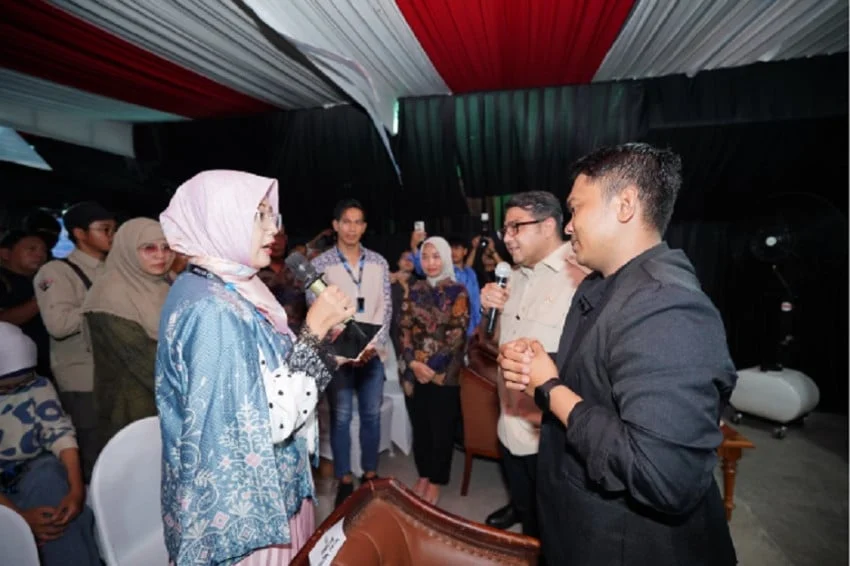
The chronology of the ministerial visit unfolded dynamically upon Minister Riefky’s arrival at the Adiluhur Reptile Park, a popular regional attraction in Kebumen. Waiting at the threshold of the workshop venue was Rytha Sariedova, a dedicated elementary school teacher by profession and an influential local content creator by vocation. Clutching a microphone, Rytha immediately stepped forward to greet the arriving minister, bridging the gap between official policymaking and ground-level execution.
What followed was an impromptu yet substantive dialogue that set the tone for the entire visit. Rytha briefed Minister Riefky on the architecture and objectives of the digital content workshop currently underway, detailing the demographic makeup of the participants and the overarching curriculum focused on digital monetization. More importantly, she introduced the minister to several local workshop attendees who had successfully transitioned from casual social media users to active digital earners. These individuals shared firsthand accounts of how learning to construct engaging video narratives, harness platform algorithms, and market regional commodities had created sustainable revenue streams and opened up entirely new commercial avenues.
Minister Riefky listened intently, engaging with each participant on a personal level. He posed targeted inquiries regarding their creative processes—ranging from initial ideation and content development strategies to the practicalities of identifying commercial viability across various digital platforms. This interactive exchange allowed the minister to gauge the real-world efficacy of government-backed digital training programs and understand the grassroots challenges creators face in non-urban districts.
The Origin Story of Kebumsky: Passion, Philanthropy, and Economic Survival
A central narrative that emerged during the ministerial dialogue was the inspiring journey of Rytha Sariedova herself, whose digital footprint operates under the widely recognized TikTok handle, kebumsky. Long before digital content creation was formally recognized as a strategic pillar of the national economy, Rytha recognized a glaring discrepancy in how regional businesses were marketed. She observed that numerous micro-enterprises, traditional food stalls, roadside vendors, and local coffee shops in Kebumen possessed immense culinary and commercial value but suffered from a profound lack of digital visibility.
Driven by a civic-minded desire to rectify this imbalance, Rytha initiated a self-funded, independent campaign to spotlight these overlooked establishments. Utilizing her smartphone, she began documenting neighborhood eateries, mapping out obscure vendor locations, and producing vibrant video content designed to introduce these hidden gems to a broader audience.
Initially, her endeavors were entirely uncompensated. Rytha operated out of pure altruism and the deep personal satisfaction she derived from witnessing a struggling local food stall experience an influx of new customers simply because her video had gained traction online. By bridging the information gap between traditional merchants and digital consumers, she laid the groundwork for organic community resilience.
Reflecting on her transition from purely voluntary community service to generating supplementary income, Rytha shared her perspective with Minister Riefky. In her remarks, she emphasized how the landscape has matured, noting that while her early days were defined by unpaid promotional labor for local MSMEs, the current digital ecosystem offers vital financial reinforcement. "In the early days, I made videos without any pay whatsoever. It was purely to promote MSMEs. Now, it is quite substantial; in this current economy, it is extremely helpful," she explained to the Minister. Her testimony encapsulated the dual nature of modern digital content creation: it serves simultaneously as a philanthropic tool for community empowerment and a viable economic cushion during periods of financial tightening.
National Context: Integrating Regional Creativity into the Global Economy
Minister Riefky’s visit to Kebumen is far from an isolated event; it represents a calculated alignment with the Ministry of Creative Economy’s overarching strategic roadmap. As Indonesia positions itself as a formidable force in the global creative arena, initiatives like the World Conference on Creative Economy (WCCE)—including upcoming frameworks aimed at spotlighting indigenous cultural phenomena such as the Pacu Jalur traditional boat race—demonstrate a dual commitment to international projection and domestic capacity building.
The Ministry has systematically emphasized that the creative economy is no longer confined to traditional subsectors such as film, music, and fashion in tier-one cities like Jakarta, Bandung, or Yogyakarta. Instead, the democratization of the internet, expansion of 4G and 5G infrastructure, and widespread smartphone penetration have catalyzed a decentralization of economic opportunity. Regional creators in regencies like Kebumen, Wonosobo, and beyond are increasingly recognized as essential economic actors.
Cross-ministerial collaborations further highlight this holistic approach. Recent engagements—such as interactions involving high-ranking officials like Finance Minister Sri Menteri (Sri Mulyani) demonstrating traditional instruments like the Bundengan in Wonosobo to Minister Riefky—signal a unified bureaucratic push to merge cultural preservation with modern economic policy. These interactions reinforce the narrative that traditional arts, local craftsmanship, and contemporary digital media are not mutually exclusive, but rather deeply synergistic components of the modern Indonesian identity.
Data, Digital Transformation, and MSME Resilience in Central Java
To fully comprehend the significance of Minister Riefky’s engagement in Kebumen, one must examine the broader socioeconomic data governing Central Java’s digital transformation. According to data from the Ministry of Cooperatives and SMEs, alongside insights from digital platform analytics, regional MSMEs that adopt basic digital marketing tools experience a measurable increase in market reach and revenue generation compared to their offline-only counterparts.
In Central Java, where agriculture, tourism, and traditional culinary trades form the backbone of the regional economy, the integration of digital storytelling acts as an economic multiplier. Content creators like Rytha function as localized marketing agencies, drastically reducing the customer acquisition cost for small businesses that could never otherwise afford traditional advertising channels.
- Market Reach Expansion: Digital video content allows hyper-local products—such as specialized Kebumen snacks, artisanal coffee, and traditional handicrafts—to transcend geographical boundaries, attracting regional tourists and national consumers alike.
- Skill Transfer and Workforce Agility: Workshops of the kind visited by Minister Riefky serve as practical incubators for digital literacy, transforming passive social media consumers into active economic producers, particularly among educators, homemakers, and youth.
- Inflationary Buffering: As articulated by local creators, supplementary income derived from digital content creation and affiliate marketing provides an essential financial buffer against broader macroeconomic pressures and inflationary trends.
Policy Implications and Future Outlook
The field observations in Kebumen offer critical takeaways for policymakers tasked with shaping the future of Indonesia’s creative sector. First, they validate the bottom-up approach to economic development. Rather than imposing top-down commercial structures, government intervention is most effective when it identifies, validates, and scales organic initiatives already driven by passionate community members.
Second, the interaction highlights the necessity of continuous digital infrastructure development and targeted educational support. For creators in tier-two and tier-three regions to fully monetize their digital assets, issues related to internet stability, digital payment gateways, and content monetization policy frameworks must remain at the forefront of the Ministry’s legislative agenda.
Finally, the narrative of educators like Rytha Sariedova transitioning into digital community leaders proves that the boundaries of the traditional workforce are blurring. Teachers, farmers, and small business owners are increasingly adopting dual roles as cultural ambassadors and digital entrepreneurs.
As Minister Teuku Riefky Harsya concluded his inspection of the Adiluhur Reptile Park, the overarching message was clear: Indonesia’s creative economy is robust, adaptable, and deeply rooted in the resilience of its local communities. By fostering these grassroots digital ecosystems, the Ministry of Creative Economy is not merely cultivating a new generation of content creators; it is engineering a sustainable, inclusive, and decentralized economic future capable of withstanding global economic shifts while honoring local cultural identities.
