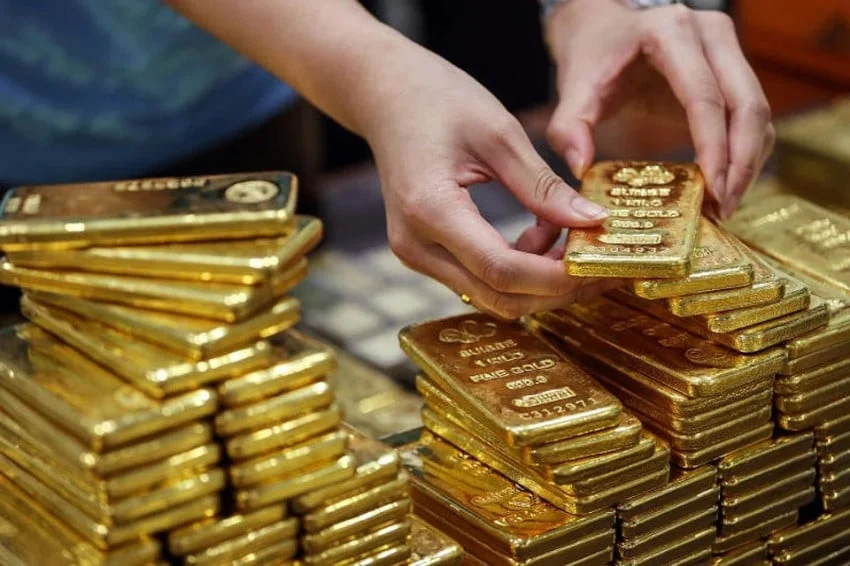
Singapore is increasingly capturing the attention of the world’s ultra-wealthy elite, positioning itself as a premier global hub for physical gold storage. Driven by escalating international conflicts, deep political instability, and pervasive macroeconomic uncertainty, global investors are aggressively seeking secure jurisdictions to safeguard their wealth. The Southeast Asian nation has successfully emerged as a primary destination for affluent families and private investors hailing from the United States, Europe, and the Middle East. In doing so, Singapore is mounting a formidable challenge to Switzerland’s historic dominance as the undisputed global capital for precious metals storage.
The tectonic shift in global wealth preservation strategies reflects a broader psychological pivot among institutional investors and family offices. Traditionally reliant on European financial strongholds, the global elite are now diversifying their sovereign risks by establishing substantial physical assets in Asia. This transition is not merely about moving existing portfolios; it signifies a fundamental reassessment of geopolitical safety, regulatory stability, and logistical security in an increasingly fractured world order.
The Shift in Ultra-High-Net-Worth Asset Allocation Strategies
Traditional wealthy dynasties that have historically kept their physical gold reserves stored in traditional Western vaults are now actively reallocating a significant portion of their holdings to Singapore. Simultaneously, a new wave of affluent families who previously held little to no physical gold are entering the market. These investors are acquiring precious metals through tier-one private banks and specialized bullion dealers, designating Singapore as their primary custody jurisdiction.
This operational pivot is underpinned by Singapore’s stellar reputation for rule of law, robust financial regulations, political neutrality, and exceptionally low crime rates. Industry insiders note that private wealth managers are fielding unprecedented inquiries regarding cross-border asset migration. The city-state’s modern infrastructure provides an institutional-grade ecosystem where large-scale bullion transactions can be executed with absolute transparency, legal certainty, and logistical efficiency.
Explosive Growth in Private Gold Reserves
Empirical data underscores the dramatic scale of this capital inflow. According to market estimates provided by precious metals trading and storage firm J. Rotbart & Co., the volume of privately held gold stored within Singapore has experienced an exponential surge. The total tonnage of private gold in the country has multiplied approximately 16 times since 2014, officially surpassing the monumental threshold of 800 metric tons.
This staggering influx of precious metals has pushed the nation’s specialized storage infrastructure to its operational limits. Le Freeport, an ultra-secure subterranean vault facility frequently dubbed the "Fort Knox of Asia," has reported that a vast majority of its high-security underground vaults are currently operating at full capacity. Designed to meet the stringent security requirements of global collectors and institutional investors, Le Freeport has become an indispensable node in the international precious metals supply chain.
Similarly, other prominent high-security vault operators in the region are experiencing unprecedented demand. The Reserve, another state-of-the-art precious metals storage facility in Singapore, reported that its customer gold holdings have expanded threefold compared to baseline levels recorded at the beginning of 2020. Official tracking data from The Reserve indicated that by September 2026, the facility managed an impressive 8.6 metric tons of gold. Crucially, international clients account for approximately 90 percent of these holdings, highlighting Singapore’s appeal as an offshore wealth sanctuary. Furthermore, market analytics reveal that roughly 40 percent of European clients have either transferred portions of their existing gold reserves out of traditional Swiss vaults into Singapore or deliberately chosen Singapore for new bullion acquisitions.
Chronology of Singapore’s Ascent as a Precious Metals Hub
To understand how Singapore achieved its current status as a global safe haven, it is essential to examine the strategic milestones and policy adjustments that shaped its financial landscape over the past two decades.
The foundation was laid in 2012 when the Singaporean government introduced a pivotal tax reform by exempting Investment Precious Metals (IPM)—including gold, silver, and platinum of specified pureness—from the Goods and Services Tax (GST). This single policy decision instantly leveled the playing field against traditional bullion centers like London and Zurich, removing a major friction cost for global investors.
By 2014, physical infrastructure began catching up with progressive tax policies. The inauguration of Le Freeport provided an ultra-secure, tax-neutral environment capable of housing not only precious metals but also fine art, diamonds, and high-end collectibles. This massive facility set a new benchmark for physical asset security in the Asia-Pacific region.
Between 2015 and 2020, as trade tensions between global superpowers escalated and populist movements gained traction across Western democracies, family offices began establishing formal operational bases in Singapore. The city-state offered a politically stable, neutral territory insulated from the immediate crossfire of major geopolitical disputes.
The onset of the global COVID-19 pandemic in 2020 marked a major inflection point. Supply chain disruptions, expansive monetary policies by central banks, and surging inflation triggered a renewed appreciation for hard assets. Investors sought tangible inflation hedges, leading to a steady accumulation of physical gold in secure offshore jurisdictions.
Between 2022 and 2026, the eruption of major armed conflicts in Eastern Europe and the Middle East, coupled with weaponized international financial sanctions, accelerated the fragmentation of the global economy. Wealthy individuals from jurisdictions facing political volatility or asset seizure risks increasingly viewed Western banking systems as potentially vulnerable to regulatory overreach. Consequently, capital flight toward politically neutral, legally predictable havens like Singapore reached unprecedented heights, culminating in the milestone storage figures observed in late 2026.
Macroeconomic Drivers and Geopolitical Implications
The massive relocation of physical gold to Singapore is not occurring in a vacuum; it is the direct consequence of systemic shifts in the global macroeconomic and geopolitical architecture. As central banks worldwide aggressively accumulate gold to de-risk their foreign exchange reserves away from fiat currencies, private investors are mirroring this behavior at an individual level.
The weaponization of the global financial system—exemplified by the exclusion of certain nations from the SWIFT messaging system and the freezing of sovereign assets—has sent a chilling message to high-net-worth individuals worldwide. Investors are increasingly aware that assets held in traditional Western financial centers could be subjected to sudden regulatory freezes or geopolitical retaliation. Singapore’s steadfast diplomatic neutrality and its strict adherence to international law provide a vital psychological and operational buffer against such systemic risks.
Moreover, persistent global inflationary pressures and ballooning sovereign debts in major economies have eroded confidence in long-term fiat currency stability. Gold has historically served as the ultimate store of value during eras of monetary debasement. By consolidating physical gold in Singapore, global investors ensure immediate liquidity and sovereign diversification, insulating their generational wealth from regional economic shocks.
Comparative Analysis: Singapore Versus Switzerland
For centuries, Switzerland stood as the undisputed global epicenter for physical wealth preservation and gold safekeeping. However, recent developments have complicated Switzerland’s position. While the Alpine nation remains a dominant player in the global refining and storage sectors, its historical commitment to absolute banking secrecy has eroded under pressure from international tax transparency frameworks, such as the Common Reporting Standard (CRS). Furthermore, Switzerland’s decision to align with European Union sanctions against certain foreign powers introduced a new variable of geopolitical alignment that unsettled some non-Western ultra-high-net-worth investors.
In contrast, Singapore has maintained a strictly independent foreign policy, nurturing robust commercial and diplomatic ties with the United States, European nations, China, and Middle Eastern states alike. This non-aligned posture provides a reassuring environment for global investors who wish to remain insulated from regional rivalries. Additionally, Singapore’s hyper-efficient logistics, advanced port facilities, and world-class aviation security networks allow for the seamless, rapid import and export of bullion under maximum security protocols.
Economic Impact and Future Outlook for Singapore’s Financial Sector
The maturation of Singapore into a premier global bullion hub carries profound implications for its domestic economy. The influx of ultra-high-net-worth families has generated a powerful multiplier effect across the financial services sector, boosting demand for private banking, legal structuring, tax advisory, asset management, and high-security real estate.
As more family offices establish operational footprints in the city-state, Singapore solidifies its role as the undisputed financial capital of Southeast Asia and a critical bridge between Western capital and Asian growth opportunities. Vault operators, logistics firms, and security providers are expected to continue expanding their capacities to accommodate the relentless demand for physical asset safekeeping.
Ultimately, Singapore’s ascent as a global sanctuary for physical gold reflects a profound transformation in how the world’s wealthiest individuals perceive security in the twenty-first century. By combining impeccable governance, strategic neutrality, and state-of-the-art infrastructure, Singapore has successfully redefined the geography of global wealth management, securing its legacy as the ultimate modern safe haven.