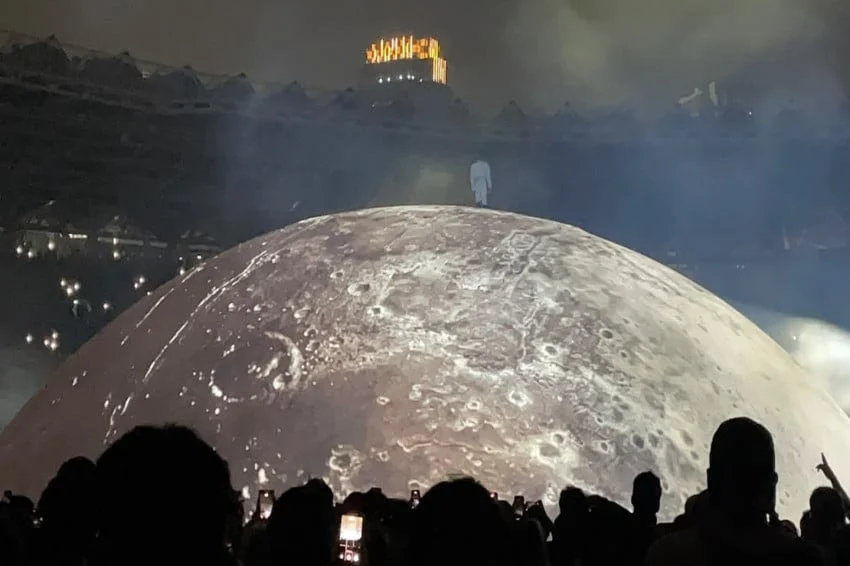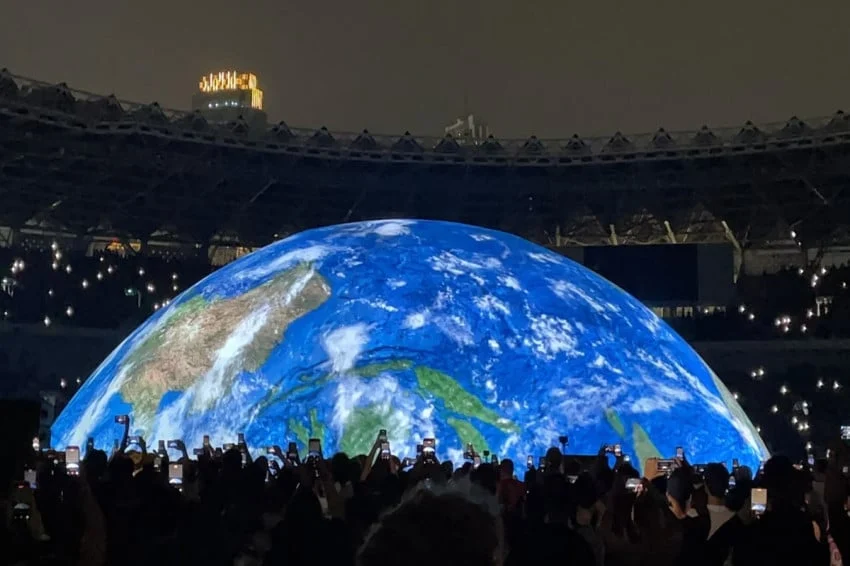
American hip-hop icon Kanye West delivered a historic and visually arresting performance at the Gelora Bung Karno Main Stadium (SUGBK) in Senayan, Jakarta, on Saturday, October 24, 2026. Drawing a massive crowd of approximately 50,000 domestic and international attendees, the concert marked a monumental milestone for the Indonesian live entertainment industry. Utilizing a cutting-edge, globe-shaped dome stage, the Grammy Award-winning artist combined minimalist stage direction with avant-garde production values to create an immersive auditory and visual spectacle.
The event not only showcased West’s enduring global influence but also underscored Jakarta’s growing status as a premier destination for major international concert tours. Behind the grandeur of the production lay a massive logistical operation that engaged thousands of local workers, highlighting the economic and infrastructural dimensions of staging a world-class concert in Southeast Asia’s largest economy.
A Grand Architectural Marvel: The Dome Stage Concept
From the moment the venue gates opened, anticipation was palpable among the tens of thousands of fans who packed the stadium floor and grandstands. The centerpiece of the evening was the custom-built dome stage, a massive hemispherical structure designed to resemble a stylized globe. As the house lights dimmed, complex projection mapping transformed the dome’s surface into a glowing, rotating projection of the planet Earth, establishing a cosmic and reflective atmosphere.
Breaking away from traditional concert setups that rely heavily on backing screens and extensive pyrotechnics, West utilized stark, high-concept minimalism. Standing atop the apex of the giant dome, the rapper appeared as an imposing silhouette beneath a single, piercing white spotlight that pierced through rolling plumes of artificial fog. This striking visual choice immediately drew roars of approval from the stadium audience.
The lighting design complemented the architectural feat. Hundreds of high-powered, multi-colored lasers shot outward from the perimeter of the dome, slicing through the Jakarta night sky in geometric patterns that synchronized precisely with the sub-bass frequencies of the performance. The interplay of fog, laser arrays, and architectural projection transformed the iconic Jakarta stadium into an otherworldly canvas, setting a new benchmark for concert production standards in the region.
Chronology and Event Timeline
Planning for an operation of this magnitude required months of meticulous coordination between international tour promoters, local event organizers, and Indonesian regulatory bodies. The timeline leading up to the Saturday night spectacle reflects the complex mechanics of modern global touring.
Months prior to the event, rumors began circulating within local music communities regarding a potential Jakarta stop on West’s itinerary. Official confirmation arrived mid-year, triggering an unprecedented surge in ticket demand. Within hours of the public on-sale date, primary ticketing platforms experienced historic traffic volumes, leading to a rapid sell-out of standard and VIP categories.
On-site construction at the Gelora Bung Karno Main Stadium commenced nearly two weeks prior to the show. International technical directors worked alongside thousands of local stagehands, riggers, and hospitality personnel to assemble the bespoke dome structure—a process that required navigating strict weight restrictions to protect the stadium’s turf and athletic infrastructure.
By Saturday afternoon, tens of thousands of concertgoers had converged on the Senayan district, creating localized traffic density that required extensive deployment of local traffic police and marshals. Gates opened smoothly at 4:00 PM local time, allowing the massive crowd to file into the stadium bowl in an orderly fashion.
The concert commenced shortly after 8:30 PM, opening with an ambient soundscape that built tension before the sudden illumination of the globe stage. West delivered a career-spanning setlist that melded experimental electronic production with his signature boundary-pushing hip-hop anthems. The performance concluded near midnight, followed by an efficient, highly coordinated crowd dispersal managed by event security and municipal transit authorities.
Economic Impact and Local Workforce Integration
Beyond its artistic merits, the Kanye West concert in Jakarta served as a significant economic catalyst, demonstrating the profound multiplier effect of large-scale entertainment events on the domestic economy. According to preliminary data released by event organizers and local municipal stakeholders, the production successfully drew an estimated 50,000 visitors, a substantial portion of whom traveled from neighboring provinces and Southeast Asian nations, boosting occupancy rates for Jakarta hotels, restaurants, and retail centers.
Crucially, the concert functioned as a major employment generator. Industry reports indicate that over 5,000 local workers were directly or indirectly involved in the execution of the event. This workforce encompassed a diverse range of sectors, including staging technicians, audio-visual engineers, hospitality staff, crowd management personnel, and transportation providers.
The integration of a predominantly local workforce aligns with strategic governmental pushes to elevate the technical capabilities of Indonesia’s creative economy sector. By collaborating with international touring crews, local technicians gained hands-on experience in managing hyper-complex stage designs, advanced rigging systems, and large-scale crowd safety protocols. This knowledge transfer is expected to benefit future domestic and international productions hosted within the country.
Official Statements and Stakeholder Reactions
The unprecedented scale of the production drew widespread commentary from industry stakeholders, cultural analysts, and government representatives, reflecting the event’s broad societal resonance.
A spokesperson for the national promoters highlighted the rigorous logistical hurdles overcome to realize the vision. "Bringing an artist of Kanye West’s stature to Jakarta with a production as technologically demanding as the dome stage required months of unbroken collaboration," the representative noted. "Our primary focus was not only on delivering an unforgettable artistic experience for the fans but also on ensuring that local talents and workers were empowered throughout the process. The success of this event proves that Indonesia possesses the infrastructure and human capital to host the world’s most complex touring productions."
Cultural observers noted that the concert further cemented Jakarta’s position as a vital tour stop on the global map. In recent years, the city has increasingly attracted A-list international acts, signaling a maturation of the local market’s purchasing power and regulatory readiness.
Fans took to social media platforms in their millions following the conclusion of the event, sharing footage of the luminous dome stage and praising the immersive sensory execution. For many local hip-hop enthusiasts, the concert represented the fulfillment of a long-held aspiration to witness one of the genre’s most influential figures perform live on home soil.
Implications for Indonesia’s Live Entertainment Sector
The successful execution of Kanye West’s Jakarta concert carries several important implications for the future trajectory of Indonesia’s live entertainment and creative industries.
First, the event sets a new operational precedent for stadium-level concerts in the country. The seamless integration of complex, non-traditional stage designs—such as the globe dome—demonstrates that local venues can adapt to the increasingly ambitious technical riders demanded by global superstars. This capability is likely to encourage other major international artists to include Jakarta in their upcoming Asian tour routings.
Second, the heavy reliance on a local labor force underscores the viability of localized capacity-building within the entertainment sector. As international promoters increasingly look to optimize touring costs and leverage regional expertise, the successful training and deployment of thousands of Indonesian workers on a single project enhances the nation’s competitive edge in event management.
Finally, the influx of regional tourists attending the concert reinforces the economic viability of music tourism as a contributor to national GDP. Policymakers have increasingly recognized large-scale cultural events as key drivers of hospitality and transport revenues. The Jakarta concert serves as a compelling case study for public-private partnerships aimed at streamlining event permitting, visa processing for international crews, and municipal infrastructure support.
As the echoes of the dome stage’s laser displays fade from the Jakarta night sky, the concert stands as a watershed moment for Indonesian concert history—a testament to the power of ambitious artistic vision backed by robust logistical execution and local collaboration.