
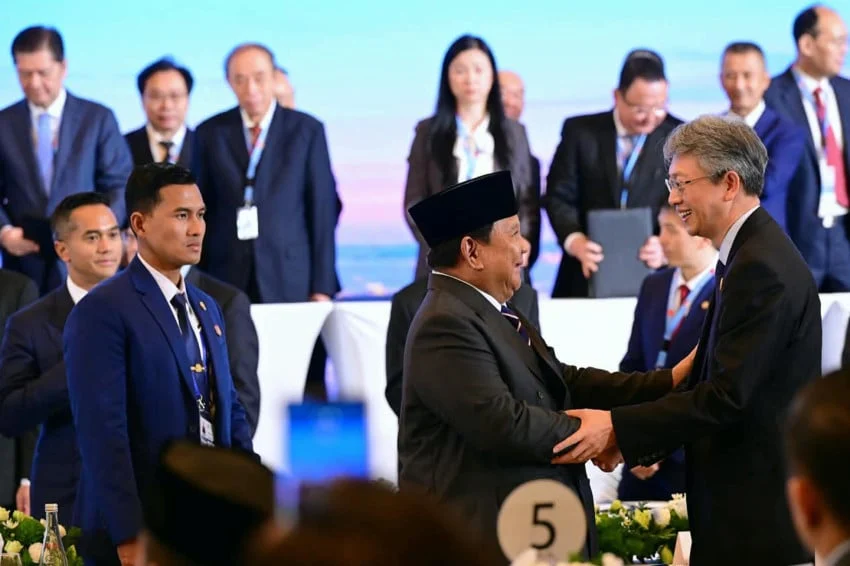
In a significant diplomatic and economic gesture, Indonesian President Prabowo Subianto has formally pledged his administration’s commitment to safeguarding the interests of Chinese investors and business partners operating within the Southeast Asian nation. Speaking at the Indonesia-China Business Forum 2026 held in Shenzhen on Friday, November 20, 2026, President Prabowo framed the bilateral economic relationship not merely as a transactional arrangement, but as a strategic partnership rooted in mutual respect, cultural alignment, and long-term trust.
The forum, which brought together high-ranking government officials and top-tier corporate leaders from both nations, served as a platform to solidify the deepening economic ties between Jakarta and Beijing. President Prabowo’s address was particularly notable for its emphasis on the cultural dimensions of business, drawing on Indonesian traditional values to underscore the sanctity of the host-guest relationship.
Cultural Foundations of Diplomatic Ties
President Prabowo’s message resonated deeply with the audience as he articulated the Indonesian concept of hospitality, which mandates that a host must protect their guests with the same fervor and care afforded to one’s own family. By grounding his policy commitment in the cultural bedrock of "adat" (customary law), the President sought to reassure Chinese stakeholders of the stability and safety of their investments in Indonesia.
He further emphasized the gravity of these commitments by referencing the concept of "kualat," a term describing the severe spiritual or moral consequences—akin to karma—that follow a betrayal of trust or the violation of hospitality. "Inilah adat istiadat kita," the President stated, translating the significance for his international audience as a solemn vow that transcends political cycles. This framing is designed to signal to foreign investors that the protection of their assets is a matter of national honor and moral duty for the Indonesian state, rather than just a policy preference.
Economic Milestone: The Rp274 Trillion Breakthrough
The diplomatic rhetoric was backed by substantive economic outcomes. The forum witnessed the signing of 35 new cooperation agreements between Indonesia and China, totaling an estimated Rp274 trillion (approximately USD 17 billion). These agreements span critical sectors, including infrastructure development, renewable energy, downstream processing of natural resources, and digital technology.
This influx of capital represents a continuation of the aggressive investment strategy initiated under the previous administration and accelerated by President Prabowo to meet his national growth targets. The agreements are designed to bolster Indonesia’s "downstreaming" (hilirisasi) agenda, which seeks to move the country up the value chain by processing raw materials—such as nickel, bauxite, and copper—domestically before exporting them.
Chronology of Expanding Indonesia-China Relations
The current state of bilateral relations is the result of years of incremental growth and strategic alignment.
- 2013: China launches the Belt and Road Initiative (BRI), which later becomes a pillar of Indonesia’s infrastructure expansion, most notably through the Jakarta-Bandung High-Speed Railway project.
- 2021-2023: Indonesia solidifies its position as a primary destination for Chinese investment in electric vehicle (EV) battery manufacturing and mineral refining.
- October 2024: President Prabowo takes office, signaling a foreign policy of "good neighborliness" and economic pragmatism, prioritizing stability for existing foreign investments.
- November 2026: The Shenzhen Forum serves as the apex of the current bilateral dialogue, shifting the focus from initial infrastructure construction to sustainable industrial partnership and technology transfer.
Strategic Implications for Southeast Asia
The reinforced partnership between Jakarta and Beijing carries significant weight for the regional geopolitical landscape. As a founding member of ASEAN, Indonesia’s deepening ties with China represent a balancing act that many nations in the region are attempting to navigate. By positioning Indonesia as a safe haven for Chinese capital, President Prabowo is signaling that he intends to maximize economic opportunities while maintaining an independent foreign policy.
Economists note that the integration of Chinese supply chains into the Indonesian economy provides a significant hedge against global supply chain disruptions. However, the reliance on a single primary investor also poses risks. Analysts suggest that the Indonesian government’s focus on "protecting" these investments—as articulated by the President—is a necessary response to the growing need for legal certainty in the Indonesian business climate, which has historically been a concern for international investors.
Official Responses and Industry Outlook
The business community in Shenzhen, which includes some of China’s most prominent manufacturing and technology firms, welcomed the President’s remarks. Representatives from sectors such as renewable energy and telecommunications indicated that the "honorable" treatment mentioned by the President translates into tangible expectations for improved ease of doing business, including streamlined licensing processes and reduced bureaucratic bottlenecks.
Conversely, domestic observers in Indonesia have noted that the emphasis on protecting foreign investors must also be balanced with the protection of local labor interests and environmental standards. The government has acknowledged this, stating that the new agreements include provisions for technology transfer and local workforce development, ensuring that the partnership creates long-term value for the Indonesian population.
Analysis: Beyond the Transactional
The underlying theme of President Prabowo’s address—that allowing a partner to suffer a loss is a source of "shame"—marks a departure from standard diplomatic discourse. By framing investment protection through a moral lens, the administration is effectively branding Indonesia as a high-trust partner. This is a critical move, particularly as global capital markets face volatility and investors become increasingly cautious about emerging market exposure.
The economic data supports this pivot. With trade volume between Indonesia and China consistently remaining in the tens of billions of dollars annually, the relationship is already the most significant bilateral economic pillar for both nations. The new Rp274 trillion commitment suggests that the next phase of this relationship will focus heavily on high-value-added manufacturing.
Addressing Future Challenges
While the outlook is overwhelmingly positive, the administration faces the ongoing challenge of maintaining the pace of infrastructure development and legal reforms. The "kualat" warning, while culturally evocative, will ultimately be tested by the practical implementation of contracts, the resolution of land disputes, and the stability of the regulatory framework.
The President’s assurance of protection extends beyond physical security. It encompasses the protection of investment rights, contractual sanctity, and the consistency of economic policies. For international observers, this is a clear signal that the Prabowo administration intends to maintain the trajectory of its predecessor, ensuring that Indonesia remains a reliable and attractive destination for foreign capital in an increasingly competitive global landscape.
Conclusion
The Indonesia-China Business Forum 2026 has effectively set the tone for the remainder of President Prabowo’s term. By emphasizing a blend of cultural duty and economic pragmatism, the Indonesian government has sought to create a "gold standard" for its investment environment. As the 35 newly signed agreements move from the signing table to the implementation phase, the success of this partnership will be measured by its ability to deliver on the promises of growth, technology transfer, and mutual prosperity.
The President’s declaration in Shenzhen serves as more than just a speech; it is a policy manifesto that places the reputation of the Indonesian state on the line. As Indonesia seeks to become a global player in the EV and green energy supply chains, the success of these Chinese-led ventures will serve as a bellwether for the country’s broader economic ambitions in the late 2020s. For the business community, the message is clear: Indonesia is open for long-term, deep-rooted partnerships, and the government is prepared to act as a guarantor of that stability.
