The Oklahoma City Thunder enters the 2026/2027 NBA season with a singular, driving ambition: to reclaim the throne they last occupied in 2025. Following a 2025/2026 campaign that saw them finish as the regular-season juggernaut of the Western Conference with an elite 64-18 record, the team’s postseason exit in the Western Conference Finals at the hands of the San Antonio Spurs served as a jarring wake-up call. As the league prepares to tip off the new season on Tuesday, October 20, 2026, the Thunder finds itself in the unique position of beginning its path to redemption exactly where its previous journey ended: the Frost Bank Center in San Antonio.
This opening night clash is more than just a standard early-season fixture; it is a narrative-heavy rematch that pits the former champions against the team that dismantled their title defense. Scheduled for 8:30 PM local time (08:30 WIB on Wednesday), the game represents a critical barometer for both franchises. For the Thunder, it is the first opportunity to demonstrate that the tactical shortcomings exposed in their seven-game series loss last May have been rectified.
A Legacy of Consistency and the Sting of Defeat
To understand the weight of this opening matchup, one must look at the statistical dominance the Thunder exerted throughout the 2025/2026 regular season. Finishing with 64 wins, the team boasted an offensive efficiency that was historic. They averaged 119 points per game while restricting opponents to just 107.9 points, resulting in a point differential of +11.1—a figure that placed them among the most statistically impressive teams in modern NBA history.
The team’s defensive identity, anchored by the versatile Chet Holmgren and perimeter specialist Lu Dort, provided a blueprint for success that carried them through early playoff rounds. The Thunder’s postseason run began with surgical precision, sweeping both the Phoenix Suns and the Los Angeles Lakers 4-0 in consecutive series. However, the momentum stalled when they met the Spurs. The seven-game series culminated in a 111-103 loss for the Thunder in Oklahoma City, a result that highlighted a vulnerability in their half-court execution when the pace slowed down and defensive intensity reached its peak.
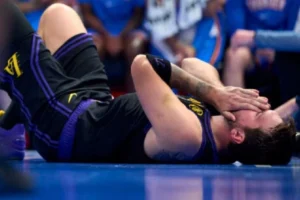
Internal assessments from the organization following the season noted that the absence of Jalen Williams for significant stretches—due to injuries that persisted into the playoffs—crippled the team’s ability to maintain offensive rhythm. The reliance on Shai Gilgeous-Alexander became too pronounced, allowing the Spurs to implement defensive schemes that forced the ball out of the superstar’s hands, leaving other players to struggle with secondary playmaking duties.
The Gilgeous-Alexander Factor: Leading the Charge
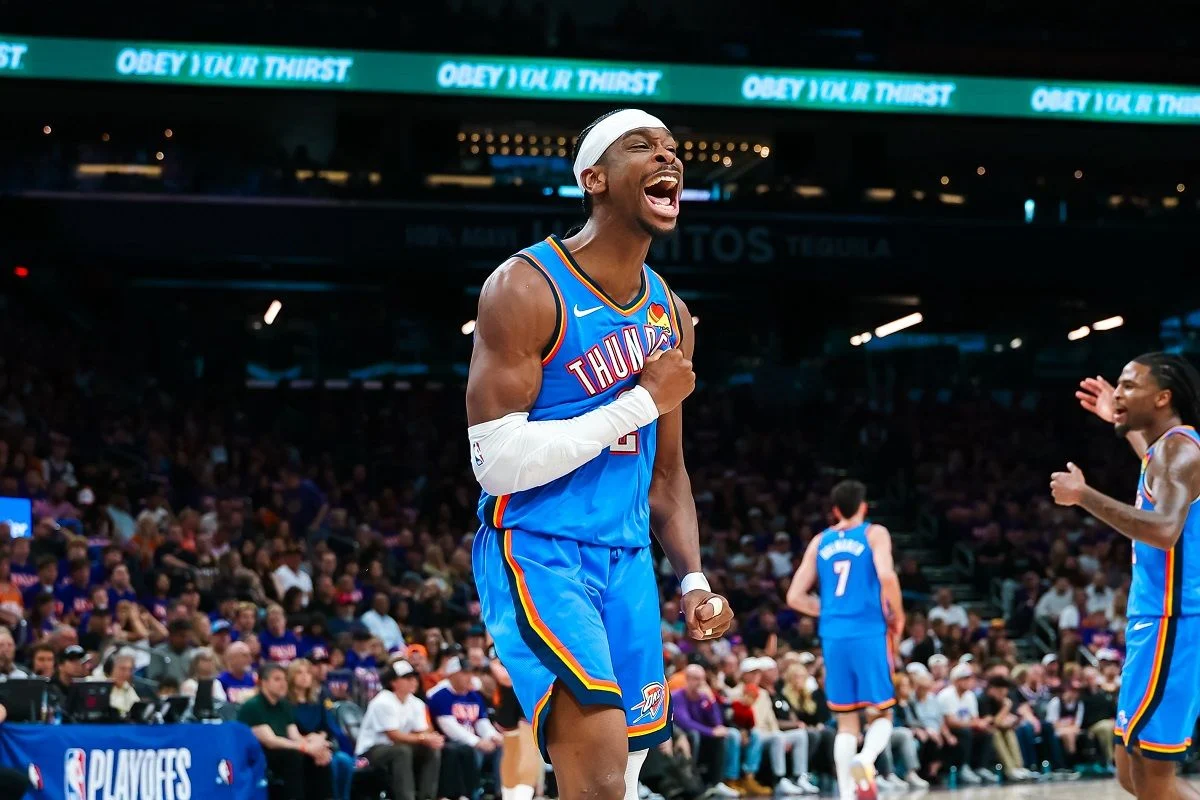
At the heart of the Thunder’s championship aspirations remains Shai Gilgeous-Alexander. The Canadian guard continues to operate at an MVP-caliber level, serving as the fulcrum of head coach Mark Daigneault’s offensive system. His ability to navigate tight spaces, draw contact to reach the free-throw line, and dictate the tempo of the game is essentially the engine room of the team’s success.
However, entering the 2026/2027 season, the challenge for Gilgeous-Alexander is one of evolution. While his scoring prowess is unquestioned, the coaching staff has emphasized the necessity of his role as a facilitator. In the aftermath of the Western Conference Finals loss, analytical reviews suggested that the Thunder’s offense became too static when the game entered the "clutch" period. To overcome defensive traps, Gilgeous-Alexander must effectively elevate the offensive contributions of his teammates, particularly when opponents commit multiple defenders to him. His maturity and experience in high-pressure playoff environments are now being leveraged to help integrate new rotation pieces and ensure the team’s offensive output remains balanced throughout the grueling 82-game schedule.
Jalen Williams and the Path to Tactical Depth
Perhaps the most significant variable for the Thunder this season is the return of Jalen Williams. His injury-plagued previous campaign created a "what-if" scenario that lingered throughout the summer. Williams serves as the vital secondary creator the team lacked in the final stages of the 2026 postseason.
His ability to operate in the mid-range and penetrate the lane provides the Thunder with a secondary layer of attack that prevents opposing defenses from collapsing exclusively on Gilgeous-Alexander. Furthermore, Williams provides a necessary buffer for the team’s physical health. With a long season ahead, the training staff is expected to manage his minutes with caution, ensuring he is in peak condition for the postseason, rather than forcing his output during the mid-winter grind. If Williams can maintain his health and find his rhythm early, the Thunder’s offense will likely regain the unpredictability that made them nearly impossible to guard for most of last year.
Coaching Adjustments Under Mark Daigneault
Head coach Mark Daigneault faces a tactical mandate this season: finding the "Plan B" when the primary offensive system faces resistance. While the team’s defensive metrics are among the best in the league, the offensive stagnation seen in their 95.8 points-per-100-possessions output against the Spurs in the playoffs remains a point of emphasis.
Daigneault has reportedly spent the offseason refining the team’s off-ball movement and perimeter shooting efficiency. The objective is to ensure that when the paint is clogged by elite rim protectors, the Thunder can exploit the perimeter. The addition of new personnel, including Aday Mara, Otega Oweh, and Bennett Stirtz, signals an attempt to inject fresh energy and versatility into the rotation. While these players are still acclimatizing to the pace of the NBA, their inclusion is part of a broader strategy to ensure the team can weather injuries and maintain a high level of play regardless of who is on the floor.
The Competitive Landscape of the Western Conference
The road back to the NBA Finals is arguably steeper than it was a year ago. The Western Conference has evolved into a gauntlet where multiple teams possess championship-level depth.
The San Antonio Spurs, led by the generational talent of Victor Wembanyama and the emergence of Stephon Castle, have signaled that their 2026 victory was not a fluke. They have utilized the confidence gained from their victory over the Thunder to further solidify their roster. Meanwhile, the Denver Nuggets, with Nikola Jokic continuing to serve as the league’s most unique offensive force, remain a constant threat. The Minnesota Timberwolves, with their bruising, physical style of play, and the Houston Rockets, who are increasingly dangerous, round out a conference that leaves little room for error.
The implications for the regular season are clear: seeding matters. The Thunder’s focus on securing a top-two seed is not just about prestige, but about the strategic advantage of home-court superiority. Every game against conference rivals like the Spurs will be scrutinized not just for the final score, but for what it reveals about the tactical development of the teams involved.
Strategic Outlook and Future Projections
As the league enters the 2026/2027 season, the Oklahoma City Thunder stands at a crossroads. They possess the talent, the chemistry, and the coaching to win it all, but they must demonstrate that they have internalized the lessons of their previous failure. The upcoming season will require a shift from being a team that relies on regular-season dominance to one that is built for the attrition of the playoffs.
The organization’s long-term strategy focuses on maintaining a sustainable core while surrounding their stars with defensive-minded, high-IQ role players. The front office remains committed to this philosophy, prioritizing the development of players like Chet Holmgren, who serves as the defensive anchor and the team’s insurance policy against high-scoring opponents.
Ultimately, the 2026/2027 season is an indictment of the team’s character. Can they bounce back from the heartbreak of a seven-game series loss? Can they adapt when the game slows down and the pressure mounts? The answer will begin to take shape on October 20 at the Frost Bank Center. Whether they emerge from that game with a victory or a defeat, the match against the Spurs will set the tone for a season that is, for the Thunder, entirely about reclaiming their status as the kings of the West and, ultimately, the NBA.
The narrative of the coming months will be defined by how the Thunder balances the high expectations of their fanbase with the reality of a league that is constantly evolving. With a roster that is entering its prime and a front office that has demonstrated patience and strategic foresight, the Thunder remains a beacon of consistency in an otherwise volatile league. The quest for the championship title begins anew, and for the Oklahoma City faithful, the hope is that the lessons of the past have paved the way for a more successful future.