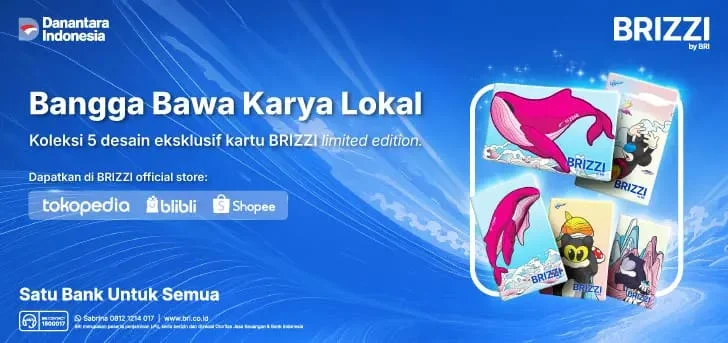
The landscape of Jakarta’s urban culture has undergone a significant transformation, with the Blok M area emerging as a focal point for the convergence of youth culture, creative industries, and modern financial technology. Central to this evolution is the ongoing collaboration between BRIZZI, the electronic money product of Bank Rakyat Indonesia (BRI), and renowned Indonesian visual artist Arkiv Vilmansa. This partnership, hosted at the Blok M Hub, represents a strategic intersection where functional payment systems meet artistic expression, catering specifically to the demographic preferences of Gen Z and Millennials who prioritize aesthetic value in their daily utility tools.
The Intersection of Art and Financial Utility
The collaboration, branded as "BRIZZI x ARKIV," serves as a tangible example of how financial institutions are pivoting toward lifestyle-integrated marketing. By transforming a standard contactless payment card into a canvas for contemporary art, BRI is tapping into the "collectible culture" that has gained massive traction in Southeast Asia. Arkiv Vilmansa, widely recognized for his distinct character-based designs and bold aesthetic, provides the visual identity for these limited-edition cards.
For the modern urbanite, the BRIZZI card has transitioned from a mere transit payment tool for the MRT or TransJakarta into an accessory. By integrating high-end local artistry with the ubiquity of the BRIZZI payment ecosystem, the campaign seeks to normalize the use of cashless transactions while simultaneously promoting the local creative economy.
Chronology of the Initiative
The program, dubbed "Collect the Art," was designed to be a sequential experience for visitors to the Blok M Hub. The timeline of the engagement is structured to incentivize both physical presence and sustained utilization of the digital payment platform:
- Phase 1: Acquisition: The journey begins at the designated stations within the Blok M Hub where patrons can acquire the limited-edition BRIZZI x ARKIV cards. The logistical setup offers two primary tiers: the Single Pack, priced at IDR 50,000, and the Bundling Pack, priced at IDR 250,000, which includes a curated set of items.
- Phase 2: Incentivized Adoption: To accelerate the adoption of the card, the campaign includes a promotional mechanism where customers receive a IDR 10,000 discount on the card purchase price, provided they conduct a minimum top-up of IDR 50,000. This structure is intended to ensure that the cards are not merely collected as static art pieces but are actively used within the merchant ecosystem.
- Phase 3: Integration: Following acquisition, participants are encouraged to utilize the card across the Blok M Hub’s diverse range of merchants, including culinary outlets, retail boutiques, and creative spaces. This phase emphasizes the card’s interoperability within the surrounding infrastructure.
Strategic Context and Market Data
The decision to launch this initiative in Blok M is grounded in clear demographic data. Blok M has consistently been ranked as one of the most vibrant social hubs in Jakarta, characterized by a high density of retail outlets and proximity to major transit nodes. According to recent urban planning reports, the area has seen a 15% increase in foot traffic among the 18–35 age demographic over the past two years, driven by the revitalization of public spaces and the proliferation of "third spaces"—locations that are neither home nor work.
Furthermore, the Indonesian cashless payment market continues to expand at a compound annual growth rate (CAGR) of approximately 12-15%. BRI, as the market leader in the micro-banking and electronic money sector, faces the challenge of maintaining brand relevance among younger demographics who are increasingly inclined toward digital-native wallets and fintech startups. The collaboration with an artist like Arkiv Vilmansa is a deliberate move to humanize the brand, shifting the perception of BRIZZI from a state-affiliated utility to a lifestyle-aligned necessity.
Perspectives on the Creative Economy
While official statements from BRI executives emphasize the functional convenience of the card, the underlying narrative reflects a broader commitment to supporting the Indonesian creative economy. Industry analysts suggest that collaborations of this nature provide artists with a massive distribution network that they would otherwise be unable to access independently.
"The fusion of street art and fintech is not merely a marketing gimmick; it is an acknowledgment that the consumer experience is becoming increasingly holistic," notes an independent retail consultant based in Jakarta. "When a consumer uses a card that features artwork they admire, it creates a psychological touchpoint that reinforces brand loyalty. It elevates the act of paying for a coffee or transit fare into a momentary interaction with art."
Operational Implications for the Blok M Hub
The presence of the BRIZZI x ARKIV activation at the Blok M Hub serves as a anchor for foot traffic. By creating a physical space for the collection and usage of these cards, the Hub acts as a micro-laboratory for urban lifestyle experiments. Retailers within the vicinity have reported an uptick in cashless transactions, citing the ease of use and the "collectible" nature of the card as a conversation starter among younger customers.
From an operational standpoint, the success of this campaign provides a blueprint for other transit-oriented developments (TOD) in Indonesia. As cities like Jakarta continue to invest in mass transit, the need for seamless, integrated payment systems that carry cultural significance will only increase. The Blok M model suggests that the future of urban infrastructure is not just about moving people from point A to point B, but about curating the experience of the commute itself.
Analysis: Broader Economic and Cultural Impact
The long-term implication of the BRIZZI x ARKIV initiative is the further normalization of digital transactions among a demographic that historically leaned toward cash. By gamifying the acquisition of the card through the "Collect the Art" program, BRI is successfully lowering the barrier to entry for digital finance.
Furthermore, this campaign highlights a significant shift in corporate social responsibility (CSR) and marketing budgets. Rather than allocating funds toward traditional media, major financial institutions are increasingly investing in localized creative events that offer high visibility and community engagement. This shift benefits local artists, who receive recognition and fair compensation, and provides consumers with unique, limited-edition products that possess secondary market value.
Conclusion: The Future of Urban Engagement
The collaboration at Blok M Hub is a testament to the fact that urban centers remain the heartbeat of cultural and economic activity in Indonesia. As technology and art continue to merge, the BRIZZI x ARKIV project stands as a successful case study of how brands can effectively navigate the intersection of functionality and aesthetics.
For the Gen Z and Millennial visitors of Blok M, the experience is no longer defined by the singular act of purchasing a product. Instead, it is defined by the total experience of the space—the art they carry, the ease of their commute, and the vibrancy of the community they engage with daily. As the campaign continues to unfold, the metrics on user adoption and transaction volume will likely inform future iterations of lifestyle-integrated fintech products, potentially setting a new standard for how financial services are delivered within the Indonesian urban landscape.
The success of this initiative is not measured solely by the number of cards distributed, but by the qualitative shift in how users perceive their everyday financial tools. By treating the BRIZZI card as a medium for artistic expression, BRI has successfully carved out a niche that resonates with the identity-driven consumption habits of today’s youth, ensuring that even in an increasingly digital world, the physical connection to art remains a powerful driver of consumer behavior.